What Makes Stranger Things So Popular: A Deep Dive
Discover what makes Stranger Things so popular! Uncover its unique blend of nostalgia, horror, and storytelling that captivates audiences.
- Why is Stranger Things so popular
- Stranger Things fanbase reasons
- Stranger Things cultural impact
- Popularity of Stranger Things
On this page
Stranger Things is defined by its rare ability to fuse 1980s nostalgia, supernatural horror, and genuine emotional storytelling into a single show that feels both familiar and completely alive. Since its Netflix debut in 2016, the series has built a fanbase that spans generations, broke streaming records with 8.65 billion viewing minutes during its 2025 to 2026 finale week, and became one of the most talked-about cultural touchstones of the past decade. Understanding what makes Stranger Things so popular means looking at the specific creative choices that turned a small-town monster story into a global phenomenon.
What makes Stranger Things so popular starts with sincere nostalgia
Most shows that lean on nostalgia do it with a wink. They reference the past ironically, keeping a safe distance so no one accuses them of being earnest. The Duffer Brothers went the opposite direction. They drew directly from J.J. Abrams’ Super 8 and Steven Spielberg’s adventure films, aiming to revive a storytelling style that treats its characters’ feelings as genuinely important. That sincerity is the secret ingredient most imitators miss.
The 1980s aesthetic in Stranger Things is not just set decoration. It shows up in:
- The music. Kyle Dixon and Michael Stein’s synth-heavy score pulls directly from John Carpenter and Tangerine Dream, creating an atmosphere that feels period-accurate without being a museum piece.
- The clothes and technology. Walkie-talkies, Atari consoles, and feathered hair are not played for laughs. They are treated as the normal, lived-in world of these characters.
- The emotional register. The show does not mock its decade. It acknowledges the complexity of the era, including Cold War anxiety and social conformity, while still finding warmth and adventure inside it.
This approach lowers the barrier for viewers who did not live through the 1980s. You do not need to recognize every reference to feel the emotional pull. The sincere adventure storytelling style works on its own terms, which is why younger audiences connect with it just as strongly as older ones.
Pro Tip: If you want to understand why the show hits differently than other nostalgia projects, watch the first episode back to back with Super 8. The DNA is unmistakable, but Stranger Things adds a layer of emotional vulnerability that Abrams’ film only hints at.
How character development keeps the Stranger Things fanbase coming back
Plot twists get people talking. Characters get people attached. The popularity of Stranger Things rests heavily on the second category.
 Over a decade of storytelling, viewers watched the core party grow from middle schoolers into young adults. That kind of long-form character development is rare in genre television, and it creates a bond that is hard to replicate in a single season. Viewers formed deep emotional bonds with characters who matured alongside them, reflecting their own personal growth across the years the show aired.
Here is how the character work earns that loyalty:
- Eleven’s arc is built on vulnerability, not just power. She starts the series as a traumatized child with extraordinary abilities and spends five seasons learning what it means to have an identity outside of what she can do. That journey resonates with anyone who has ever felt defined by their usefulness rather than their personhood.
- The ensemble structure means everyone finds their person. Whether you connect with Will’s quiet sensitivity, Dustin’s humor, or Joyce’s relentless maternal drive, there is a character whose emotional logic feels like yours.
- The dialogue stays accessible. The kids talk like kids. The adults talk like adults who are barely holding it together. Nobody delivers exposition in a way that feels written. That naturalness keeps you inside the story.
- Relationships drive the stakes. The show’s greatest strength is emotional character connections rather than plot mechanics. When the Demogorgon shows up, you are scared because you care about the people in the room, not because the monster is particularly original.
Pro Tip: Pay attention to how the show handles reunions. Every time the group comes back together after a separation, the scene is given real time and real emotion. That is not accidental. It is the show telling you that connection is the point.
Why Stranger Things appeals across generations and demographics
The show’s cross-generational reach is one of the clearest answers to why Stranger Things resonates with such a wide audience. It connected nostalgic Gen X viewers with younger Gen Z audiences through themes of friendship, loyalty, and resilience that do not belong to any single decade.
The mechanism is clever. The show uses distinct character groups to serve different viewer demographics simultaneously.
| Audience segment | What they connect with | Key characters |
|---|---|---|
| Gen X adults (35 to 55) | 1980s period authenticity, parental anxiety, Cold War backdrop | Joyce, Hopper, Murray |
| Millennials (25 to 40) | Coming-of-age emotion, teen social dynamics, early internet-era discovery | Nancy, Jonathan, Steve |
| Gen Z (under 25) | Adventure, identity formation, found family, supernatural stakes | Eleven, Mike, Max, Robin |
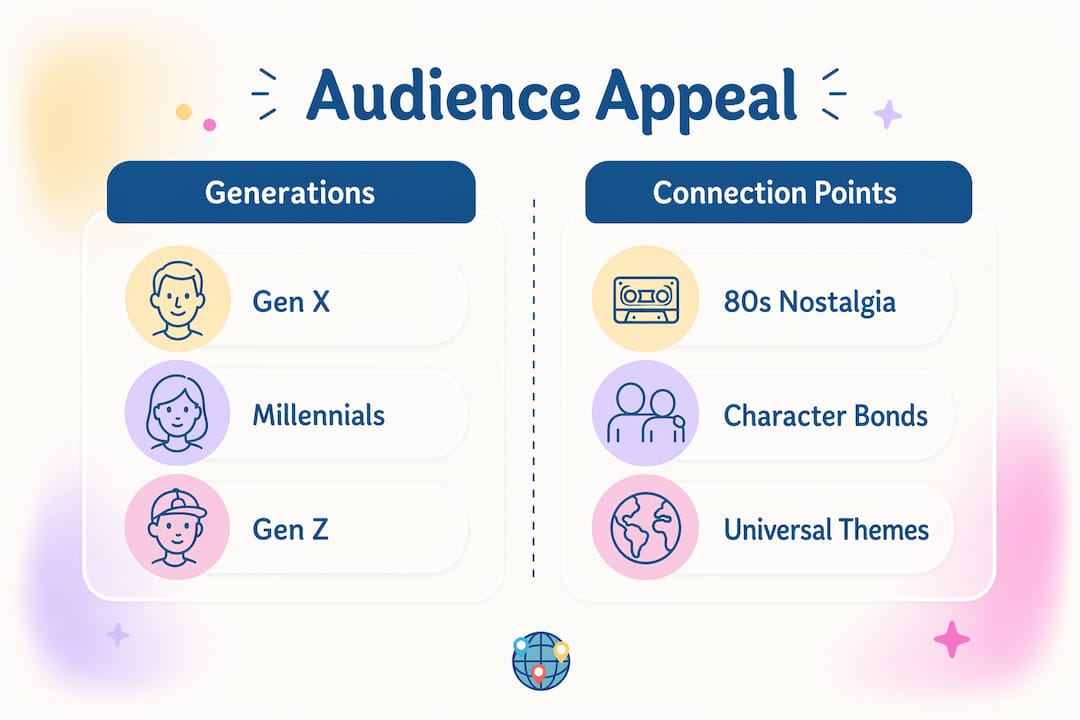
This character segmentation is not accidental. The Duffer Brothers structured the show so that multi-age households could watch together and each person would have a character whose experience felt personally relevant. That is a rare feat in genre television, and it explains why the show performed consistently across demographic groups for a full decade.
The universal themes do the heavy lifting underneath the segmentation. Friendship under pressure, loyalty when it costs you something, and the specific grief of growing up are not 1980s ideas. They are human ones.
How does Stranger Things balance horror with heart?
Horror that alienates mainstream viewers tends to lean too hard into nihilism. Stranger Things avoids that trap by building emotional safety into its structure. Episodes that put characters through genuine terror tend to end with warmth, humor, or a reunion that resets the emotional baseline.
This is not a soft approach to horror. The show earns its scares. The Mind Flayer, the Upside Down, and Vecna are genuinely unsettling. But the horror is always paired with something that reminds you why these people are worth saving. Dustin’s one-liners after a near-death experience are not comic relief for its own sake. They are the show’s way of saying: these people are still here, still themselves, and still worth caring about.
The adult characters add another layer of tonal balance. Hopper, Joyce, and Murray are all deeply flawed, but the show never tips them into cynicism. They are adults who are trying, which is a more honest and more hopeful portrayal than most genre television manages. That refusal to go fully dark is part of what draws audiences to Stranger Things who might otherwise avoid horror entirely.
The record-breaking viewership of 8.65 billion minutes during the finale week confirms that this tonal balance works at scale. A show that leaned purely into darkness would not hold that kind of broad, sustained audience.
The cultural impact and legacy of Stranger Things by 2026
By the time the finale aired, Stranger Things had become something bigger than a TV show. It became a shared emotional reference point during a period of political anxiety and cultural fragmentation, offering audiences a sense of community and moral clarity that felt genuinely rare.
The Stranger Things cultural impact shows up in several concrete ways:
- Streaming benchmarks. The finale week’s 8.65 billion viewing minutes set a new standard for what a Netflix series can achieve at the end of its run.
- Fashion and collectibles. The show’s aesthetic drove a measurable revival of 1980s fashion trends and fueled demand for nostalgia-driven collectibles among Gen Z and Millennial buyers.
- Storytelling influence. The Duffer Brothers demonstrated that sincere, emotionally grounded genre storytelling could compete with ironic, prestige-TV approaches. That proof of concept changed what streaming platforms were willing to greenlight.
- Fan community. The show built one of the most active fandoms in streaming history, though that community has not been without friction. Toxic fandom subcultures spreading conspiracy theories have affected the mental health of cast and creators, showing the unintended costs of intense fan culture around beloved properties.
Pro Tip: The show’s influence extends well beyond the screen. If you want to track its cultural footprint, look at what it did to Kate Bush’s “Running Up That Hill” in 2022. A 37-year-old song hit number one in multiple countries because of a single scene. That is the kind of cultural gravity very few shows ever generate.
Key takeaways
Stranger Things is popular because it combines sincere 1980s nostalgia, deeply emotional character arcs, and a tonal balance of horror and warmth that makes it accessible to viewers across generations and demographics.
| Point | Details |
|---|---|
| Sincere nostalgia over irony | The Duffer Brothers drew from Spielberg and Abrams to create heartfelt storytelling, not a parody of the 1980s. |
| Character bonds drive loyalty | Long-form arcs for characters like Eleven built viewer attachment that plot twists alone cannot create. |
| Multi-generational design | Distinct character groups (kids, teens, adults) give every age demographic a personal entry point into the story. |
| Horror balanced with warmth | Emotional anchors at episode ends keep the show accessible to viewers who would otherwise avoid the genre. |
| Cultural scale | The finale week’s 8.65 billion viewing minutes and the Kate Bush revival confirm the show’s reach beyond television. |
Have you ever felt close to a Stranger Things character? Try Worldlecity’s Character quiz.
If breaking down what makes a show like Stranger Things tick is your kind of thing, you will feel right at home at Worldlecity. Across 15 questions, you’ll move through ‘Hawkins’ that map your instincts, loyalties, and crisis style to different characters from the show.
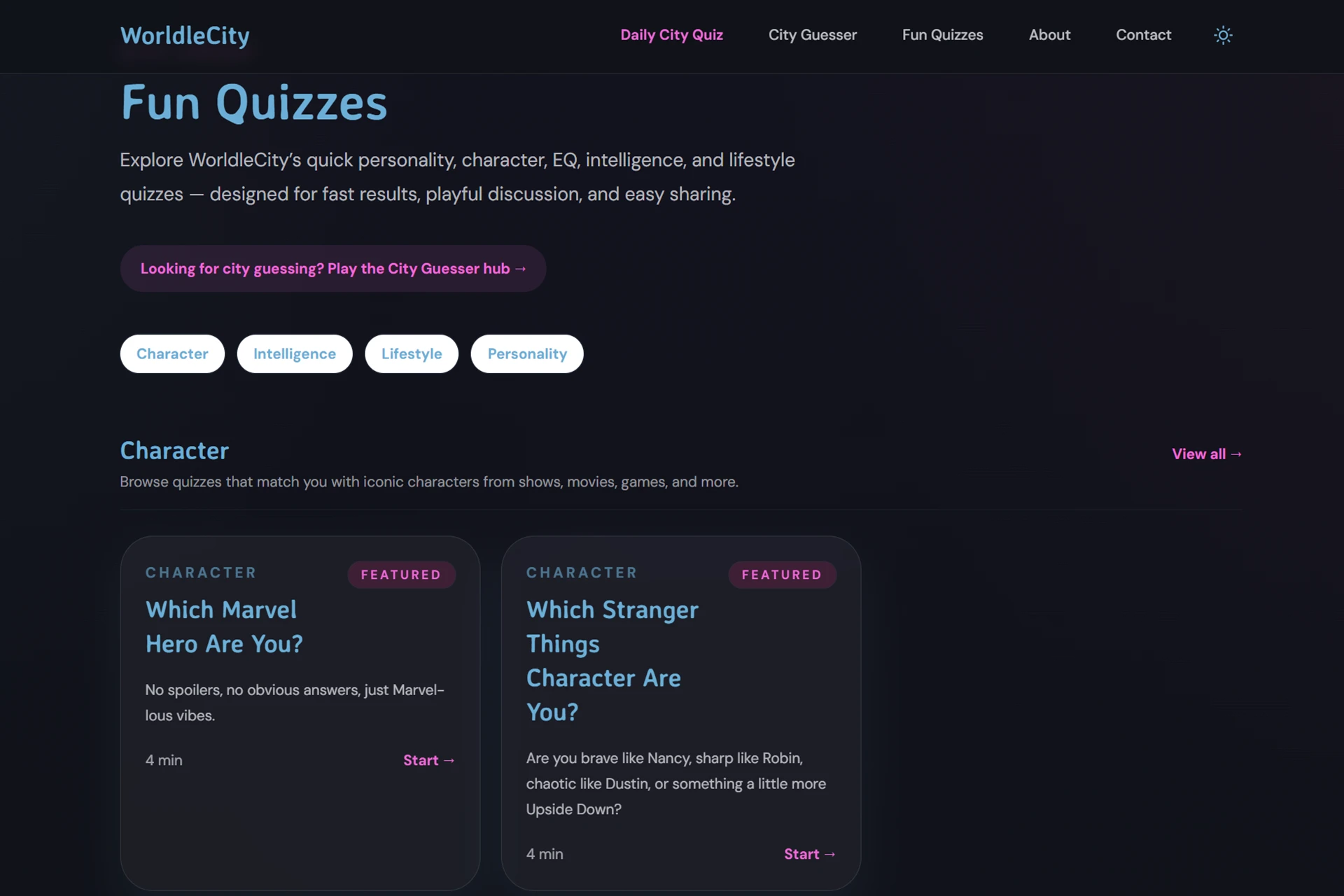
The site also offers a daily city guessing game where you get six attempts to identify a mystery city from a photograph, plus personality and lifestyle quizzes that tap into the same curiosity that makes you want to understand why certain stories hit so hard. No account needed. No pressure. Just the kind of fun, low-stakes challenge that scratches the same itch as figuring out which character from Hawkins you actually are. Head over to Worldlecity and see how your pop culture instincts hold up when geography gets thrown into the mix.
FAQ
Why is Stranger Things so popular with multiple generations?
The show uses distinct character groups (kids, teens, and adults) to give every age demographic a personal entry point, while universal themes of friendship and loyalty connect viewers regardless of whether they lived through the 1980s.
What draws audiences to Stranger Things more than other horror shows?
The show builds emotional safety by ending episodes with warmth or humor, which keeps horror accessible to mainstream viewers who might otherwise avoid the genre entirely.
How did the Duffer Brothers approach the show’s storytelling style?
The Duffer Brothers credit J.J. Abrams’ Super 8 and Steven Spielberg as direct inspirations, aiming to revive sincere, heartfelt adventure storytelling rather than ironic nostalgia.
What was the Stranger Things finale viewership record?
The finale week from December 29, 2025 to January 4, 2026 generated 8.65 billion viewing minutes, making it one of the most-watched streaming events on record.
Does the Stranger Things fandom have any downsides?
Yes. Toxic fandom subcultures within the community have spread conspiracy theories and negatively affected the mental health of cast members and creators, which is a known risk when any property reaches this level of cultural intensity.