Why Quizzes Are Educational Tools That Actually Work
Discover why quizzes are educational tools that enhance learning. Unlock the power of retrieval practice and boost memory retention!
- quizzes as learning aids
- role of quizzes in assessment
- how quizzes enhance learning
- educational value of quizzes
- quizzes improve student engagement
- importance of quizzes in teaching
On this page

Quizzes are defined as active learning instruments that force your brain to retrieve stored information, making them far more effective than passive study methods like rereading or highlighting. Cognitive psychologists call this the testing effect: the act of recalling information strengthens memory traces more than reviewing the same material again. Researchers Roediger and Karpicke confirmed this in landmark studies showing that retrieval practice produces durable, long-term learning. Whether you are a teacher building a lesson plan, a parent supporting homework routines, or a learner trying to retain more, understanding why quizzes are educational tools changes how you approach studying entirely.
Why quizzes are educational tools: the science of retrieval practice
The testing effect is the core reason quizzes work. When you try to pull information from memory, even imperfectly, your brain strengthens the neural pathway connected to that knowledge. Passive review, like rereading a chapter, does not trigger this process. It creates familiarity, not mastery.
The numbers back this up clearly. Self-testing produces about 61% retention of material one week later, compared to just 40% for rereading. That 21-point gap is not a small margin. It represents the difference between a student who can recall a concept under pressure and one who recognizes it only when prompted.
What surprises most people is that failed retrieval attempts still help. Cognitive scientists call this the generation effect: when you struggle to recall something and get it wrong, your brain encodes the correct answer more deeply once you see it. Errors are not setbacks. They are part of the learning mechanism.
- Retrieval practice improves retention by 50% compared to passive re-study after one week.
- Even incorrect guesses during quizzes prime the brain to retain the right answer more effectively.
- Short, frequent quizzes outperform single long review sessions for building lasting memory.
Pro Tip: Start quizzing yourself within 24 hours of learning new material. Early retrieval practice, before forgetting sets in, produces the strongest long-term gains.
How spacing and quiz design shape long-term retention
Timing matters as much as the quiz itself. A meta-analysis covering over 800 experiments found that spaced quizzes produce 10–30% better long-term learning compared to massed study. Massed study means cramming everything into one session. Spaced practice means spreading quizzes out over days or weeks, revisiting material just as you start to forget it.

This spacing effect works because forgetting is not the enemy. Mild forgetting before a quiz forces your brain to work harder during retrieval, which deepens the memory trace. Studying the same material every day with no gap does not produce the same effect.
Quiz design also determines whether learners actually learn or just feel like they do. The fluency illusion is the false sense of mastery that comes from rereading familiar text. Students who reread notes feel confident. Then they blank on the exam. Active recall quizzes break this illusion by exposing what you actually know versus what merely looks familiar.
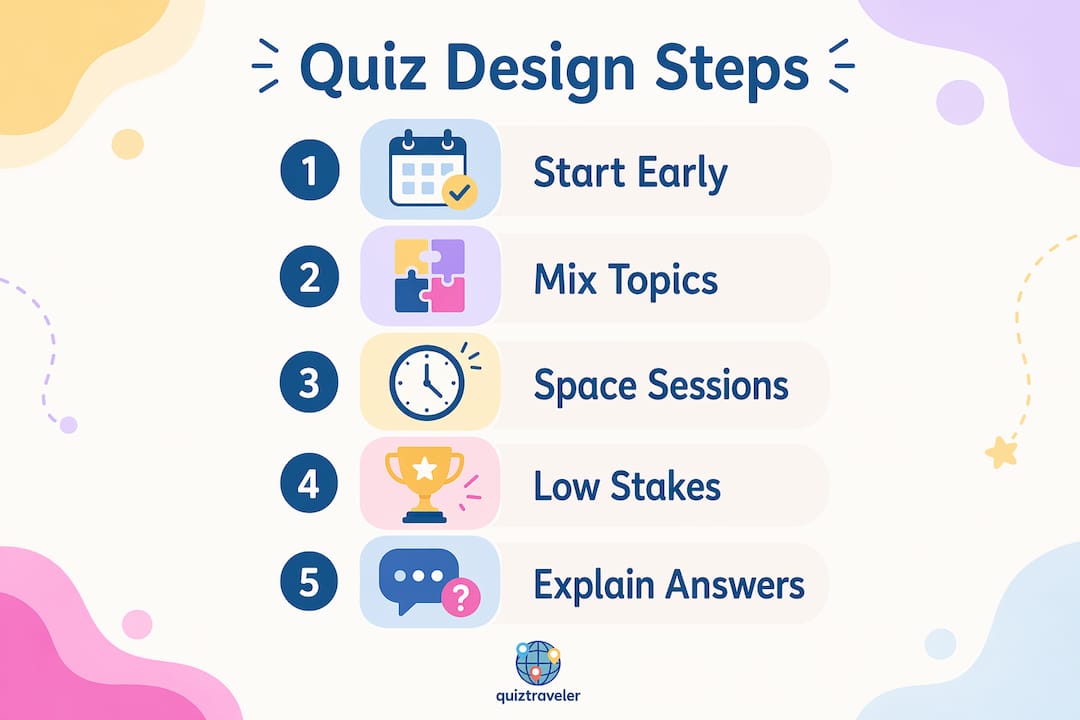
The format of the quiz matters too. Interleaved practice, where you mix different topics within a single quiz session, feels harder than blocked practice (studying one topic at a time). But that difficulty is the point. Interleaved quiz practice improves final test scores by approximately 43% over blocked study. The mental effort of switching between topics forces deeper processing.
| Practice type | How it works | Learning outcome |
|---|---|---|
| Massed (cramming) | All study in one session | Short-term recall, rapid forgetting |
| Spaced | Sessions spread over days or weeks | 10–30% better long-term retention |
| Blocked | One topic per session | Feels easier, weaker transfer |
| Interleaved | Mixed topics per session | Approximately 43% higher test scores |
Pro Tip: Build quizzes that mix topics from previous weeks alongside new material. It feels uncomfortable at first, but that discomfort signals real learning is happening.
What quizzes do for learners and educators in practice
The benefits of quizzes in education go well beyond memory. Quizzes change how learners feel about the material. Low-stakes quizzes reduce test anxiety because they normalize the experience of being tested. When you take a short quiz every few days, the high-stakes exam at the end of the semester feels less like a threat and more like a familiar format.
Vocabulary quizzes provide more durable learning than flashcards because they force retrieval with explanation-based feedback, not just recognition. This matters for language learners and younger students building foundational knowledge. Flashcards let you recognize the right answer. Quizzes make you produce it.
For educators, quizzes serve as real-time diagnostic tools. A short quiz at the start of class reveals which concepts students misunderstood from the previous lesson. That information lets a teacher adjust the day’s plan before spending 40 minutes reinforcing a concept most students already grasp. This is the core of formative assessment: using data from low-stakes checks to shape instruction.
Here is what quizzes deliver for both sides of the classroom:
- Learners get immediate feedback that corrects errors before they solidify into misconceptions.
- Educators get a clear picture of class-wide knowledge gaps without waiting for a formal exam.
- Confidence builds as learners see measurable progress through repeated short quizzes.
- Engagement rises because quizzes create a concrete goal within each study session.
- Low-stakes formative quizzes with multiple attempts increase long-term retention significantly compared to single-attempt high-stakes tests.
The importance of quizzes in teaching also shows up in attitude. Students who experience regular, low-pressure quizzing report more positive feelings about the subject. The quiz becomes a signal that learning is happening, not a judgment of worth.
How to implement quizzes that actually maximize learning
Good quiz design is not complicated, but it does require a few deliberate choices. Optimal quiz sessions last 20–25 minutes with 10–20 questions. Longer sessions decrease encoding efficiency because cognitive fatigue sets in and attention drops. Shorter sessions with focused questions keep the brain engaged throughout.
Here is a practical framework for building quizzes that work:
- Keep sessions short. Aim for 10–20 questions in 20–25 minutes. Stop before fatigue undermines focus.
- Use low-stakes formats. Allow multiple attempts and frame errors as feedback, not failure. Multiple-attempt quizzes produce stronger retention than single-shot tests.
- Mix question types. Combine factual recall questions with analytical ones that ask learners to explain or apply a concept. Pure recognition questions (multiple choice only) are weaker than questions that require production.
- Space your quizzes. Schedule follow-up quizzes 2–3 days after initial learning, then again after a week. This spacing locks in retention.
- Use digital tools thoughtfully. Well-designed e-quizzes reduce extraneous cognitive load, freeing mental resources for actual learning rather than navigating a confusing interface.
- Give explanatory feedback. Do not just mark answers right or wrong. Explain why. Feedback that includes reasoning deepens understanding and supports the cycle of exposure, retrieval, and application.
The role of quizzes in assessment shifts when you apply these principles. Quizzes stop being a measure of what students already know and become the mechanism through which they learn. That is a meaningful distinction. You can learn quiz patterns and strategies that make this process even more effective, whether you are building quizzes for a classroom or taking them yourself.
Key Takeaways
Quizzes are the most research-backed active learning method available, outperforming passive review through retrieval practice, spacing, and immediate feedback.
| Point | Details |
|---|---|
| Retrieval beats rereading | Self-testing produces 61% retention vs. 40% for rereading after one week. |
| Spacing multiplies results | Spaced quizzes improve long-term learning by 10–30% over massed study sessions. |
| Interleaving raises scores | Mixing topics in one quiz session improves test scores by approximately 43%. |
| Low stakes, high gains | Multiple-attempt, formative quizzes build retention and reduce test anxiety. |
| Design and length matter | Sessions of 10–20 questions in 20–25 minutes keep cognitive load manageable. |
Worldlecity makes daily quizzing genuinely fun
Knowing the science is one thing. Building a daily quiz habit is another. Worldlecity puts the research into practice through a format that feels more like a game than a study session.
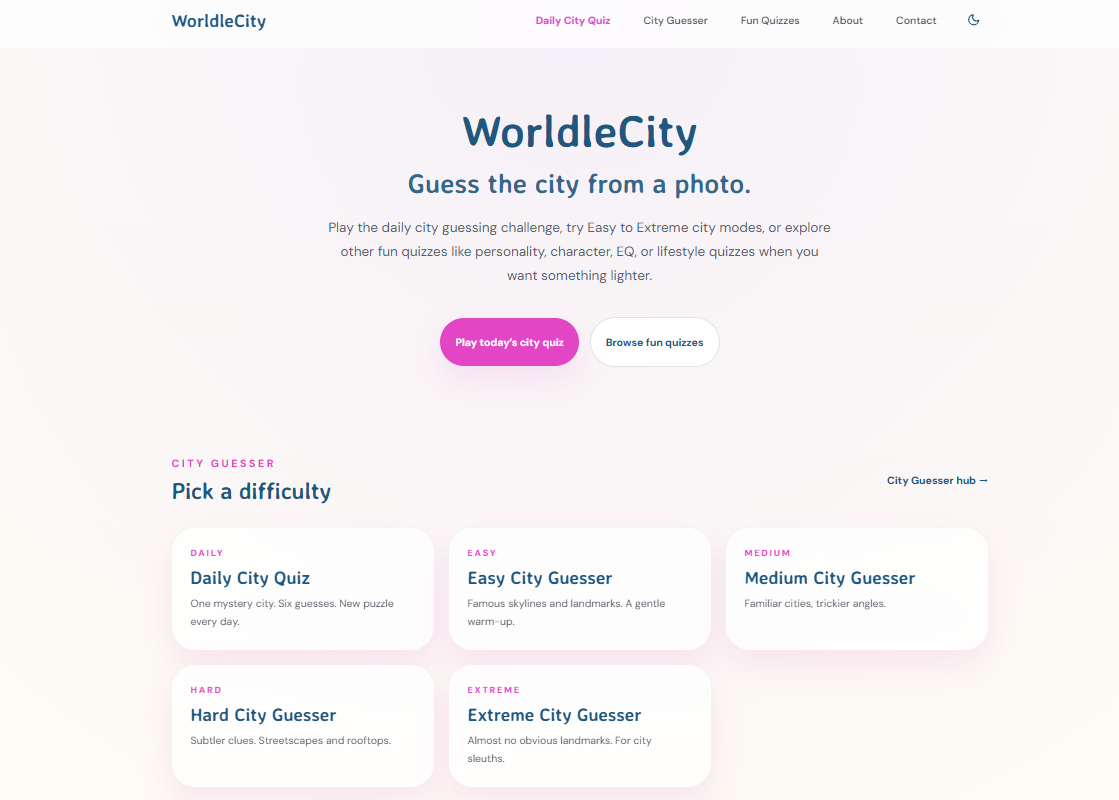
Each day, Worldlecity gives you a photograph of a mystery city and six attempts to identify it, with feedback on your proximity and direction after every guess. That immediate feedback loop mirrors exactly what cognitive research recommends: active retrieval followed by corrective information. Beyond the daily city guessing game, Worldlecity offers geography quizzes across four difficulty modes and a range of personality and lifestyle quizzes, all without requiring an account. You get the educational value of spaced, low-stakes quizzing wrapped in something you actually want to open every day. That combination is harder to find than it sounds.
FAQ
Why are quizzes better than rereading for learning?
Quizzes force active retrieval, which strengthens memory traces more than passive review. Research shows self-testing produces 61% retention after one week versus 40% for rereading.
What is the testing effect in education?
The testing effect is the well-documented finding that retrieving information from memory during a quiz improves long-term retention more than restudying the same material.
How long should a quiz session be?
Optimal quiz sessions run 20–25 minutes with 10–20 questions. Longer sessions reduce encoding efficiency as cognitive fatigue sets in.
What makes a quiz low-stakes and why does it matter?
A low-stakes quiz allows multiple attempts, carries minimal grade weight, and frames errors as feedback rather than failure. This format increases learner engagement and produces stronger long-term retention than single-attempt high-stakes tests.
How do spaced quizzes improve retention?
Spacing quizzes across days or weeks forces mild forgetting before each retrieval attempt, which deepens the memory trace. A meta-analysis of over 800 experiments found spaced practice produces 10–30% better long-term learning than massed study.