Paris Landmarks: the Iconic Buildings You Must See
Discover the most famous buildings and landmarks of Paris! Explore iconic sites like the Eiffel Tower and Louvre to enhance your visit.
- Paris architecture highlights
- what to visit in Paris
- must-see landmarks in Paris
- famous monuments in Paris
- Most famous buildings and landmarks of Paris
- historical sites in Paris
On this page
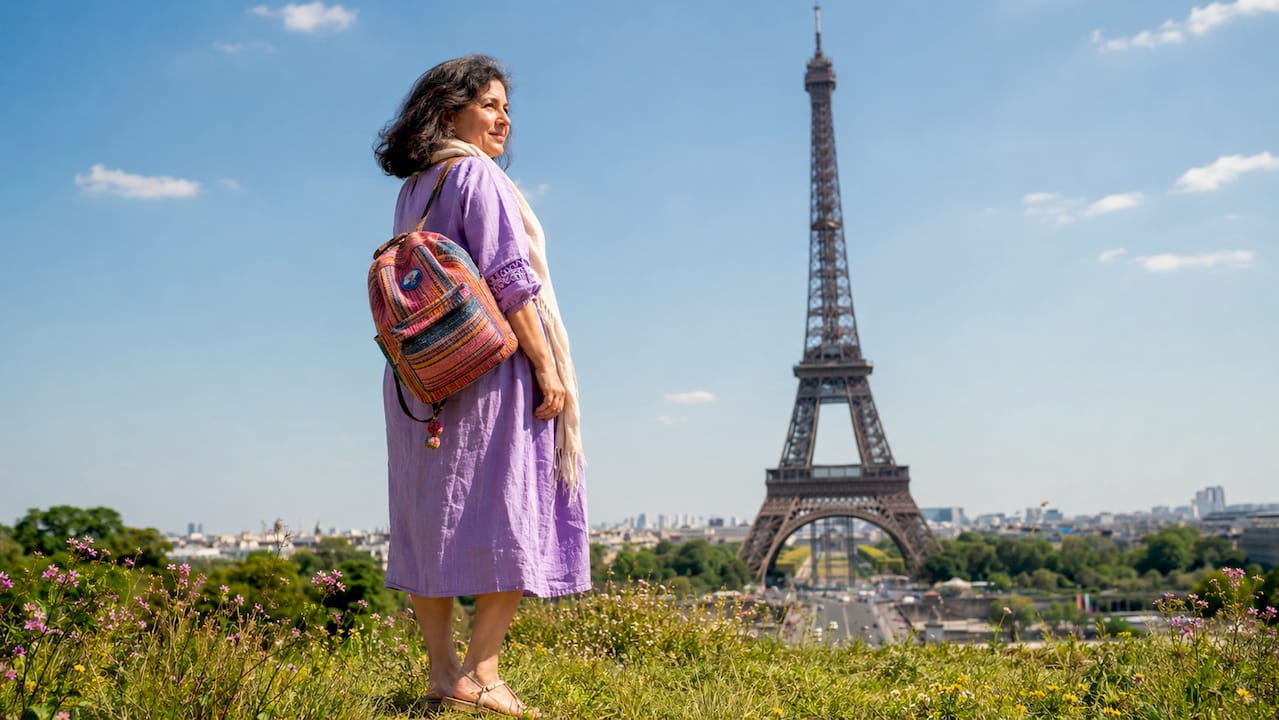
The most famous buildings and landmarks of Paris are defined as the architectural and cultural monuments that have shaped the city’s identity across centuries. The Eiffel Tower, Notre-Dame Cathedral, the Arc de Triomphe, and the Louvre Museum sit at the top of that list. Together, they represent Gothic craftsmanship, Napoleonic ambition, industrial engineering, and one of the world’s greatest art collections, all within a few kilometers of each other.
Paris is the world’s most-visited city, and its landmarks are the main reason. Whether you’re planning your first trip or your fifth, knowing what each structure offers and how to visit it without burning out makes the difference between a rushed checklist and a genuinely memorable experience.
What are the most famous buildings and landmarks of Paris?
Paris landmarks are the iconic Parisian structures that define the city’s skyline and cultural story. Here’s a quick breakdown of the heavyweights.
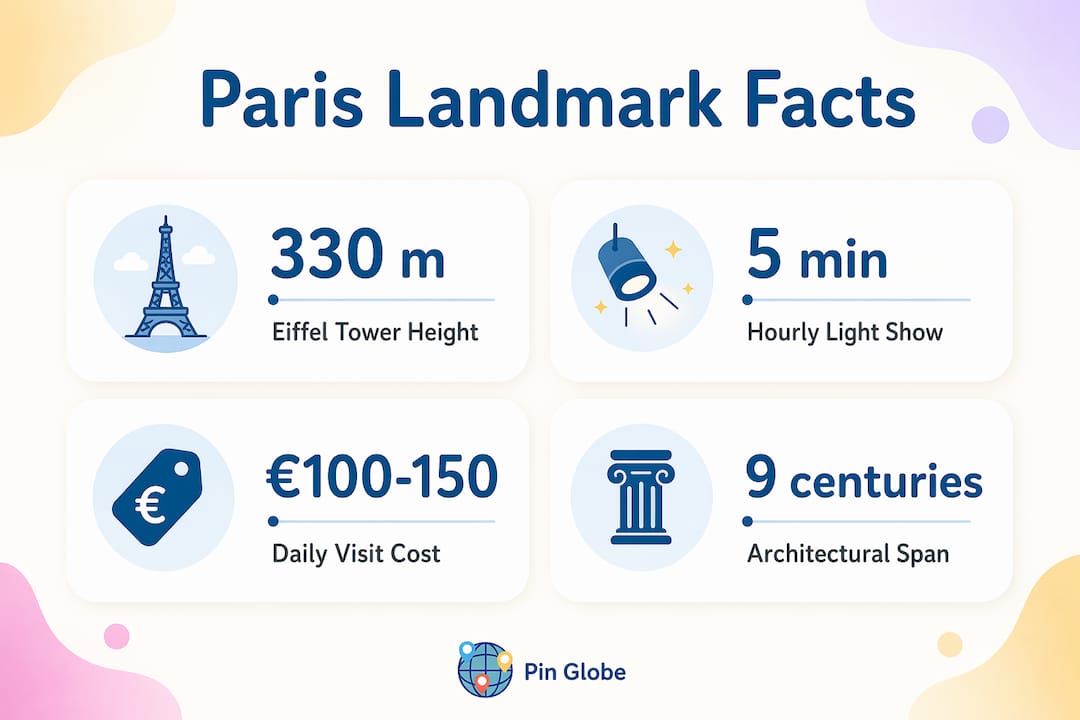
- Eiffel Tower: At 330 meters tall, it’s the tallest structure in Paris and the city’s most recognized symbol worldwide. Gustave Eiffel built it as a temporary exhibit for the 1889 World’s Fair. It stayed.
- Notre-Dame Cathedral: A Gothic masterpiece on the Île de la Cité. After the devastating 2019 fire, Notre-Dame fully reopened in 2026 following a meticulous restoration. The rebuilt spire and interior are stunning.
- Arc de Triomphe: Standing 49.54 meters tall at the center of twelve radiating avenues, it honors Napoleon’s military victories. The view from the top, down the Champs-Élysées, is one of the best in the city.
- Louvre Museum: The world’s largest art museum at 360,000 square meters, housing over 35,000 artworks. The Mona Lisa lives here, but so does an overwhelming amount of ancient Egyptian, Greek, and Roman art.
- Sacré-Coeur Basilica: Perched on the hill of Montmartre, it offers a panoramic view over the city and a Romano-Byzantine architectural style that stands apart from everything else in Paris.
- Sainte-Chapelle: Often overshadowed by Notre-Dame, this chapel on the Île de la Cité contains some of the finest medieval stained glass in Europe.
- Les Invalides: A French Baroque complex that houses Napoleon’s tomb and the Musée de l’Armée. The golden dome is visible from across the city.
| Landmark | Height / Size | Key Feature |
|---|---|---|
| Eiffel Tower | 330 meters | Tallest structure in Paris |
| Arc de Triomphe | 49.54 meters | 12-avenue convergence point |
| Louvre Museum | 360,000 m² | World’s largest art museum |
| Notre-Dame Cathedral | 69-meter towers | Restored Gothic masterpiece |
| Sacré-Coeur | 83 meters | Panoramic Montmartre views |
How do architectural styles shape Paris’s famous monuments?
Paris architecture highlights span roughly nine centuries, and the contrast between styles is part of what makes the city so visually rich. You’re not just looking at old buildings. You’re reading a timeline of European history carved in stone and iron.
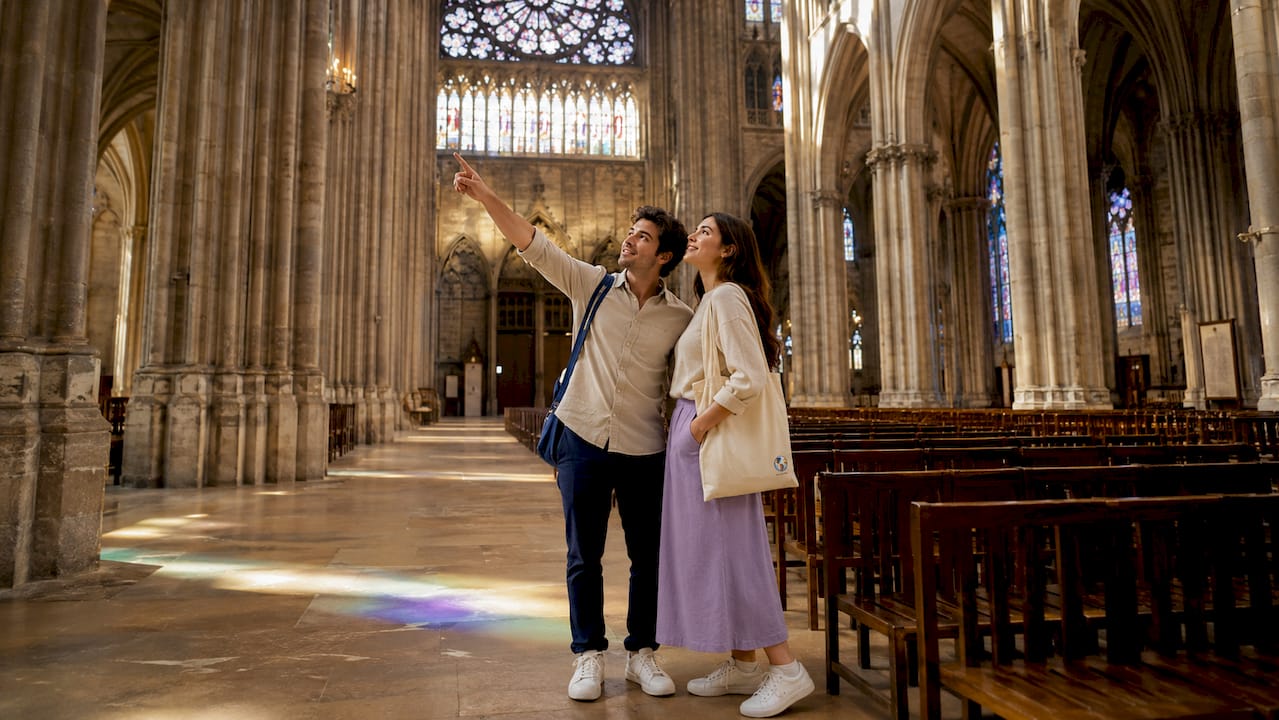
Gothic architecture defines Notre-Dame and Sainte-Chapelle. Notre-Dame’s flying buttresses, pointed arches, and gargoyles are textbook examples of the style. Sainte-Chapelle goes further. Its stained glass windows reach 15 meters high and cover nearly every wall surface, creating a light effect that feels more like a kaleidoscope than a church.
French Baroque shows up in Les Invalides, commissioned by Louis XIV in 1670. The symmetry, the grand dome, and the formal courtyard reflect the Sun King’s obsession with order and spectacle. The Panthéon, where French cultural heroes like Voltaire and Marie Curie are buried, carries similar classical weight. The Apotheosis of Napoleon fresco inside illustrates how Parisian landmarks evolved as political symbols across French history.
Industrial engineering gave Paris the Eiffel Tower, which the public initially hated. Critics called it an eyesore and an iron monstrosity. That reaction wasn’t unusual. Many Paris landmarks faced backlash before becoming beloved icons, a pattern that suggests the city’s relationship with bold architecture is always complicated at first.
Modern contrast arrives with I.M. Pei’s glass pyramid at the Louvre, completed in 1989. It sits in the center of a Renaissance palace and somehow works. The Paris 2024 Olympic Cauldron in the Jardin des Tuileries is the newest addition to this tradition. It defied its temporary status and now stands as a permanent modern landmark with atmospheric lighting at dusk.
Pro Tip: Visit Sainte-Chapelle on a sunny morning. The stained glass windows face west and east, so morning light hits the lower chapel first, then floods the upper chapel by mid-morning. Afternoon visits miss the best of it.
Which landmarks offer the best views and visitor experiences?
Not every famous monument in Paris gives you a great view. Some are better experienced from the outside. Knowing the difference saves you time and money.
- Eiffel Tower: The views from the second and third floors are genuinely spectacular, but the lines are brutal without advance booking. Book tickets online weeks ahead, especially in summer. The third floor, at 276 meters, gives you a clear 360-degree panorama on a good day.
- Montparnasse Tower: This is the only vantage point in Paris where you can photograph the Eiffel Tower as part of the city skyline. From the Eiffel Tower itself, you obviously can’t see it. The Montparnasse Tower’s €600 million renovation in 2026 has significantly improved the experience.
- Sacré-Coeur: The steps leading up to the basilica in Montmartre offer a free, wide-angle view over Paris. You don’t need to go inside to enjoy the best part of this visit.
- Trocadéro Gardens: The classic postcard shot of the Eiffel Tower is taken from here. It’s free, it’s open all day, and the symmetry of the gardens framing the tower is hard to beat.
- Seine River cruises: Companies like Bateaux Mouches and Vedettes du Pont-Neuf run evening cruises that pass Notre-Dame, the Louvre, and the Eiffel Tower in one loop. The golden-hour light on the stone facades is worth the ticket price alone.
Pro Tip: The Eiffel Tower lights up every hour after dark with a sparkling display that lasts five minutes. Position yourself at Trocadéro or Pont d’Iéna just before the hour for the full effect.
How to plan your visit to Paris landmarks without burning out
Seeing too many historical sites in Paris in one day is the fastest way to stop enjoying them. The best approach is a maximum of two major landmarks per day, paired with slower walks and good food in between.
Paris landmarks cluster geographically, which makes smart grouping easy.
Cluster 1: Left Bank and river. Pair the Eiffel Tower with a walk through Trocadéro Gardens and a Seine cruise in the evening. This covers the tower, the best photo spot, and a waterfront view of the city in one relaxed day.
Cluster 2: Île de la Cité and the Louvre. Notre-Dame and Sainte-Chapelle are a five-minute walk apart on the same island. Add the Louvre in the afternoon. That’s three must-see landmarks in Paris within easy walking distance, but give yourself a full day. The Louvre alone can swallow four hours.
Cluster 3: Montmartre. Sacré-Coeur, the artists’ square at Place du Tertre, and the surrounding streets form a half-day experience with real neighborhood atmosphere. This one is less about ticking boxes and more about feeling what Paris actually feels like away from the tourist core.
Budgeting matters too. Plan for roughly €100–€150 per day to cover major admissions, meals, and transport. Some landmarks, like Sacré-Coeur and the Arc de Triomphe’s exterior, are free to approach. The Louvre and the Eiffel Tower are the biggest ticket items.
| Cluster | Landmarks Included | Best Time |
|---|---|---|
| Left Bank and river | Eiffel Tower, Trocadéro, Seine cruise | Full day, evening cruise |
| Île de la Cité and Louvre | Notre-Dame, Sainte-Chapelle, Louvre | Full day, morning start |
| Montmartre | Sacré-Coeur, Place du Tertre | Half day, late morning |
| Champs-Élysées area | Arc de Triomphe, Grand Palais | Half day, afternoon |
Prioritizing landmarks by your own goals makes the trip sharper. First-timers benefit from visual icons like the Eiffel Tower and Arc de Triomphe. Culture seekers get more from Sainte-Chapelle, the Panthéon, and Les Invalides, where the historical layers run deeper.
Key takeaways
Paris’s most famous landmarks reward visitors who plan by cluster, pace by depth, and book major tickets weeks in advance.
| Point | Details |
|---|---|
| Book tickets early | Reserve Eiffel Tower and Louvre tickets online weeks ahead to avoid long lines. |
| Cluster your visits | Group Notre-Dame, Sainte-Chapelle, and the Louvre together to save time and energy. |
| Match landmarks to your goals | First-timers should prioritize visual icons; culture seekers get more from Sainte-Chapelle and the Panthéon. |
| Budget realistically | Plan for €100–€150 per day to cover admissions, meals, and transport comfortably. |
| Use Montparnasse for skyline shots | The Montparnasse Tower is the only spot where you can photograph the Eiffel Tower in the Paris skyline. |
Test your Paris knowledge with Worldlecity
You’ve read the guide. Now see how much of it actually stuck.
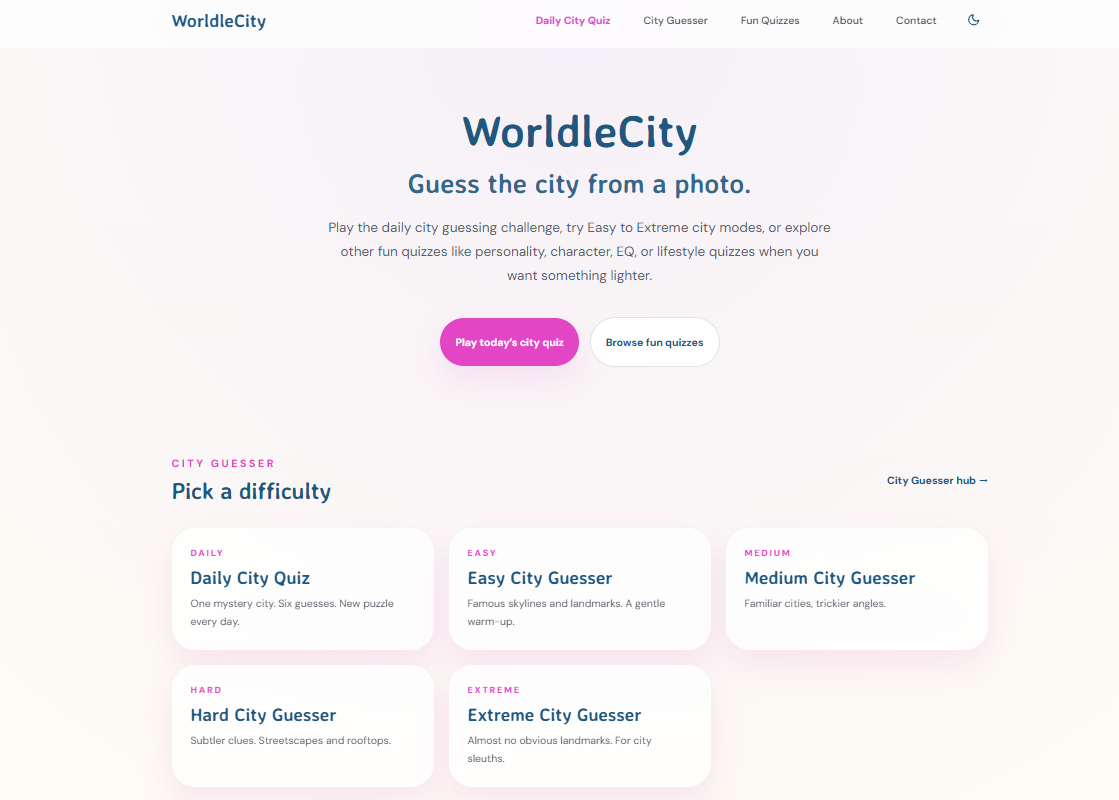
Worldlecity turns geography into a daily challenge you’ll actually want to come back to. Each day, a mystery city photo drops and you get six guesses to identify it, with directional clues after each attempt. Paris shows up regularly, and knowing your Sacré-Coeur from your Sainte-Chapelle gives you a real edge. Beyond the daily game, Worldlecity’s city guesser quizzes run across four difficulty modes, so you can go from casual explorer to genuine geography nerd at your own pace. No account needed. Just play the daily game and find out how well you really know the world’s most-visited city.
FAQ
What is the most visited landmark in Paris?
The Eiffel Tower is Paris’s most visited paid monument, drawing millions of visitors annually. At 330 meters, it remains the tallest structure in the city and its most recognized symbol worldwide.
Is Notre-Dame Cathedral open to visitors in 2026?
Yes. Notre-Dame Cathedral fully reopened to the public in 2026 following its restoration after the 2019 fire. The rebuilt interior and restored spire are now accessible again.
What is the best spot to photograph the Eiffel Tower?
Trocadéro Gardens offer the classic symmetrical view of the Eiffel Tower and are free to visit. For a full skyline shot that includes the tower, the Montparnasse Tower observation deck is the only option in the city.
How much does it cost to visit Paris landmarks per day?
Budget roughly €100–€150 per day to cover major admissions, dining, and transport in Paris. Some landmarks, like Sacré-Coeur, are free to approach, while the Louvre and Eiffel Tower have the largest ticket expenses.
Which Paris landmark is best for architecture lovers?
Sainte-Chapelle is the standout for architecture enthusiasts. Its 15-meter-high stained glass windows represent one of the finest examples of Rayonnant Gothic architecture in Europe, and it’s far less crowded than Notre-Dame.