The Role of Community Sharing in Games: A Quiz Player's Guide
Discover the role of community sharing in games to boost learning, social skills, and motivation. Transform your quiz experience today!
- community collaboration in games
- importance of sharing in gaming
- benefits of game sharing communities
- impact of community in gaming
- how community affects game experience
- role of community sharing in games
On this page

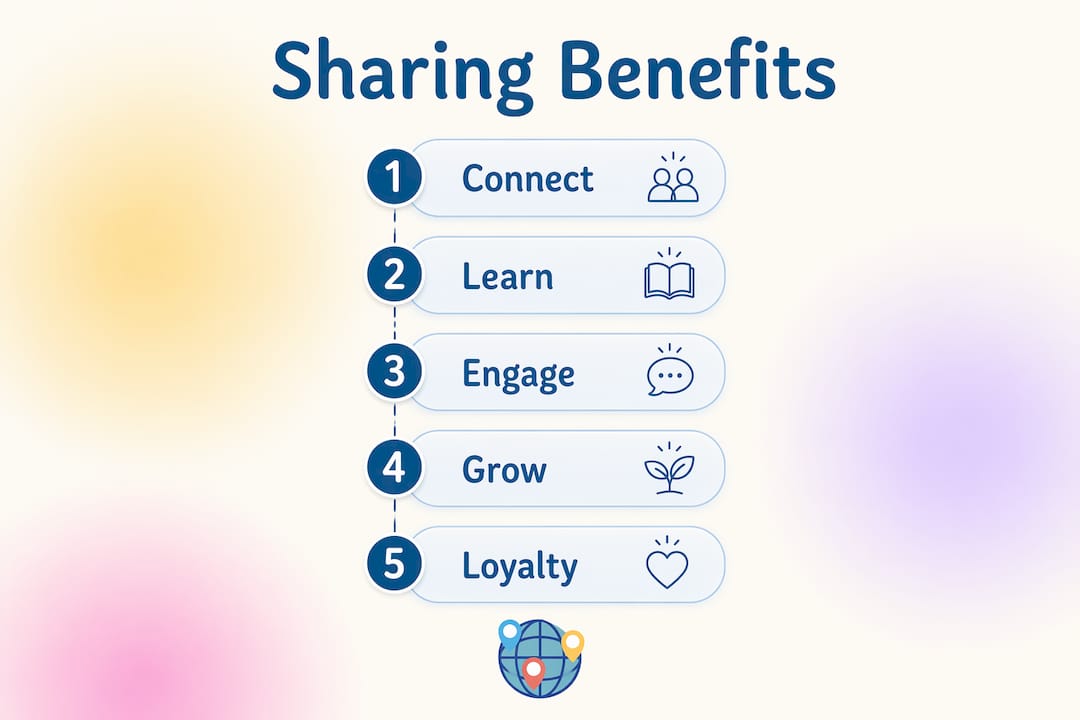
Sharing your quiz results with other players directly increases learning, belonging, and replay value. A systematic review of 15,451 players found predominantly positive impacts on social capital, friendship, and social skills when players participate in online gaming communities. A recent study on digital trust confirmed that active community engagement builds group identity and trust through a chain of social reinforcement. Here’s what you get when you share:
- Quick feedback that corrects your geography gaps faster than solo play
- Social bonding with players who share your curiosity
- Motivation to play again because someone challenged you or cheered you on
Why community sharing matters in casual geography-quiz games
When you post your result, you’re not just showing off. You’re turning a private “I had no idea that was Tbilisi” moment into a conversation. That feedback loop, post then react then learn, is what makes geography stick.
The 15,451-player systematic review found that community membership consistently improved friendship formation and social capital, especially when games involved cooperation and learning to achieve objectives. Geography quizzes fit that profile almost perfectly.
There’s a business angle too. An analysis of 45 games found that community co-creation and modding activity correlates with higher base-product sales. Developers who build sharing features aren’t being generous; they’re protecting retention. That’s why platforms invest in share dialogs, result cards, and community feeds.
The social rewards are real on both sides of the screen.
How sharing converts a single guess into learning and loyalty
The immediate learning loop
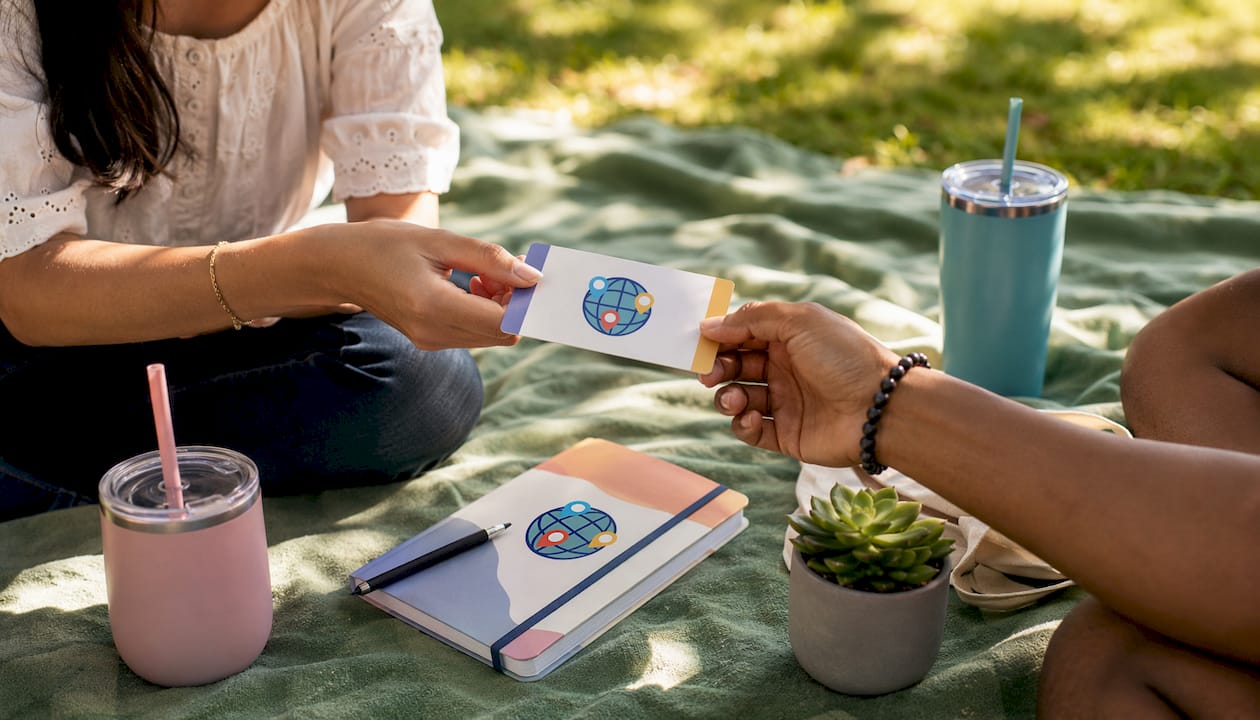
You post a screenshot. Someone comments “that’s actually in Georgia, not Russia.” You look it up. You never miss it again. That cycle, share, receive correction, retain, is faster than any flashcard.
Identity and ritual
Shared language builds belonging. Inside jokes, recurring caption formats, and weekly challenge rituals create what researchers call an imagined community — a sense of “we” that transcends geography. Players who don’t know each other’s real names still feel connected through shared references and game-specific shorthand.
The digital trust pathway
Research published in Frontiers in Psychology describes a chain mediation model: rich interactions increase perceived media realism, which strengthens group identity, which builds trust. In plain terms, the more you engage authentically, the more the community feels real and worth returning to.
Micro-mechanics that make it work
- Liking and reacting to results
- Commenting with a tip or a rival guess
- Screenshot-and-caption posts on Discord, Reddit, X, or TikTok
- Tagging a friend with “bet you can’t beat this”
Player participation typically evolves in stages: passive signals first (likes), then active contributions (tips, screenshots), and eventually co-creation where players shape norms and challenges.
Pro Tip: When you post, end your caption with a question: “Where did you place your first guess?” Invitations outperform announcements every time.
What the research actually says
| Study | Sample / Scope | Key finding |
|---|---|---|
| Sage systematic review | 15,451 players, 24 articles | Positive impacts on social capital, friendship, and social skills |
| Frontiers in Psychology (2026) | Chain mediation model | Rich interaction builds group identity and digital trust |
| ACM modding analysis | 45 games | Community co-creation correlates with higher base-product sales |
| ScienceDirect toxicity study | Two online surveys | Perceived toxicity within gaming communities correlates with lower social capital and increased loneliness |
Key numbers worth remembering:
- 15,451 players across 24 studies confirm social benefits are not anecdotal
- 45 games show sharing and co-creation have measurable commercial impact
- Toxicity correlates with lower social capital and higher loneliness, making moderation a player-welfare issue, not just a policy box to check
Multiplayer game research also links well-designed social features to brand intimacy and self-awareness, two outcomes that matter to casual players who play for fun and personal growth, not competition.
Where sharing goes wrong and how to avoid it
Sharing has a shadow side. Here’s what to watch for:
- Toxic comments that shame wrong answers instead of helping
- Privacy oversharing — posting a screenshot that includes your location, device name, or identifiable background details
- Social comparison spiral — checking scores obsessively and feeling bad instead of curious
- Echo chambers — only engaging with players who always agree with you
Practical mitigations:
- Crop screenshots to show only the result card, not your full screen
- Use private Discord servers or friend-only Reddit posts when you want low-stakes sharing
- Block and report toxic comments immediately; don’t debate them
- Follow players who correct you kindly, not players who mock you
Pro Tip: Before posting any screenshot, ask: “Does this image show anything beyond my score and the city name?” If yes, crop it. Location clues in background maps or browser tabs are easy to miss.
A common scenario: you post a result card that still shows the map zoomed in on your home region. You didn’t mean to share your location. The crop step takes three seconds and removes the risk entirely.
Practical tips for sharing your quiz results well
Here’s a repeatable process for a share-ready post:
- Finish the quiz and screenshot only the result card.
- Crop to remove anything beyond score, city name, and attempt count.
- Pick a caption that invites a response (see templates below).
- Choose your platform based on who you want to reach.
- Post and reply to the first two comments within an hour to seed conversation.
Caption templates you can copy
- “6 attempts and I still thought this was somewhere in Eastern Europe. Anyone else?”
- “Got it in 2! Hint: I visited this city last year. Your turn.”
- “Day 47 streak. Today nearly broke me. Where did you start your guesses?”
- “Zero clue. Zero shame. What city stumped you this week?”
- “Finally got one right on the first try. Geography is healing.”
Where to post
- Discord — best for tight friend groups and servers with shared geography interests; threads stay organized and searchable
- Reddit — good for wider reach and longer discussions; geography subreddits welcome result posts
- X (Twitter) — fast, public, good for streaks and daily challenges; replies can get noisy
- TikTok — screen-record your guessing process for video content; understanding why short-form shares spread helps you frame the video for maximum engagement
- In-game feeds — lowest friction, most relevant audience; use when the platform supports it
Understanding how visual content spreads can also sharpen how you frame image-based result posts for platforms like TikTok and Reddit. Check out popular quiz game mechanics to understand what makes geography quizzes shareable by design.
Design and moderation tips for game creators
If you’re building or managing a geography-quiz community, these practices make the biggest difference.
- Auto-redact precise coordinates from share templates so players can’t accidentally expose location data
- Offer reaction types beyond a generic like — a “tip” reaction signals helpful intent and changes the tone of a thread
- Seed rituals early: a weekly “hardest city of the week” thread gives players something to rally around before organic culture forms
- Track moderation signals: toxicity report rate, comment-response rate, and new-member retention in the first 48 hours tell you more than total member count
For platform integration, Discord’s role-assignment features let you automatically grant roles based on in-game achievements, turning a “100-day streak” into a visible community identity marker. That kind of persistent identity keeps players engaged between sessions.
Informal channels like guild chats and Discord threads are where most player knowledge actually lives. Build your community around those spaces, not just announcements.
Pro Tip: Assign a “local expert” role to players who consistently give helpful corrections. It costs nothing and creates a visible incentive for constructive behavior.
Quick checklist: is this community healthy or heading toxic?
Green signals (keep posting here)
- Corrections come with context, not mockery
- New members get a welcome or a tip within 24 hours
- Moderators respond to reports within a day
Amber signals (proceed with caution)
- Most comments are reactions, very few are helpful replies
- New-member questions go unanswered for days
- Occasional sharp comments that don’t get called out
Red signals (step back or report)
- Wrong answers get mocked regularly
- Moderators are absent or dismissive
- Harassment of specific players goes unaddressed
What to do: Green means engage freely. Amber means post selectively and watch the response. Red means report to platform moderators, archive harmful threads, and find a different community.
Worldlecity: how one geography-quiz platform approaches sharing
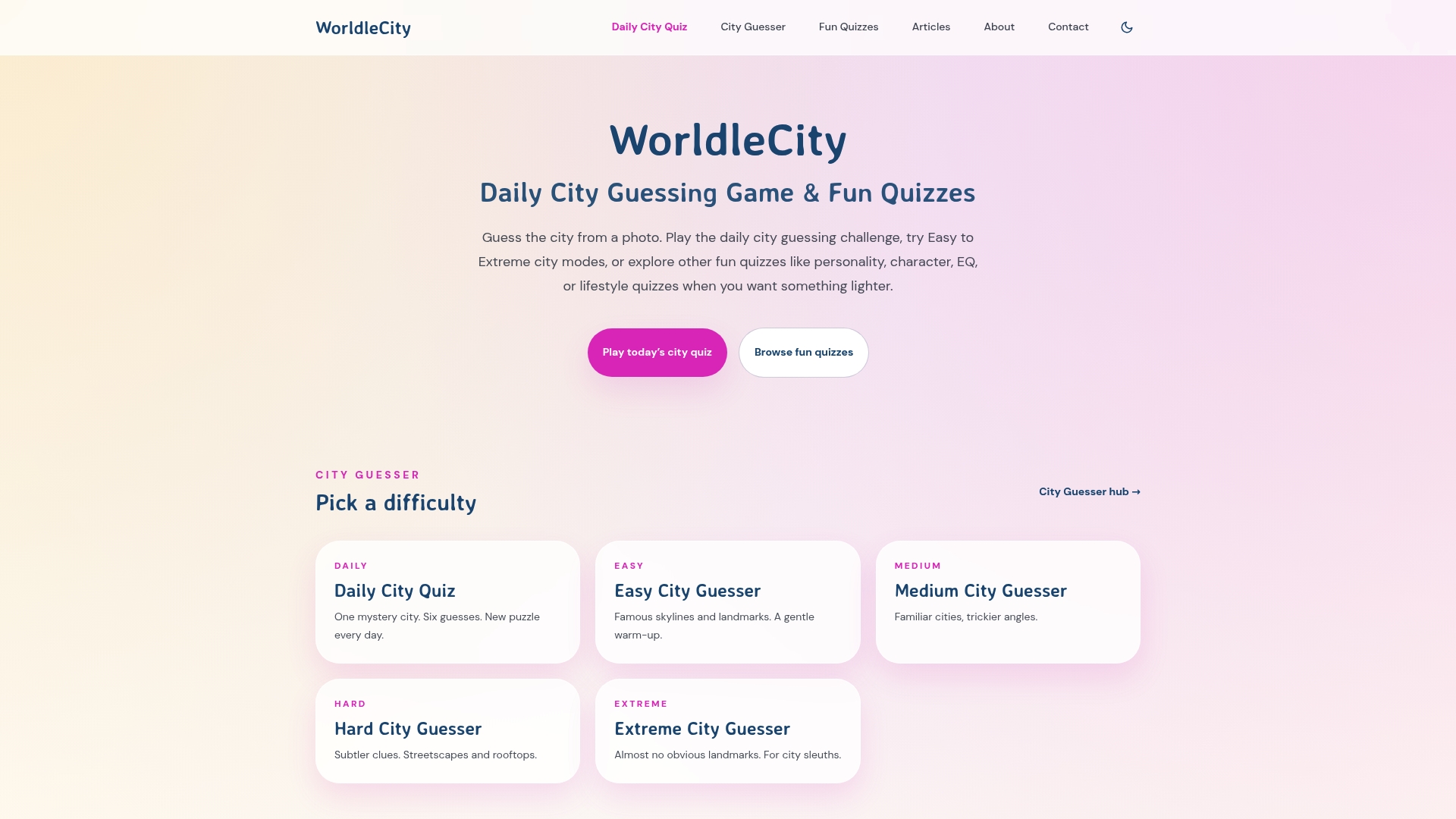
Worldlecity is built around exactly the kind of sharing this article describes. Each day, players get a photograph of a mystery city and six attempts to identify it, with proximity and direction feedback after each guess. That structure generates natural share moments: “I was off by 3,000 miles on attempt one” is a story, not just a score.
Key features that support safe, social play:
- Daily city photo challenges that give the whole community the same puzzle at the same time
- Four difficulty modes in the city guesser quizzes, so players at any level have something to share
- No account registration required, which removes a friction point for casual sharers
- Quizzes on personality and lifestyle alongside geography, giving players more to talk about
The daily challenge format creates a shared ritual — everyone’s working the same puzzle, which means your result post lands in a conversation already in progress. That’s the imagined-community effect in practice.
Pro Tip: Try the daily challenge on Worldlecity, screenshot your result card or use the built-in share button, and use one of the caption templates above. It takes under two minutes and gives you an instant conversation starter.
Key takeaways
Community sharing in games builds social capital, accelerates learning, and increases replay value — and the research behind that claim covers tens of thousands of players.
| Point | Details |
|---|---|
| Sharing speeds up learning | Post-and-feedback loops correct geography gaps faster than solo play. |
| Social benefits are well-documented | A review of 15,451 players found positive impacts on friendship, social skills, and social capital. |
| Toxicity is a real risk | Perceived toxicity within gaming communities correlates with lower social capital and increased loneliness — moderation protects the whole community. |
| Safe sharing takes seconds | Crop to the result card, add an inviting question, and choose the right platform for your audience. |
| Worldlecity is built for this | Daily challenges, multiple difficulty modes, and no account required make it a low-friction place to start sharing. |
Worldlecity is a great place to try this out
Geography quizzes are more fun when someone else is guessing alongside you. Worldlecity gives you a fresh city photo every day, six guesses, and instant feedback on how close you got. No account needed. No pressure. Just a puzzle worth talking about.
The daily challenge format means your result is always timely. Post it on Discord, drop it in a group chat, or caption it for Reddit. Use the templates above and see what comes back. Ready to try it? Head to Worldlecity and start today’s challenge.
FAQ
What is the role of community sharing in games?
Community sharing turns solo play into a social feedback loop that improves learning, builds friendships, and increases how often players return. A systematic review of 15,451 players confirmed predominantly positive social outcomes from gaming community participation.
Does sharing quiz results actually help you learn?
Yes. When other players correct your guesses or explain why a city looks the way it does, you retain that information far better than if you’d simply moved on. The feedback loop is the mechanism.
How does toxicity affect a gaming community?
Perceived toxicity correlates with lower social capital and higher loneliness. Players in toxic communities derive fewer social benefits and are more likely to disengage entirely.
Which platforms work best for sharing geography-quiz results?
Discord works best for close friend groups and organized servers; Reddit suits wider discussion; X is good for streaks and quick reactions; TikTok works well for video walkthroughs of your guessing process.
Where can I try sharing geography-quiz results safely?
Worldlecity offers daily city photo challenges with no account required, making it a low-friction starting point for social sharing with built-in conversation hooks.
Useful sources and further reading
Evidence
- Social Networking or Social Isolation? Systematic Review (15,451 players) — Sage Journals
- Perceived toxicity, social capital, and loneliness in gaming communities — ScienceDirect
- Positive effects of multiplayer games on players and companies — Nature
Mechanisms
- Digital trust via perceived media realism and group identity — Frontiers in Psychology
- Imagined communities and identity in gaming — LJMU Research Online
- Stages of community participation and contribution — Atlantis Press
Design best practices
- Community co-creation and modding: value and sales impact across 45 games — ACM Digital Library
- Informal knowledge in player communities — Indiana University
- Discord developer docs: building community for your game — Discord