What Is a Rapid Fire Quiz? Your Complete Format Guide
Discover what is a rapid fire quiz. Learn how this fast-paced format energizes classrooms and meetings with quick, fun trivia!
- rapid fire quiz questions
- examples of rapid fire quizzes
- how to conduct a rapid fire quiz
- fast-paced quiz challenges
- what is a rapid fire quiz
- benefits of rapid fire quizzes
- rapid fire quiz definition
- what are rapid fire games
On this page
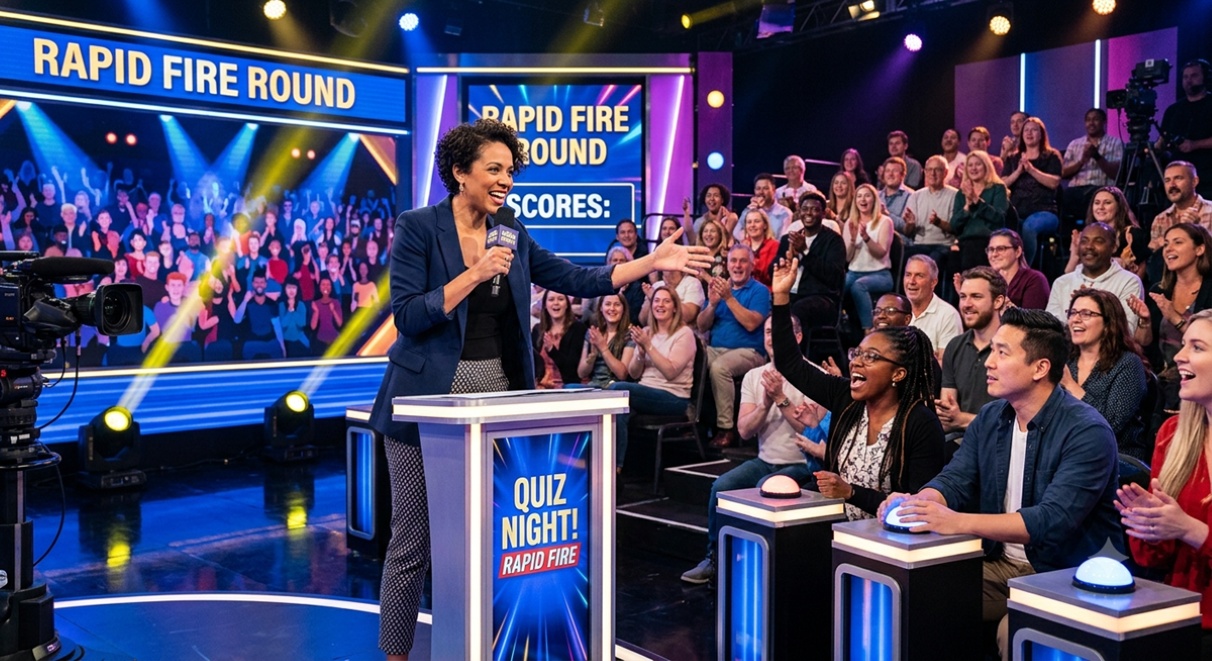
A rapid fire quiz is a fast-paced trivia format where players answer a series of short questions under a strict time limit, typically 5 to 8 seconds per question. The format tests both knowledge and reflexes at the same time. Unlike a standard pub quiz, where you have minutes to deliberate, a rapid-fire round strips away the thinking time and forces your gut to take over. That pressure is exactly what makes it so fun and so effective, whether you’re warming up a classroom or kicking off a team meeting.
The format usually runs 8 to 15 questions in a single round, with the whole session under 10 minutes. That brevity is a feature, not a limitation. Short rounds mean high energy from start to finish, with no dead air for attention to drift. You get in, you answer fast, and you feel the buzz of the clock the whole way through.
What is a rapid-fire quiz, exactly?
A rapid-fire quiz is defined as a structured question-and-answer activity where each answer window lasts no longer than a few seconds. The industry term you’ll sometimes see is “rapid fire questioning,” which covers both quiz games and facilitated group exercises. Both refer to the same core mechanic where speed is the constraint, brevity is the rule.
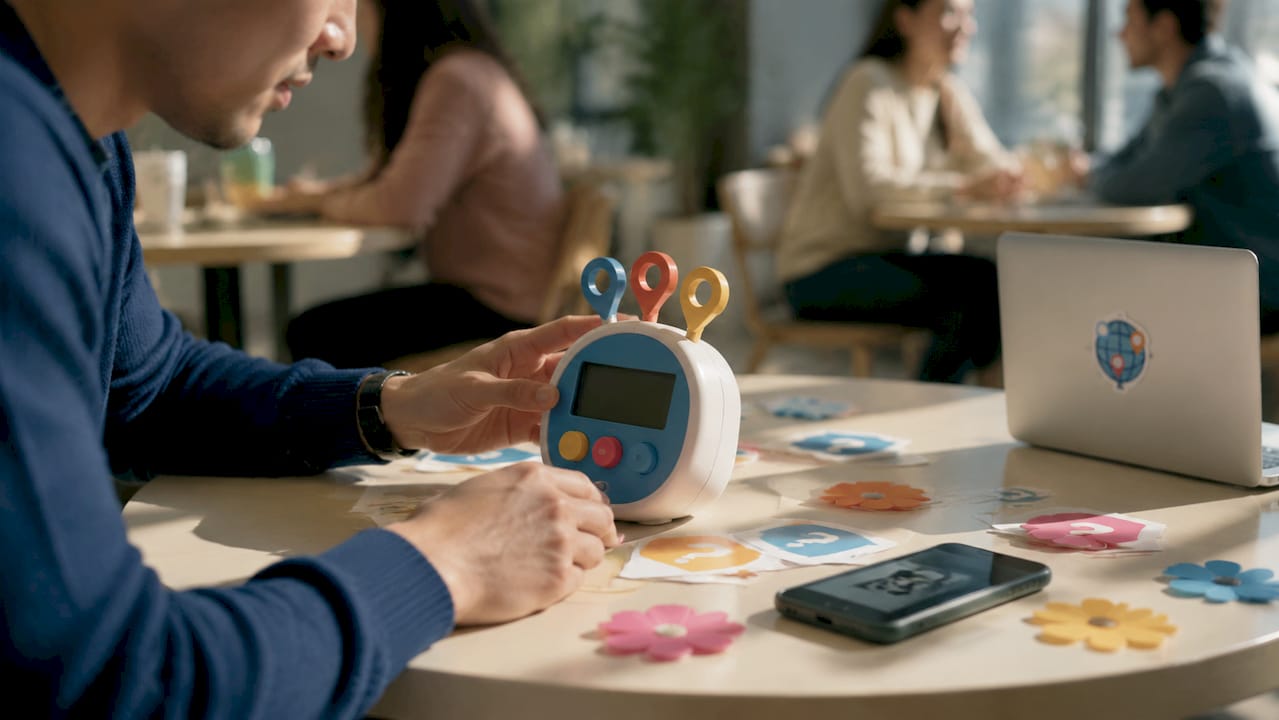
The time limit per question ranges from 5 to 10 seconds for beginners and drops to 5 seconds or less for advanced challenges. That range matters because it lets you tune the difficulty without changing a single question. Tighten the clock, and an easy question becomes genuinely hard. Loosen it slightly, and newcomers can still participate without freezing up.
Questions in this format favor single-word or short-phrase answers. “Name a country in South America.” “What color is a stop sign?” “True or false: the sun rises in the west.” These are the building blocks. Multi-part questions break the rhythm and kill the energy, so the best rapid fire rounds keep every question clean and direct.
How is a rapid fire quiz structured and run?
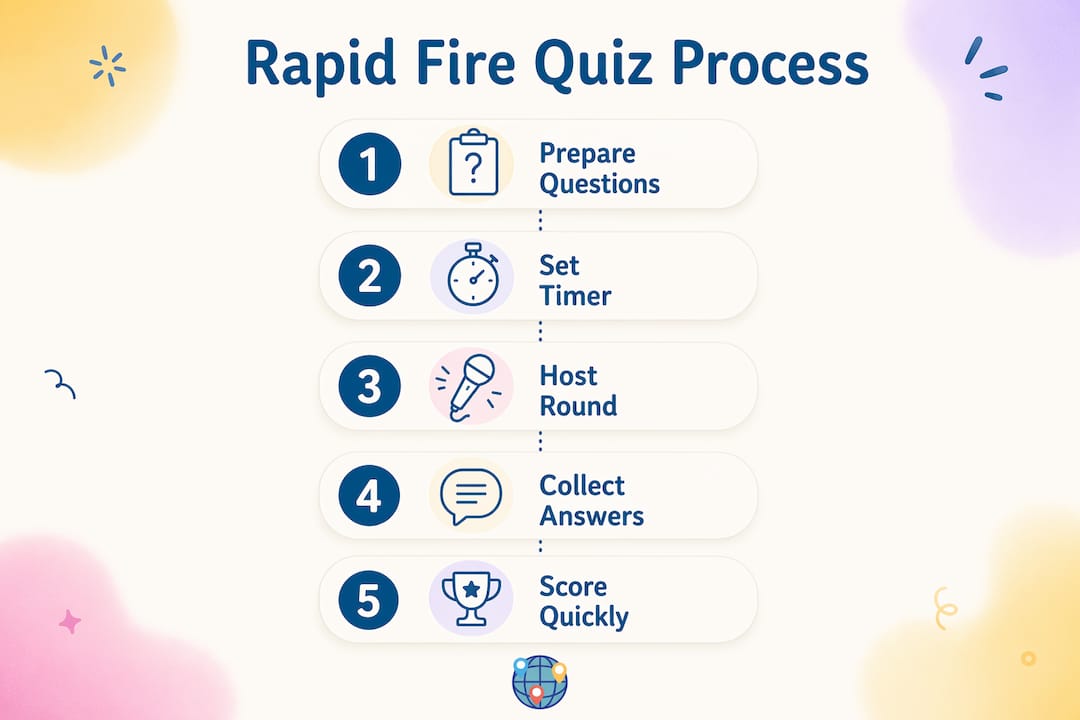
The structure of a rapid fire quiz is straightforward, but the execution takes some care. Here is how a well-run round typically flows:
- Set the time limit upfront. Tell players whether they have 5, 8, or 10 seconds per answer. Consistency matters more than the exact number.
- Display one question at a time. Never show the next question early. A visible countdown timer keeps everyone locked in and removes any ambiguity about when time is up.
- Give immediate feedback. Reveal the correct answer the moment time expires. Waiting kills momentum. Instant validation keeps the group engaged and moving.
- Keep the moderator active. The host is the engine of the round. They call questions, watch the clock, and cut off any answer that runs long.
- Limit the round to under 10 minutes. Longer sessions lose the energy spike that makes rapid fire quizzes work in the first place.
The moderator role deserves extra attention. A skilled host reads the room and adjusts pacing instinctively. If the group is flying through answers, they speed up. If someone starts explaining their answer, they interject immediately. That intervention is not rude. It is the job.
For digital sessions, apps and live polling tools automate the timing and scoring, which removes a lot of pressure from the host. Digital tools like chat floods also capture responses from every participant simultaneously, which eliminates the mic anxiety that can slow down vocal-only rounds.
Pro Tip: If you’re running a rapid-fire quiz in person, use a large visible timer on a screen rather than a phone stopwatch. When players can see the seconds ticking down, the tension builds naturally, and the energy in the room spikes without you having to do anything extra.
How does a rapid fire quiz differ from other quiz styles?
Most quiz formats reward careful thinking. Rapid fire quizzes reward the opposite. The format is built around spontaneous, authentic responses rather than deep knowledge recall. That shift changes everything about how the activity feels.
“Rapid fire questioning bypasses overthinking and rehearsed answers, leading to honest responses and greater group energy.” — Model Diplomat
Here is where rapid fire quizzes stand apart from other common formats:
- Vs. standard trivia rounds: Traditional trivia gives teams 30 to 60 seconds per question and rewards deliberation. Rapid fire rewards instinct.
- Vs. Icebreaker questions: Icebreakers often invite narrative answers (“Tell us about a time you…”). Rapid fire quizzes demand espresso-shot answers, one word or one phrase, nothing more.
- Vs. written quizzes: Written formats allow players to skip and return. Rapid fire is strictly linear. You answer now or you miss it.
- Vs. open discussion formats: Open discussions build on each answer. Rapid fire treats each question as its own closed event.
The reduced cognitive load is a genuine advantage. Simple, binary-choice or single-word questions work best under tight time limits because they remove the decision paralysis that complex questions create. Players who would freeze on a nuanced question often thrive when the answer is just “Paris” or “false.”
The format is also far more versatile than its name suggests. “Rapid fire” is not one specific game. It is a format that scales from a five-minute classroom warm-up to a 15-question corporate icebreaker, just by adjusting the clock and the difficulty of the questions.
What are the benefits of rapid fire quizzes?
Rapid fire quizzes deliver benefits that slower formats simply cannot replicate. The time pressure is the point. It forces focus, sharpens reflexes, and creates a shared energy that carries over into whatever comes next.
- Quick thinking gets a real workout. Answering under pressure trains your brain to retrieve information faster. Regular players notice the difference in everyday recall.
- Participation barriers drop. Short answers mean no one has to perform or speak at length. That inclusivity brings in players who would stay quiet in a discussion-based format.
- Authentic responses surface. Because there is no time to craft a clever answer, players give honest, unfiltered responses. That authenticity makes the activity feel real rather than rehearsed.
- Group energy spikes fast. A single well-run rapid fire round can shift the mood of an entire room. It is one of the most reliable tools for warming up a group before a meeting or event.
- Memory gets tested under pressure. The combination of time constraint and public accountability activates a different kind of recall than a quiet written test does.
Pro Tip: Use rapid fire quizzes at the start of a session rather than the end. The energy boost carries forward into the main activity. Saving it for last means you get the spike after the work is already done.
For classroom use, rapid fire rounds double as quick formative assessments. A teacher can run 10 questions in five minutes and immediately know which concepts need more time. No grading, no waiting. The feedback is instant for everyone in the room.
Tips for hosting or playing rapid fire quizzes well
Running a great rapid fire quiz is a skill. These practices separate a flat round from one people talk about afterward.
Keep the pace strict
Hosts must cut off long answers immediately to preserve the format’s energy. This is the single most common mistake new moderators make. They let one player elaborate, the pace drops, and the round loses its charge. A simple “time!” or a buzzer sound is all you need. No apology required.
Choose questions that fit the format
Complex, multi-part questions break rapid fire rounds. The best questions have one clear, short answer. Avoid questions that require context or explanation. “What is the capital of Japan?” works perfectly. “Explain the main causes of World War I” does not belong anywhere near a rapid fire round.
Here is a quick comparison of question types and their fit for the format:
| Question type | Rapid fire fit | Why |
|---|---|---|
| Single-word answer | Excellent | Fast to answer, no ambiguity |
| True or false | Excellent | Binary choice, zero cognitive load |
| Short phrase answer | Good | Slightly more recall, still quick |
| Multiple choice (read aloud) | Moderate | Works if options are short |
| Open-ended or narrative | Poor | Breaks pace and invites long answers |
| Multi-part question | Poor | Causes confusion and delays |
Use timers and instant feedback
A visible countdown timer is non-negotiable for in-person rounds. For remote sessions, live polling tools handle timing and scoring automatically, and they let every player respond at once. That simultaneous input removes the awkward silence of waiting for one person to answer out loud.
Match difficulty to your audience
A rapid fire quiz for geography enthusiasts hits differently than one for a general office party. Calibrate question difficulty so that most players can answer most questions. If the group is consistently stumped, the energy collapses. If the questions are too easy, the challenge disappears. Check out quiz night planning tips to find topic categories that work across different audiences.
Practice your own speed
If you want to get better at rapid fire quizzes as a player, practice retrieving facts quickly. Learning quiz patterns helps you recognize question structures and answer faster without second-guessing yourself. Speed comes from familiarity, not just raw knowledge.
Worldlecity is built for players who like it fast
Rapid fire quizzes thrive when the format is tight and the feedback is instant. Worldlecity delivers exactly that.
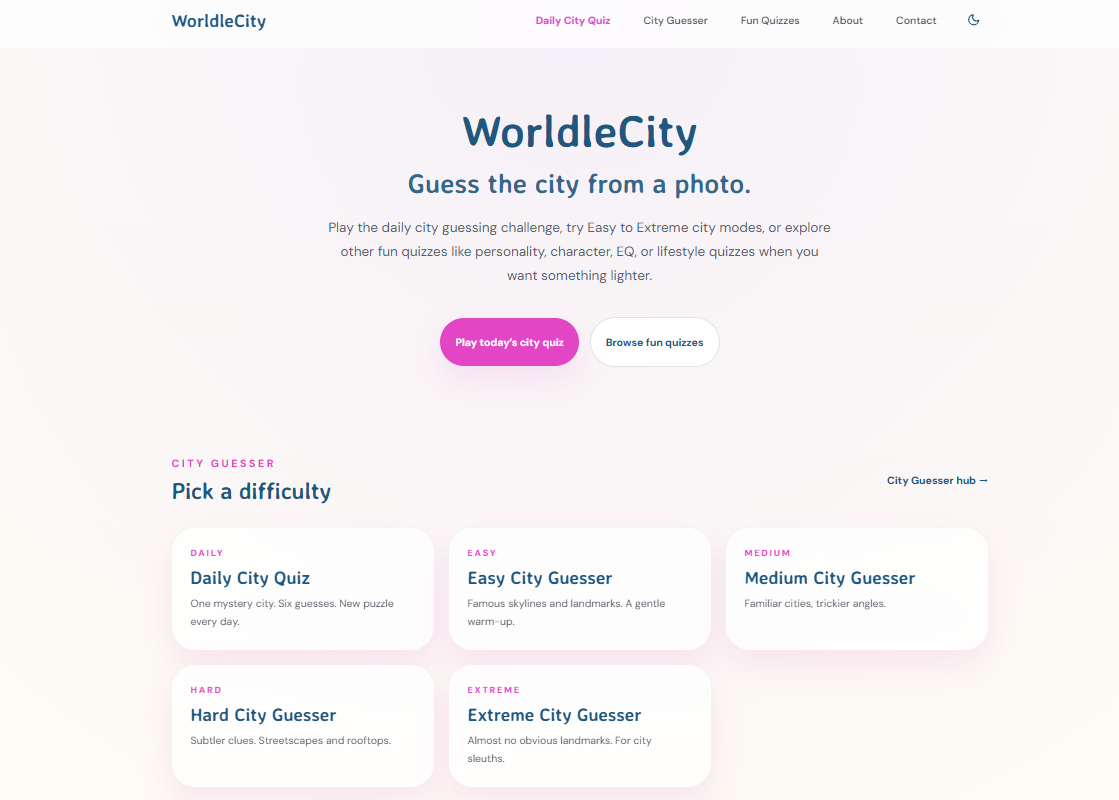
Worldlecity offers a collection of city guessing photo challenges where you get six attempts to identify a mystery city, with proximity and direction clues after each guess. There are four difficulty levels reaning from easy to extreme. You can select a quiz and start guessing with a personal timer. A quiz master can also run this quiz in groups, and can emulate the classic rapid-fire rounds. It is geography trivia with the same pressure and payoff as a rapid fire round. No account needed. No setup required. You can also browse a full catalog of personality and lifestyle quizzes whenever you want a different kind of challenge. Play today at Worldlecity and find out how fast your geography instincts really are.
FAQ
What is the time limit for a rapid fire quiz?
Each question in a rapid fire quiz typically allows 5 to 8 seconds for an answer, with the full round lasting under 10 minutes. Advanced formats can drop the limit to 5 seconds or less.
How many questions are in a rapid fire round?
A standard rapid fire round includes 8 to 15 short questions. That range keeps energy high without pushing the session long enough for attention to fade.
What kinds of questions work best in a rapid fire quiz?
Single-word answers, true-or-false questions, and short-phrase responses work best. Multi-part or open-ended questions break the pace and reduce participation.
Can you run a rapid fire quiz online?
Yes. Digital tools and live polling platforms handle timing and scoring automatically. Simultaneous input methods like chat responses also remove mic anxiety and increase full-group participation in remote sessions.
How is a rapid fire quiz different from a regular trivia quiz?
A regular trivia quiz rewards careful deliberation over 30 to 60 seconds per question. A rapid fire quiz rewards instinct and speed, with answers expected in under 10 seconds and no time for second-guessing.
Key takeaways
A rapid fire quiz is defined by strict time limits and short answers, and those two constraints together are what create its unique energy and engagement.
| Point | Details |
|---|---|
| Core definition | A rapid fire quiz gives players 5 to 8 seconds per question, favoring instinct over deliberation. |
| Ideal question type | Single-word or true-or-false questions keep pace fast and cognitive load low. |
| Moderator role | Hosts must cut off long answers immediately to preserve the format’s energy. |
| Best use cases | Classroom warm-ups, team meetings, and party games all benefit from the format’s short, high-energy structure. |
| Digital advantage | Live polling tools automate timing and let every player respond at once, removing mic anxiety in remote sessions. |