How to Guess Character Quizzes Accurately Every Time
Unlock the secrets to guess character quizzes accurately with proven strategies, tips, and tools to boost your skills and enjoy the game more!
- character quiz challenges
- guess the character games
- identify the character
- character recognition tests
- guess the hero quiz
- quiz on famous characters
On this page

Accurate character guessing is the skill of identifying fictional characters from partial clues, including silhouettes, quotes, audio clips, and letter-based feedback, before running out of attempts. Whether you’re tackling Wordle-style games, anime recognition tests, or BuzzFeed personality quizzes, the difference between a lucky guess and a correct one comes down to method. This guide breaks down the tools, strategies, and common mistakes that separate casual players from true character recognition experts. You’ll walk away knowing exactly how to guess character quizzes accurately and actually enjoy the process.
What tools and cues help you guess characters correctly?
The best character quizzes don’t just test memory. They test how well you read clues under pressure. Most character identification games follow a 6-attempt limit per round, giving you letter-based or visual feedback after each wrong guess to help you narrow down the answer. That feedback loop is the engine of accurate guessing.
Here are the core clue types you’ll encounter across platforms:
- Silhouette overlays. The character’s shape is shown without color or detail. Focus on hair shape, body proportions, and any held objects, such as weapons or tools.
- Audio clips. A sound effect, voice line, or theme plays. Recognize the tone, accent, or catchphrase rather than waiting for a full sentence.
- Quote matching. A line of dialog is shown. Look for speech patterns, vocabulary level, and emotional tone to narrow down the character.
- Letter-based hints. Like Wordle, correct letters appear in green or yellow. Treat each reveal as a logic puzzle, not a memory test.
- Environmental context. Background details like a school, spaceship, or medieval castle tell you the universe before you even see the character.
Platforms like FreeJoy and TriviaCreator host libraries of 170 to over 500 characters, which means you’ll face both fan favorites and deep cuts. Studying accessories and environmental context is what separates players who plateau at 60% accuracy from those who consistently nail the tough ones.
Pro Tip: When a silhouette quiz stumps you, ignore the face entirely. Look at what the character is holding or wearing. A scythe, a wand, or a specific uniform narrows the field faster than facial features ever will.

How to strategically approach different character quiz types
Different quiz formats reward different thinking styles. A one-size-fits-all approach will cap your accuracy. Here’s how to tailor your strategy to the format in front of you.
-
Silhouette quizzes. Start with the broadest category: is this character human, animal, or something else? Then move to body type, then accessories. Never start with the face. Silhouette overlays intentionally obscure facial features, so players succeed by analyzing weapons, colors, and environmental context instead.
-
Quote and dialog challenges. Read the quote twice. First for content, then for voice. A character who says “We don’t need luck” sounds different from one who says “Luck’s got nothing to do with it.” Vocabulary and sentence structure are character fingerprints.
-
Audio recognition tests. Experts recommend blending sensory clues across visual, audio, and textual formats for the most accurate identification. When you hear a clip, note the emotional register first. Is it heroic, comedic, or menacing? That narrows the genre and character type before you even process the words.
-
Timed arcade-style quizzes. Some quizzes impose a 20-second time limit per question. Don’t freeze. Make your best guess at the 15-second mark and use the remaining time to confirm, not reconsider. Second-guessing under pressure is the fastest way to burn a life.
-
Elimination-based formats. When wrong answers remove options from the list, treat each removal as new information. Shift from memory recall to deductive reasoning. The feedback loop from incorrect guesses shifts the guessing strategy from memory to logical deduction, which is the key to accuracy in longer quiz runs.
-
Hint systems. Use hints late, not early. Spending a hint on your first guess wastes its value. Wait until you’ve eliminated at least two categories of characters, then use the hint to confirm a specific trait.
Pro Tip: In fast-paced quizzes, build a mental shortlist of three candidates before the timer starts counting. When the clue appears, you’re matching against your shortlist rather than searching your entire memory. It cuts decision time in half.
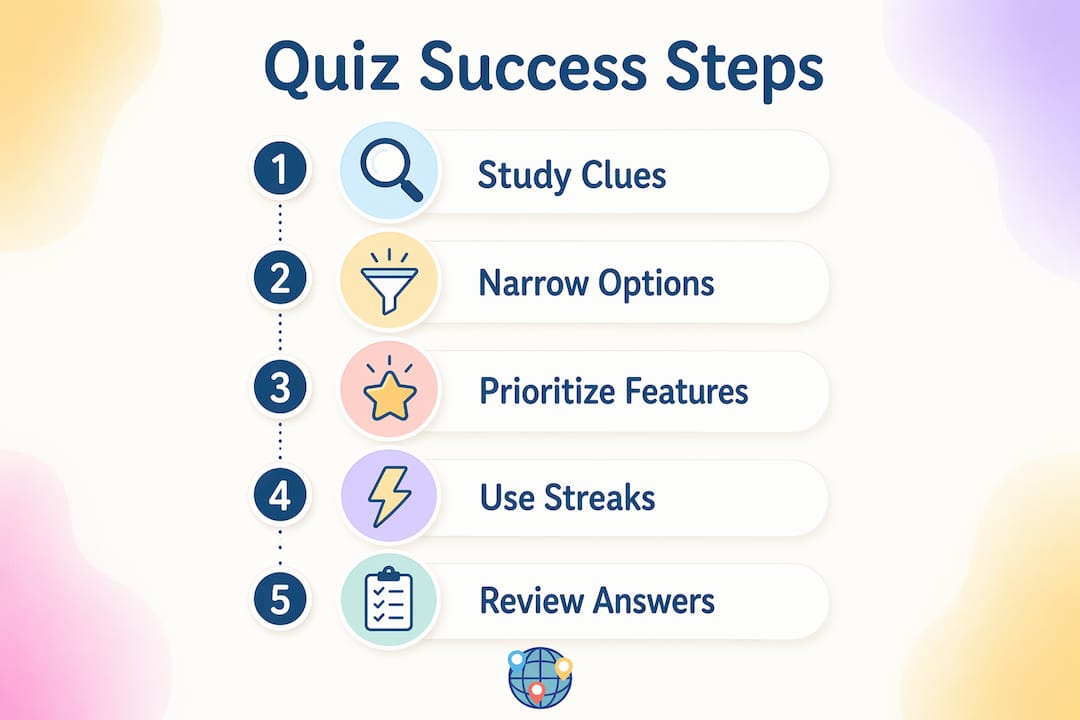
The streak mechanic is worth understanding too. Streaks shift the goal from isolated correctness to sustained accuracy, which changes how you should manage risk. A conservative guess that keeps your streak alive is often smarter than a bold guess that breaks it.
Common mistakes that tank your accuracy
Even experienced players fall into predictable traps. Recognizing them is faster than learning new skills.
- Overrelying on visuals alone. A character’s face is the most obvious clue and the most commonly obscured one. Players who skip audio and quote analysis consistently score lower on mixed-format quizzes.
- Ignoring elimination feedback. When a letter turns gray, or an option disappears, that’s data. Players who treat wrong guesses as failures instead of information waste their remaining attempts.
- Rushing on obscure characters. Fewer than 1% of users identify all characters in high-difficulty expert-themed quizzes. That stat means obscure characters are designed to slow you down. Accept the slower pace and work the clues methodically.
- Overguessing. Throwing out names rapidly without logic burns through your 6-attempt limit fast. Each guess should eliminate a category, not just test a hunch.
- Ignoring the universe. Every character exists in a specific world. A quiz on Marvel characters behaves differently from one on Studio Ghibli films. Calibrate your mental library to the quiz’s universe before you start.
The players who improve fastest aren’t the ones with the biggest character libraries. They’re the ones who treat every wrong guess as a clue, not a failure.
Balanced character difficulty keeps quizzes enjoyable for both casual players and true experts. If a quiz feels too easy, you’re not learning. If it feels impossible, you’re not having fun. The sweet spot is a quiz that mixes instantly recognizable characters with a few that make you work. That’s where your accuracy actually grows.
How do popular character quiz platforms compare?
Choosing the right platform shapes how fast your skills develop. Here’s a direct comparison of the major options.
| Platform | Character library | Clue types | Difficulty tiers | Best for |
|---|---|---|---|---|
| FreeJoy | 170+ anime characters | Silhouette, audio, visual | Beginner to expert | Anime fans wanting variety |
| TriviaCreator | 500+ characters | Quote, visual, multiple choice | Casual to intermediate | Broad pop-culture knowledge |
| Akinator | Millions of characters | Question-based deduction | Adaptive | Open-ended guessing practice |
| BuzzFeed quizzes | Varies by quiz | Personality, quote, image | Casual only | Light, social sharing |
| Custom Wordle formats | Varies | Letter-based feedback | Intermediate to expert | Logic-driven players |
FreeJoy and TriviaCreator offer the most structured skill progression because their libraries exceed 500 characters and include multiple clue types per round. Akinator is the outlier: it guesses the character you’re thinking of by asking questions, which makes it a useful tool for understanding how deductive reasoning works in reverse. BuzzFeed quizzes are purely casual and won’t sharpen your identification skills, but they’re great for exploring which characters you personally identify with.
For players who want to understand quiz mechanics at a deeper level, knowing how quiz designers build difficulty tiers helps you anticipate what clues will appear at each stage. Expert modes on most platforms use distorted audio or heavy silhouette overlays, which is why contextual clues like color palettes and weapon shapes become your primary tools at higher difficulty levels.
If you want to sharpen your pattern recognition skills beyond character quizzes, the same deductive logic applies across geography games, escape room puzzles, and trivia formats. The mental muscle is transferable.
Key takeaways
Accurate character guessing requires combining clue interpretation, deductive logic, and format-specific strategy rather than relying on memory alone.
| Point | Details |
|---|---|
| Use all clue types | Combine silhouette, audio, quote, and letter feedback for the highest accuracy. |
| Match strategy to format | Timed quizzes need fast shortlisting; elimination formats reward deductive logic. |
| Treat wrong guesses as data | Each failed attempt narrows the field. Use it, don’t waste it. |
| Choose platforms by skill goal | FreeJoy and TriviaCreator build skills; BuzzFeed is for fun, not growth. |
| Obscure characters are designed to slow you down | Work methodically on hard characters instead of guessing fast. |
Ready to put your skills to the test?
Worldlecity is built for exactly this kind of challenge. Every day, a new mystery city drops, and you get six attempts to crack it, with proximity and direction feedback after each guess. It’s the same satisfying feedback loop that makes character quizzes so addictive, applied to cities and geography.
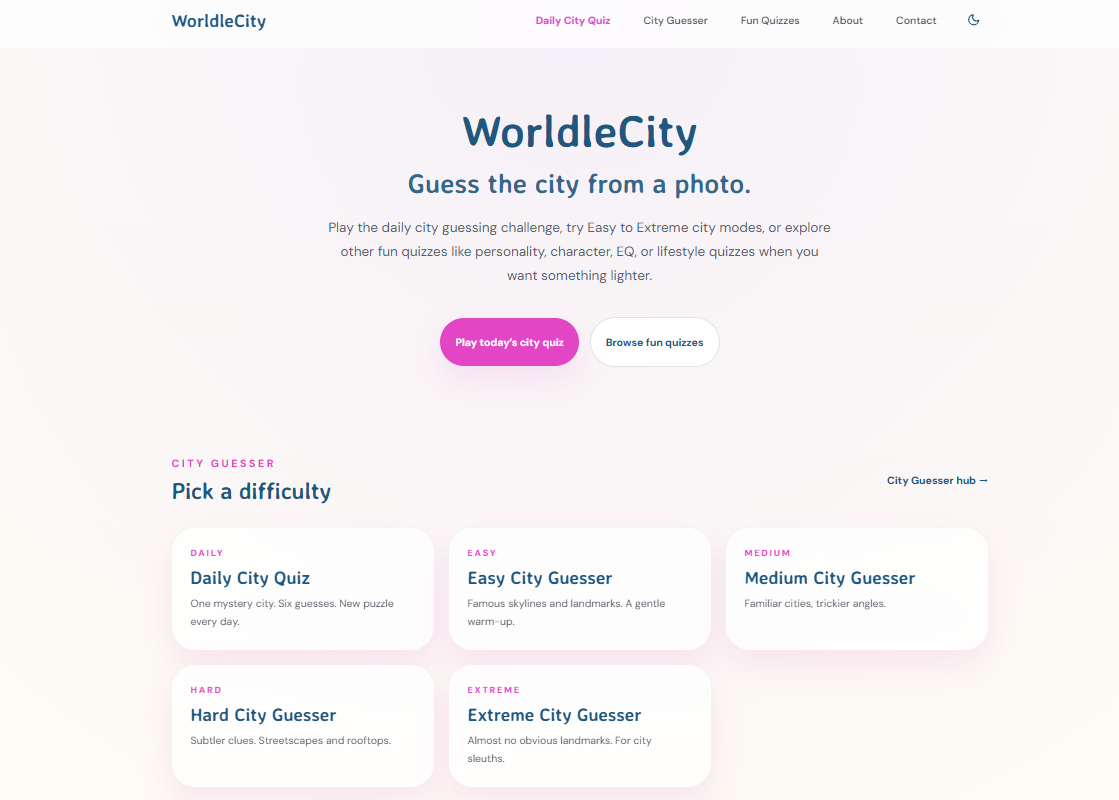
Beyond the daily city challenge, Worldlecity offers personality quizzes, lifestyle quizzes, and interactive guessing games across four difficulty modes. One specific quiz type in Worldlecity is the character quiz. Here, instead of you identifying a character, the quiz will determine which character is closer to your personality based on the answers you give. It’s a fun way to know a bit more about yourself. No account needed. Just show up, play, and share your results. If you’ve been looking for a place to practice your guessing and deduction skills in a low-pressure, high-fun environment, this is it.
FAQ
What does it mean to guess character quizzes accurately?
Accurate character guessing means identifying the correct fictional character using partial clues like silhouettes, quotes, or letter feedback before exhausting your attempts. It relies on deductive logic and clue interpretation, not just memory.
How many attempts do most character quizzes give you?
Most Wordle-style character quizzes give you 6 attempts per round, with feedback after each wrong guess to help narrow down the answer. Fast-paced arcade formats often use a 20-second timer instead.
What is the hardest type of character quiz?
Expert-mode quizzes that use distorted audio or heavy silhouette overlays are the most difficult. Fewer than 1% of players achieve perfect scores on high-difficulty character identification challenges.
Which platform is best for improving character guessing accuracy?
FreeJoy and TriviaCreator are the strongest options for skill development because they combine multiple clue types with large character libraries and tiered difficulty. Akinator is useful for practicing deductive reasoning from a different angle.
How do streaks affect character quiz strategy?
The streak mechanic shifts your goal from single correct answers to sustained accuracy across multiple rounds. This means a safe, confident guess is often smarter than a risky one, especially when you’re close to a personal best.