A Guide to the Famous Landmarks of Cities in China
Explore China's iconic sites with our guide to the famous landmarks of cities in China. Discover history, architecture, and travel tips!
- famous sites in Chinese cities
- guide to China's famous sites
- Chinese city landmarks
- A guide to the famous landmarks of cities in China
- historical landmarks in China
- top landmarks in China
On this page
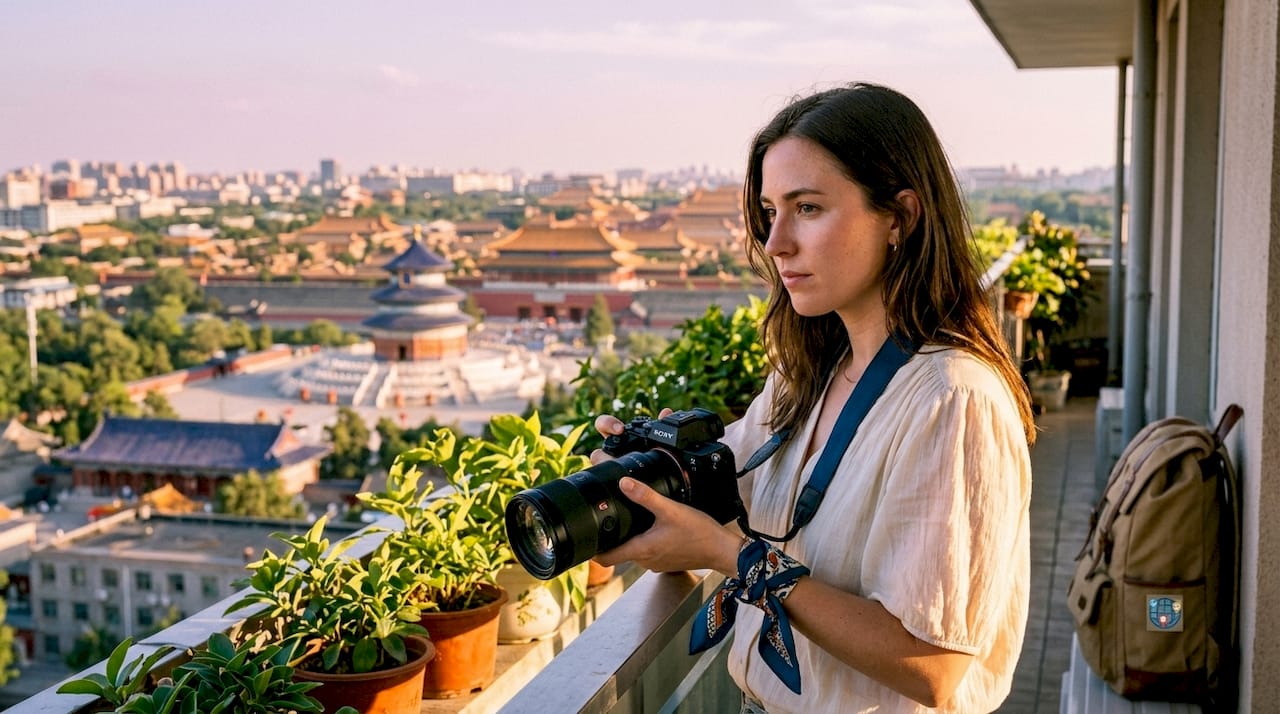
China’s most famous landmarks are defined by a striking contrast: ancient imperial palaces standing within walking distance of record-breaking skyscrapers. This guide to the famous landmarks of cities in China covers Beijing’s UNESCO-listed monuments, Shanghai’s colonial waterfront and futuristic towers, and Shenzhen’s modern skyline, giving you the tools to recognize each city by its most iconic buildings. Whether you’re planning a trip or just sharpening your geography skills, knowing these landmarks changes how you see China entirely.
What makes Beijing’s landmarks so iconic?
Beijing holds more UNESCO World Heritage Sites than any other Chinese city, and that density tells you something important. The capital layers imperial governance, religious ritual, and modern political symbolism into a single skyline. You can read the entire arc of Chinese history just by walking between four sites.
The Forbidden City is the clearest starting point. Built in 1420, it served as the imperial palace and political center for Ming and Qing emperors until 1924. The complex contains 980 buildings spread across a footprint of 961 meters by 753 meters. That scale is not accidental. Every measurement, gate, and courtyard axis was designed to reinforce imperial hierarchy and cosmic order. When you see a vast, symmetrical complex of red walls and yellow glazed rooftops in a photo, you are almost certainly looking at Beijing.
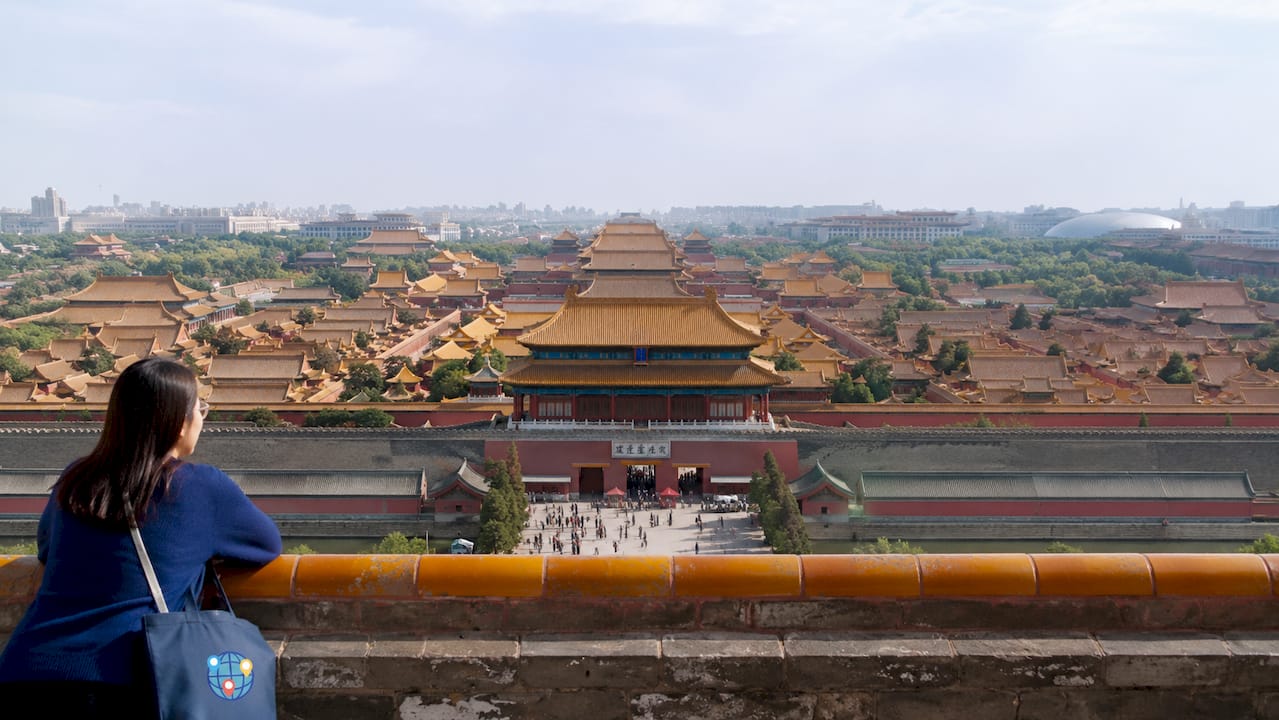
The Temple of Heaven adds a second visual signature. Built in 1420, the same year as the Forbidden City, it was used for annual prayers to Heaven and earned its UNESCO designation in 1998. Its circular Hall of Prayer for Good Harvests sits on a three-tiered marble terrace, making it instantly recognizable. The circular geometry is the key visual clue. No other major Chinese landmark uses that form at that scale.
Here are the four Beijing landmarks most worth knowing by sight:
- Forbidden City: Red walls, yellow rooftops, strict north-south axis, massive ceremonial gates
- Temple of Heaven: Circular blue-roofed hall, white marble terraces, set inside a large park
- Tiananmen Square: Vast open plaza, portrait of Mao Zedong on the Gate of Heavenly Peace
- Great Wall (Badaling section): Stone battlements snaking across mountain ridges north of the city; over 20,000 km long in total, with UNESCO recognition since 1987
Pro Tip: If you are on a visit, pair the Forbidden City and Temple of Heaven on the same day. Together, they show you two sides of imperial Beijing: governance and ritual. That combination gives you a much richer read of the city than either site alone.
How do Shanghai’s landmarks differ from Beijing’s?
Shanghai’s identity is built on contrast. The west bank of the Huangpu River carries colonial-era European architecture. The east bank holds one of the most dramatic modern skylines on Earth. That tension is what makes Shanghai’s landmarks so visually distinct from every other Chinese city.
The Bund runs for 1.6 kilometers along the Huangpu River and features 52 buildings in European styles including Gothic, Baroque, and Art Deco. It was developed during Shanghai’s colonial period and functions less like a single landmark and more like an architectural timeline. Walking it from end to end is the fastest way to understand how Shanghai absorbed and transformed foreign influence. The buildings along Zhongshan Road are the ones to watch for: stone facades, arched windows, and ornate cornices that look nothing like the rest of China.
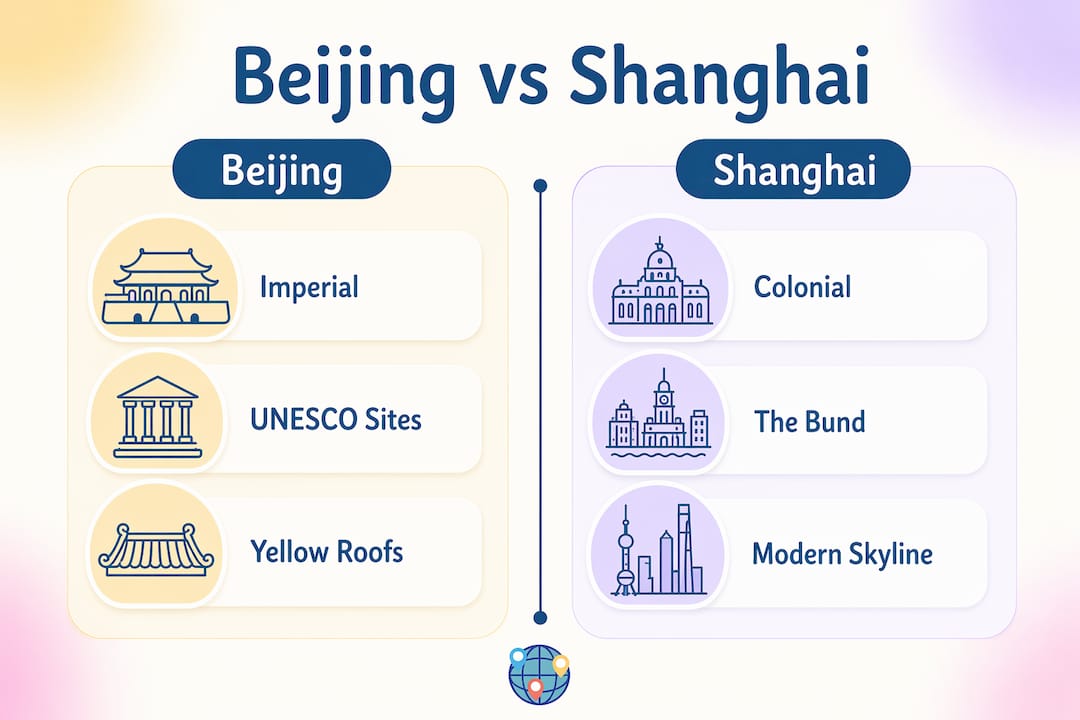
Directly across the river sits Lujiazui, and the contrast is immediate. Shanghai Tower, completed structurally in 2016, stands 632 meters tall. It is the tallest building in China and the third tallest in the world. Its twisted glass form is designed to reduce wind load, which gives it a distinctive spiral silhouette that no other tower in the city replicates.
| Landmark | Location | Style | Key visual clue |
|---|---|---|---|
| The Bund | West bank, Huangpu River | European colonial (Gothic, Baroque, Art Deco) | Stone facades, arched windows, waterfront promenade |
| Shanghai Tower | Lujiazui, Pudong | Contemporary glass skyscraper | Twisted spiral form, 632 m height |
| Oriental Pearl Tower | Lujiazui, Pudong | Postmodern | Pink spheres stacked on a tower structure |
| Jin Mao Tower | Lujiazui, Pudong | Postmodern pagoda-inspired | Stepped crown, octagonal geometry |
- Stand on The Bund and face east. The Lujiazui skyline fills your entire field of view.
- Identify Shanghai Tower by its spiral twist. The other towers are taller or more angular.
- The Oriental Pearl Tower’s pink spheres make it the easiest landmark to spot in any photo.
- At night, the entire riverfront lights up. The reflection on the Huangpu River doubles the visual impact.
Pro Tip: The best single photo of Shanghai combines both banks in one frame. Stand at the midpoint of The Bund near the Peace Hotel and shoot east at dusk. You get colonial stone on your left, futuristic glass across the water, and the river tying it together.
What do Shenzhen’s landmarks say about modern China?
Shenzhen did not exist as a major city before 1980. It was designated a Special Economic Zone that year, and within four decades it became one of the most technologically advanced cities on Earth. Its landmarks reflect that speed. There are no imperial palaces here, no colonial waterfronts. Shenzhen’s identity is built entirely on what it built after 1980.
The Ping An Finance Centre in Shenzhen stands 599 meters tall and defines the city’s skyline from almost any angle. Its tapered glass form and diamond-cut crown make it visually distinct from Shanghai Tower’s spiral. The Shenzhen Bay area and the Futian CBD cluster several major towers together, creating a skyline that reads as deliberately modern rather than historically layered.
What makes Shenzhen useful for landmark recognition is precisely what it lacks. No red walls. No circular temple rooftops. No colonial stone facades. If you see a photo of a dense, gleaming, entirely glass-and-steel skyline with no historical architecture in sight, Shenzhen is a strong candidate. The same logic applies to other fast-growing Chinese cities like Chongqing, Chengdu, and Guangzhou, all of which have invested heavily in signature towers and modern districts.
- Shenzhen’s skyline is entirely post-1980, with no pre-modern landmarks to anchor it
- The Ping An Finance Centre’s tapered crown is the clearest single identifier
- Technology campuses for companies like Tencent and Huawei function as modern landmarks in their own right
- Shenzhen’s urban grid is wide, planned, and car-oriented, which shows up in aerial photos as a visual clue
For travelers, Shenzhen rewards a different kind of attention. You are not reading centuries of history. You are watching a city that compressed a century of urban development into 40 years, and the architecture shows every bit of that ambition.
How do you identify a Chinese city by its landmarks?
Recognizing Chinese cities from photos is a learnable skill. The key is knowing which visual features belong exclusively to which city. A few reliable rules cover most cases.
Look for the roofline first. Yellow glazed tiles on a massive symmetrical complex mean Beijing, specifically the Forbidden City. Circular blue rooftops in a park setting mean the Temple of Heaven. Neither appears in any other major Chinese city at that scale.
Check the waterfront. A promenade of European stone buildings facing a river, with a cluster of glass towers on the opposite bank, is Shanghai’s Bund and Lujiazui pairing. No other Chinese city has that specific combination. For identifying cities from photos, the waterfront is often the fastest clue.
Count the skyscrapers and check their age. A skyline of entirely modern glass towers with no historical buildings visible points to Shenzhen or another post-1980 development zone. A skyline that mixes older mid-rise buildings with a few dramatic towers suggests Shanghai or Guangzhou.
| City | Signature landmark | Key visual clue |
|---|---|---|
| Beijing | Forbidden City | Red walls, yellow rooftops, strict symmetry |
| Beijing | Temple of Heaven | Circular blue hall, white marble base |
| Shanghai | The Bund | European stone facades along a river promenade |
| Shanghai | Shanghai Tower | Twisted spiral glass form, 632 m |
| Shenzhen | Ping An Finance Centre | Tapered glass tower, diamond crown |
The UNESCO World Heritage framework is a reliable shortcut for prioritizing which landmarks matter most. Sites like the Forbidden City (designated 1987) and the Temple of Heaven (designated 1998) carry official recognition that confirms their cultural weight. If a landmark appears on that list, it is almost certainly a defining visual for its city.
Pro Tip: When you see a photo of an unfamiliar Chinese city, rule out Beijing first. If there are no imperial rooftops or Tiananmen Square, move to Shanghai. If there is no European waterfront, you are probably looking at a post-1980 city like Shenzhen or Chongqing.
Comparing Chinese city landmarks to those in other countries also sharpens your eye. The landmarks of US cities follow a completely different logic, built around civic monuments and commercial towers rather than imperial complexes. The contrast makes both sets easier to remember.
Key takeaways
China’s most recognizable cities each have a distinct visual signature built from a combination of imperial heritage, colonial history, and modern architecture that no other country replicates at the same scale.
| Point | Details |
|---|---|
| Beijing’s visual identity | Yellow rooftops and red walls of the Forbidden City, plus the circular Temple of Heaven, are the clearest identifiers. |
| Shanghai’s contrast | The Bund’s European stone facades on one bank and Shanghai Tower’s 632 m spiral on the other make Shanghai instantly recognizable. |
| Shenzhen’s modern signature | An entirely post-1980 glass skyline with no historical architecture signals Shenzhen or a similar Special Economic Zone city. |
| UNESCO as a landmark filter | Sites like the Forbidden City (1987) and Temple of Heaven (1998) carry official designation that confirms their cultural and visual importance. |
| Identification strategy | Check rooflines first, then waterfronts, then skyline age to narrow down which Chinese city you are looking at. |
Worldlecity turns landmark knowledge into a daily game
You have just built a solid mental map of China’s most famous cities. Now put it to the test.
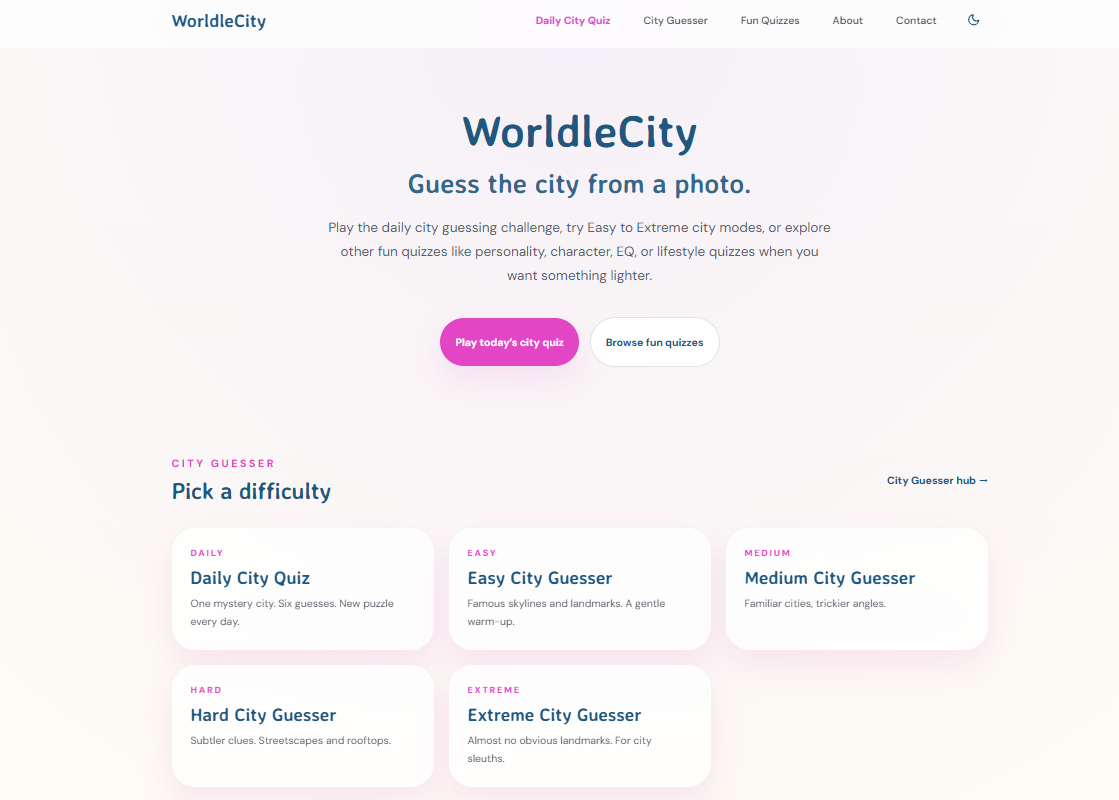
Worldlecity gives you a photograph of a mystery city every day and six attempts to guess it correctly. Each guess tells you how close you are and which direction to look. It is the fastest way to turn landmark recognition from passive knowledge into a real skill. The daily city guessing game covers cities worldwide, including Beijing, Shanghai, and Shenzhen, so the context from this guide applies directly. No account needed. Just a photo, your best guess, and a geography brain getting sharper by the day. You can also try the European Skyline guide to see how European cities compare visually to Chinese ones.
FAQ
What is the most famous landmark in China?
The Forbidden City in Beijing is widely considered China’s most famous landmark. It served as the imperial palace from 1420 to 1924 and has held UNESCO World Heritage status since 1987.
How tall is Shanghai Tower?
Shanghai Tower stands 632 meters tall, making it the tallest building in China and the third tallest in the world. It is located in the Lujiazui district of Pudong.
What are the top landmarks to visit in Beijing?
The four must-see attractions in Beijing are the Forbidden City, the Temple of Heaven, Tiananmen Square, and the Great Wall sections near Badaling. All four are UNESCO-recognized or nationally protected sites.
How do I tell Shanghai apart from other Chinese cities in a photo?
Look for the combination of European stone buildings along a river promenade (The Bund) on one side and a cluster of glass skyscrapers, including Shanghai Tower’s distinctive spiral form, on the other. No other Chinese city has that specific pairing.
Why does Shenzhen have no historical landmarks?
Shenzhen was designated a Special Economic Zone in 1980 and developed almost entirely after that date. Its identity is built on modern architecture and technology campuses rather than imperial or colonial heritage.