The 10 Most Recognizable Skylines, Ranked by How Hard They Are to Name
Ten famous skylines scored on landmark, uniqueness, framing and lookalikes, then checked against the photos I actually use in WorldleCity's city quizzes.
- most recognizable skylines
- famous city skylines
- skyline identification
- city guessing game
- landmark recognition
On this page
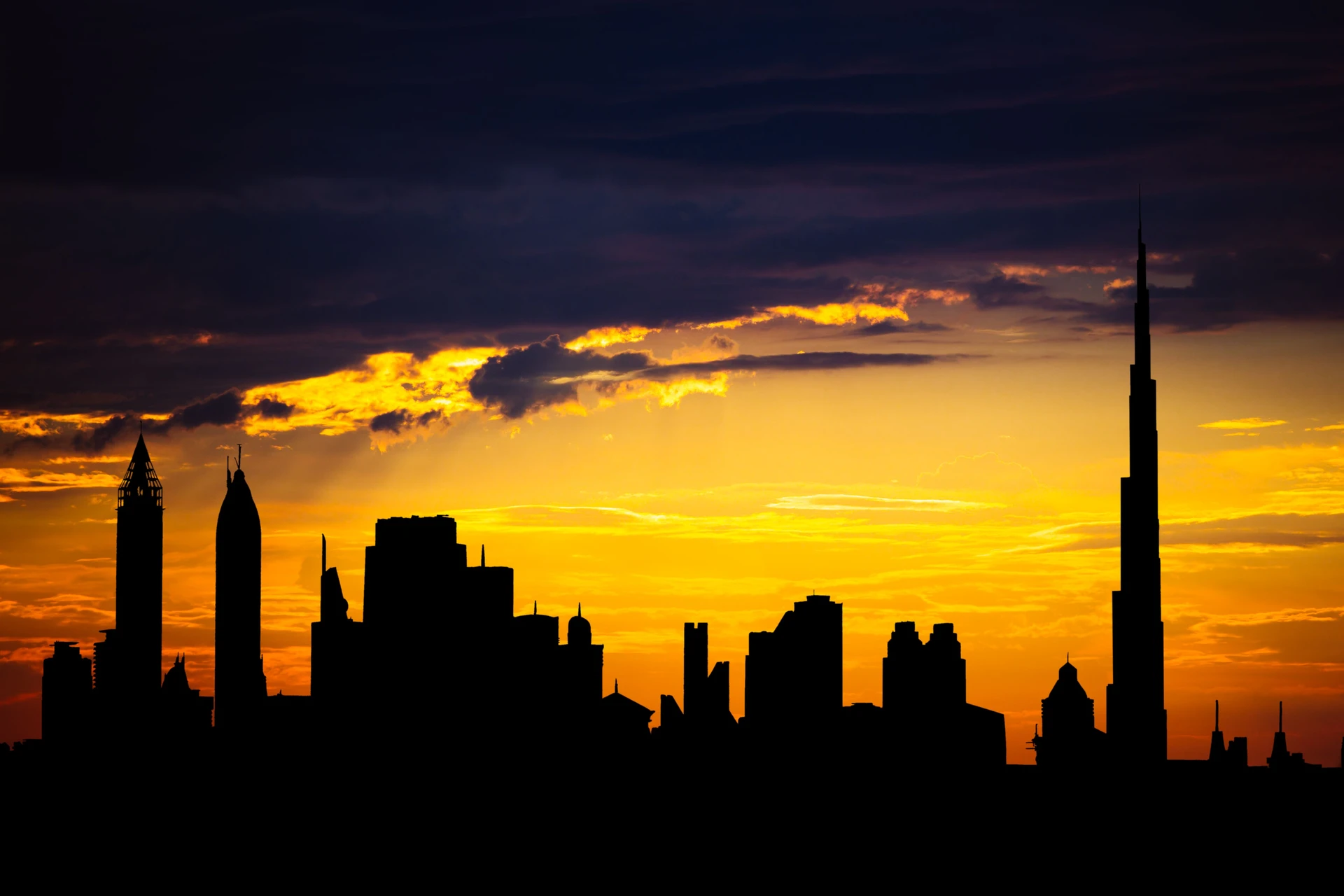
Most lists of the world’s most recognizable skylines rank cities by how many tall towers they have. That tells you which skyline is biggest, not which one you could name from a single photo. I choose and test every photo in WorldleCity’s city guessing library, and all ten skylines below are in it. Several cities appear in more than one difficulty tier, and that turned out to be the most useful thing I noticed while writing this: a city is not easy or hard to identify. A photo is.
How I scored each skyline
Each city gets 0 to 2 points on four questions, for a maximum of 8:
- Anchor: does one structure dominate the frame?
- Uniqueness: could that anchor be mistaken for a building somewhere else?
- Framing: does water or terrain help place the city?
- Lookalikes: how few other cities produce a similar silhouette? (2 means almost none)
This is a judgement call, not a measurement, so every score is shown and you can argue with any of them. I then checked the ranking against where I had actually placed each city’s photos in the game’s Easy, Medium, Hard and Extreme tiers.
The 10 skylines, ranked from easiest to hardest
| Rank | City | Anchor | Uniqueness | Framing | Lookalikes | Score | Where its photos sit in WorldleCity |
|---|---|---|---|---|---|---|---|
| 1 | Sydney | 2 | 2 | 2 | 2 | 8 | Easy (Opera House), Hard (CBD towers) |
| 2 | Singapore | 2 | 2 | 2 | 1 | 7 | Easy (Marina Bay) |
| 3 | Dubai | 2 | 2 | 1 | 2 | 7 | Easy (Burj Khalifa), Medium (Atlantis, The Palm) |
| 4 | Shanghai | 2 | 2 | 2 | 1 | 7 | Easy (Lujiazui from the Bund) |
| 5 | New York | 1 | 2 | 2 | 2 | 7 | Easy (Midtown), Medium (from the Manhattan Bridge) |
| 6 | Paris | 2 | 1 | 1 | 2 | 6 | Easy (Arc de Triomphe), Hard (Luxembourg Palace) |
| 7 | Hong Kong | 1 | 1 | 2 | 2 | 6 | Easy (Victoria Harbour at night) |
| 8 | Kuala Lumpur | 2 | 2 | 0 | 2 | 6 | Easy (Dataran Merdeka) |
| 9 | Chicago | 1 | 1 | 1 | 1 | 4 | Easy (Loop skyline) |
| 10 | Tokyo | 1 | 1 | 0 | 1 | 3 | Easy (Tokyo Tower), Medium (Senso-ji gate) |
Ties are ordered by how quickly the anchor reads in a small thumbnail.
What my own photo library says about difficulty
Every one of these ten cities has at least one photo in the Easy tier. Among skylines this famous, the ranking above is really a gradient within “easy”, and none of them is genuinely hard when the classic view is in the frame.
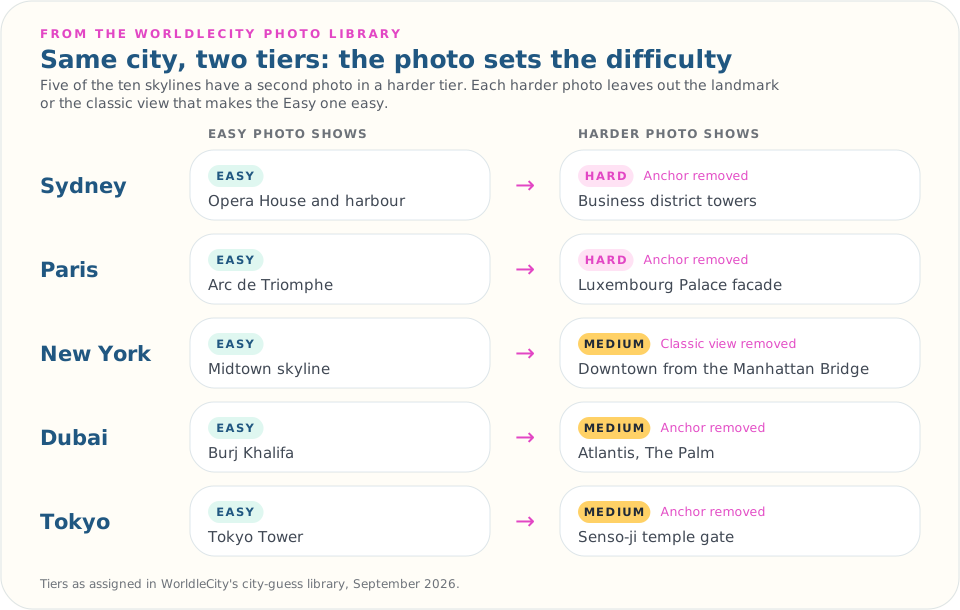
The scores start to matter when the classic view is not in the frame. Five of the ten cities also have a photo in a harder tier, and in every case the harder photo takes the anchor away:
- Sydney, Hard: the central business district’s towers, with no Opera House and no Harbour Bridge. Without its two anchors, Sydney’s glass cluster has no single feature that belongs only to Sydney.
- Paris, Hard: the Luxembourg Palace, a classical palace facade with no tower at all. It is unmistakably European, and not much more specific than that until you look closely.
- New York, Medium: downtown seen from the Manhattan Bridge, with One World Trade Center and the Verizon Building in the frame instead of the Midtown profile most people know from films and postcards.
- Dubai, Medium: Atlantis, The Palm, a 93-metre resort on the Palm Jumeirah. The Burj Khalifa is nowhere in the shot.
- Tokyo, Medium: the Hozomon gate at Senso-ji. This is a temple gate, not a skyline, and it is there on purpose, because Tokyo’s skyline on its own gives you so little to work with.
Kuala Lumpur is the one that surprised me when I went back through the library for this article. Its Easy photo shows Dataran Merdeka and the Sultan Abdul Samad Building, whose red brick with white plaster banding (locally nicknamed “blood and bandages”) and 41-metre clock tower are just as distinctive at street level as the towers are from a distance. The Malaysian flags in the foreground are a giveaway too. I still placed it in Easy because, if you look closely, the Petronas Towers are there in the backdrop.
The one clue that names each skyline
1. Sydney
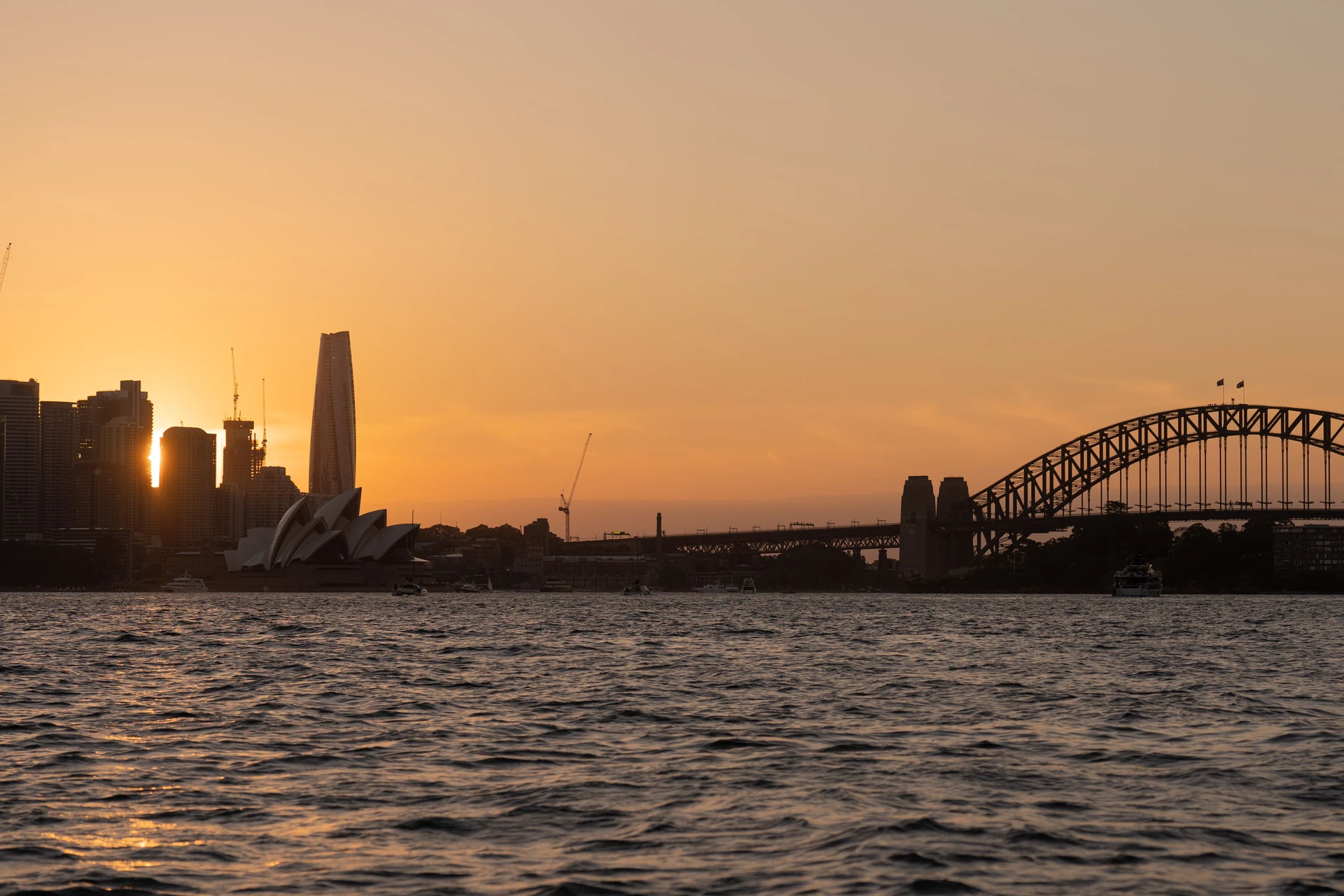
The Opera House is not tall, and that is exactly why it works. Its shells, covered in more than a million roof tiles, are a shape that no other building shares, and the Harbour Bridge usually sits in the same frame as a second confirmation. It scores full marks on all four questions.
2. Singapore
Marina Bay Sands is three 55-storey hotel towers joined across the top by a single SkyPark. That “ship resting on three towers” silhouette over the water of Marina Bay is as specific as the Opera House. Singapore loses a point only because its financial district, seen without the resort, looks like many other Asian business districts.
3. Dubai
The Burj Khalifa is 828 metres tall and has been the world’s tallest building since 2010. It rises so far above its neighbours that the top third of the photo is often enough on its own. Dubai loses a point on framing, because the flat desert and shoreline give no extra help. There is more on the region in the skylines of the Middle East.
4. Shanghai
The Oriental Pearl Tower, 468 metres tall with its stacked spherical pods, stands in Lujiazui directly across the Huangpu River from the Bund. The classic photo is taken from the Bund, so the river and the tower arrive together. The towers around it are the weak point, since Pudong’s glass cluster on its own resembles other big Chinese business districts.
5. New York
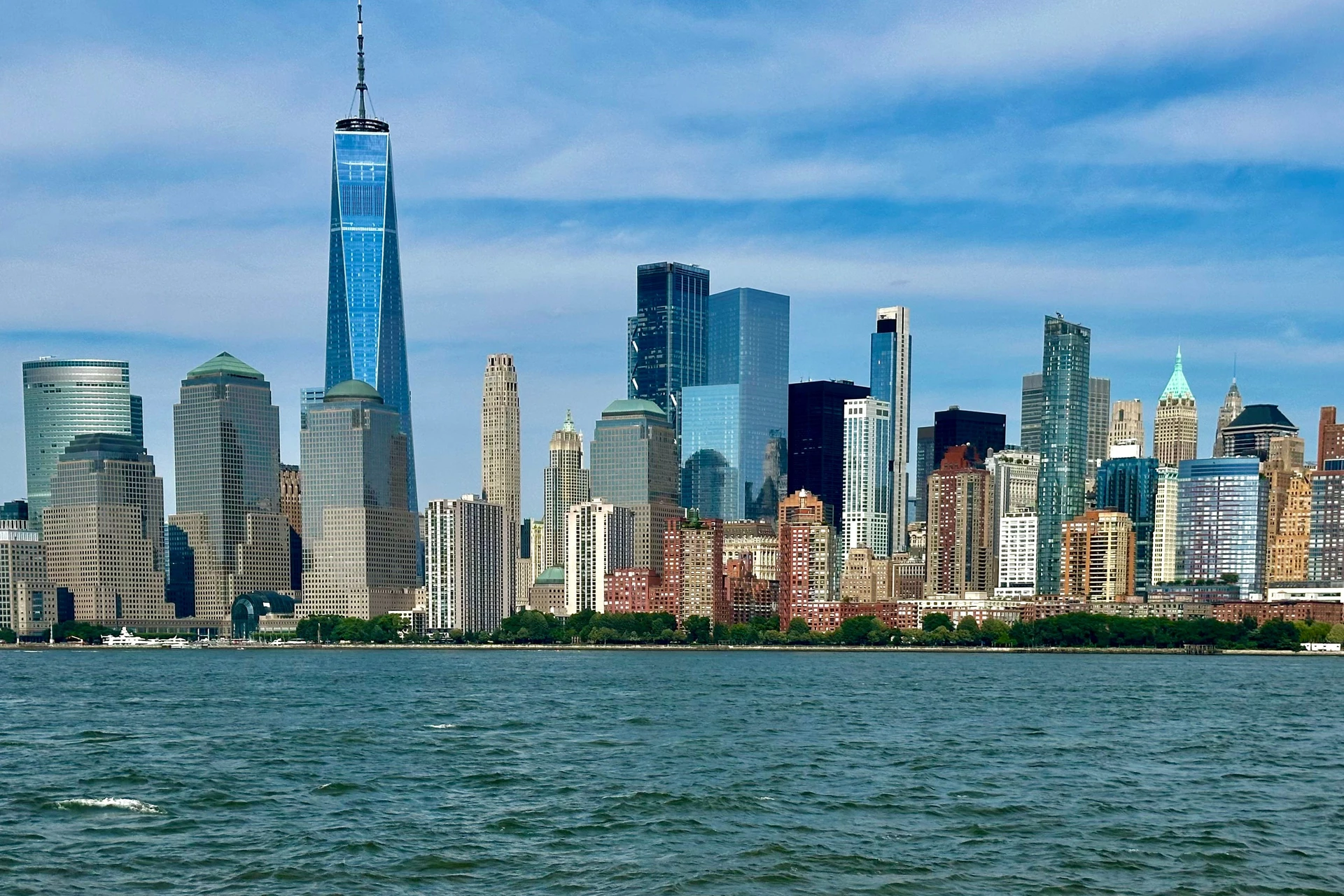
New York is the only city in the top five without a single anchor. The Empire State Building, the Chrysler Building and One World Trade Center (541 metres) share the job, and the rivers on both sides of Manhattan give the skyline a clean baseline when you see it from New Jersey. It is recognizable because of the whole profile, not one building, so it holds up in a crowded frame better than it does in a close crop. There is more on the individual buildings in famous buildings and landmarks of US cities.
6. Paris
The Eiffel Tower is the obvious anchor, but the more useful clue is what Paris lacks. After the 210-metre Tour Montparnasse was finished in 1973, buildings over seven storeys were banned in the city centre. A Paris skyline is therefore low and even, with its modern towers grouped at La Défense instead of the centre. Paris loses a point on uniqueness because the Eiffel Tower has imitators, the most important being Tokyo Tower (see below). The Paris landmarks guide covers the buildings at street level.
7. Hong Kong
No single Hong Kong tower is as instantly known as the Burj Khalifa or the Opera House, but the combination is unique: a wall of towers packed along Victoria Harbour, with the steep green ridge of Victoria Peak (552 metres) directly behind them. Harbour, mountain and extreme density all appearing in one frame is almost a fingerprint on its own.
8. Kuala Lumpur
The Petronas Towers, 452 metres tall, were the world’s tallest buildings from 1998 to 2004, and twin towers joined by a skybridge are hard to confuse with anything else. Kuala Lumpur scores zero on framing, because there is no harbour or mountain behind them. When they are small or half-hidden, street-level clues have to do the work, which is how my Easy photo plays: the old colonial square does the talking, and the towers in the background confirm it.
9. Chicago
Willis Tower, 442 metres tall, is built from nine square tubes that drop away at the 50th, 66th and 90th floors, and that stepped black profile is the clue. Willis held the world’s-tallest title from 1973 until the Petronas Towers took it in 1998. Lake Michigan does not help as much as a harbour would, because there is no far shore, so in a photo it reads like any seafront. Chicago’s downtown also resembles other American downtowns more than New York’s does.
10. Tokyo
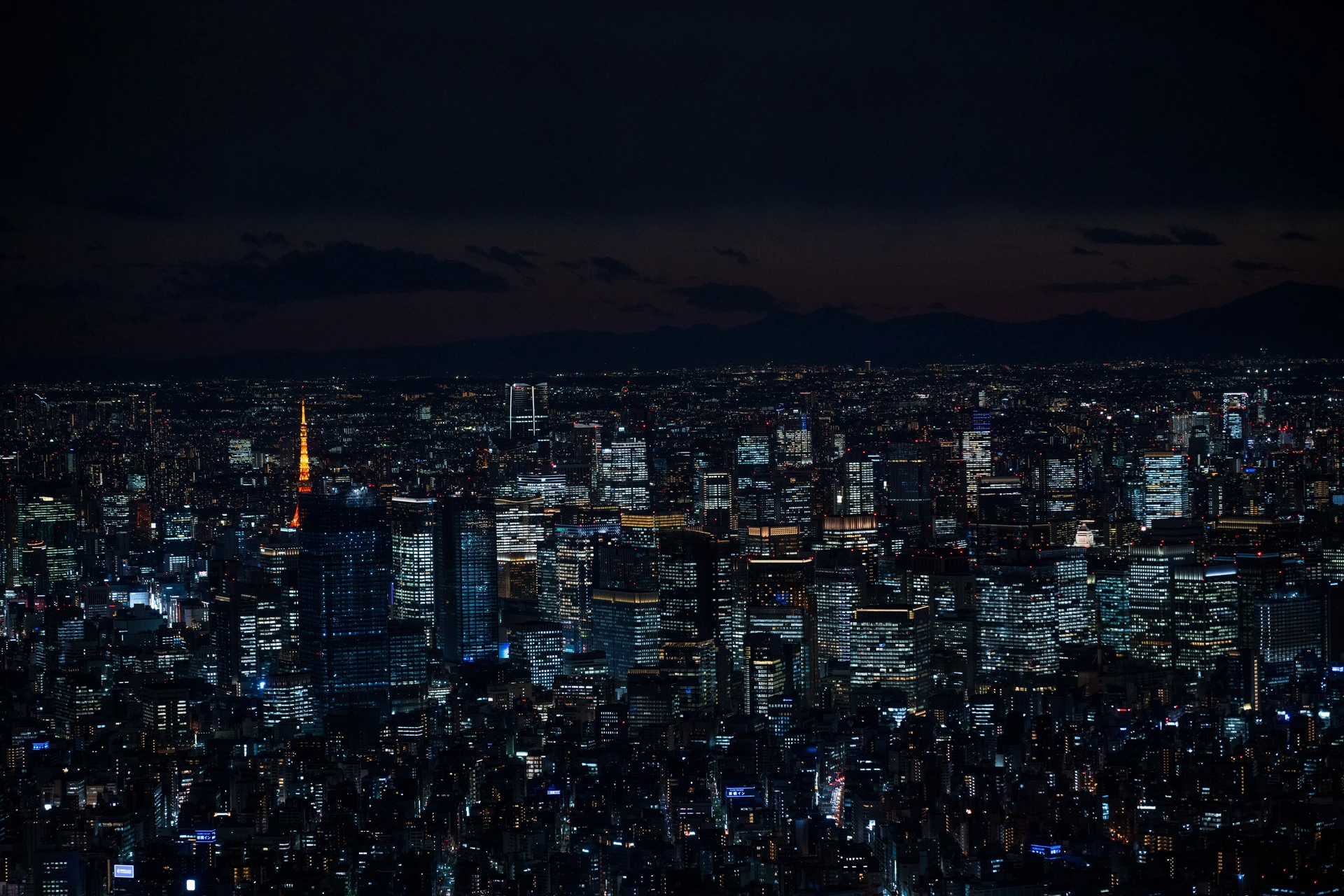
Tokyo is the hardest of these ten skylines to name from a photo. Its tallest structure, the 634-metre Tokyo Skytree, stands in Sumida, away from the main office districts, so the two rarely share a frame. What you usually get is mid-rise density running to the horizon, with no harbour or mountain behind it. The older landmark adds a trap: Tokyo Tower’s design was based on the Eiffel Tower. Its white and international-orange paint, applied to meet air-safety rules, is what tells it apart in a small photo from the Eiffel Tower, which is painted yellow-brown.
How to use this when you are guessing
- Find the anchor first. If there is one, you are usually done.
- No anchor? Read the frame. Look for a harbour with a mountain behind it, a river with a promenade, or open lake with no far shore.
- Check the lookalike pairs. A lattice tower could be Paris or Tokyo, so check the colour. A glass cluster with no landmark could be almost any Asian financial district, so look for a specific building.
- Notice what is missing. A big, old city with no towers in the centre is itself a clue, and in Europe it often points to Paris.
The same step-by-step approach works on photos that are not skylines at all, which is the subject of how to identify cities from photos.
Test yourself on WorldleCity
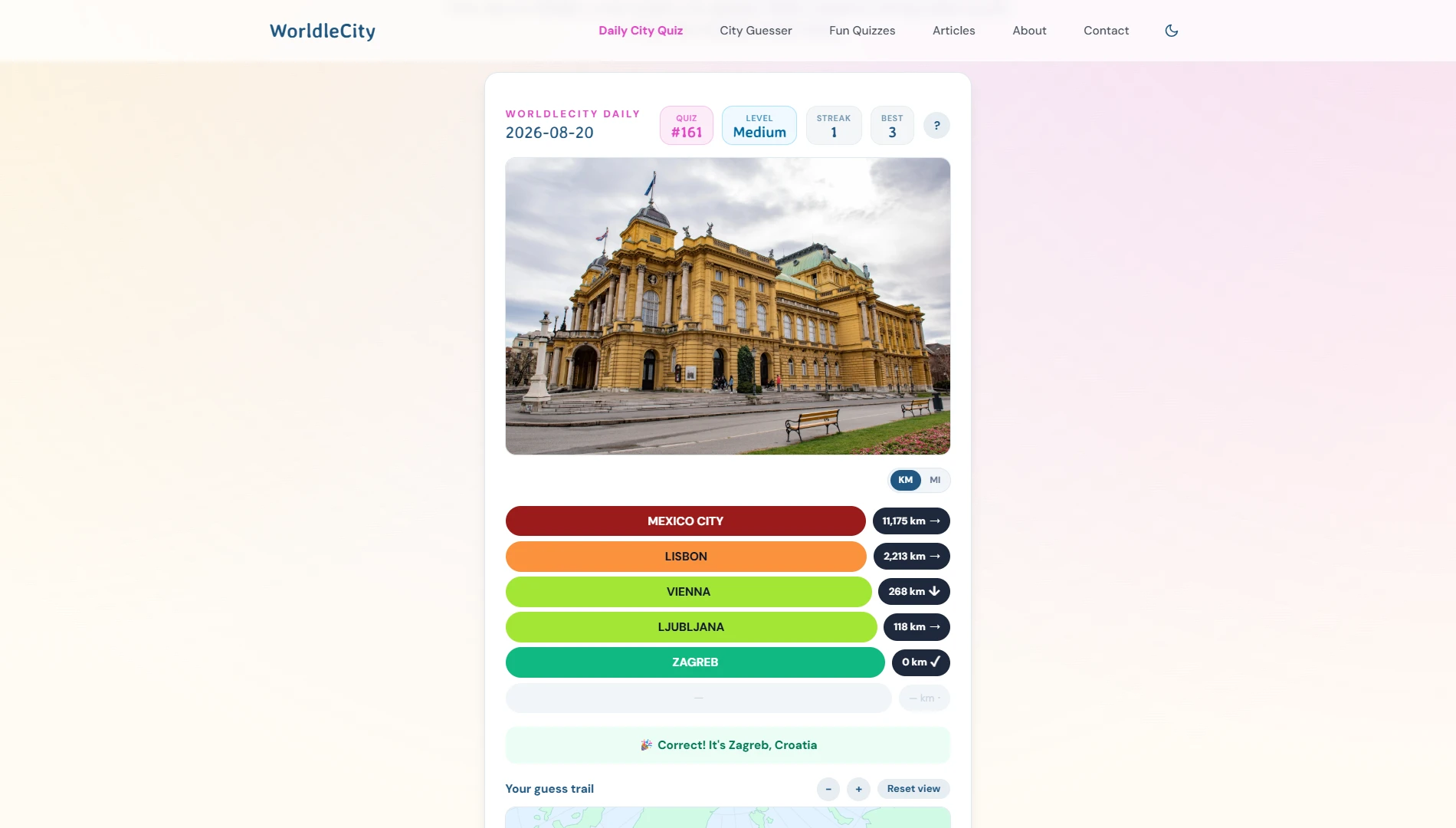
WorldleCity posts a new mystery city photo every day and gives you six attempts, with the distance and direction to the answer after each wrong guess. The city guesser quizzes come in four difficulty modes, and for the famous cities in this article you now know the pattern: the Easy photo keeps the landmark in the frame, and the harder one leaves it out. No account needed.
FAQ
What makes a skyline easy to recognize?
One dominant landmark that exists nowhere else, ideally framed by water or terrain. Sydney has both the Opera House and the harbour, so it scores full marks. A skyline with many similar towers and no landmark is hard to name, however large it is.
Which famous skyline is hardest to identify from a photo?
Of the ten in this ranking, Tokyo. Its tallest structure, the Tokyo Skytree, stands away from the main office districts, the city has no harbour or mountain backdrop in most views, and its best-known older landmark, Tokyo Tower, was based on the Eiffel Tower.
How can you tell Tokyo Tower from the Eiffel Tower in a photo?
By colour. Tokyo Tower is painted white and international orange to meet air-safety rules, while the Eiffel Tower is painted a uniform yellow-brown. The Eiffel Tower also stands over a low, even skyline, because central Paris banned buildings over seven storeys after the Tour Montparnasse was finished.
Why can the same city be easy or hard in a city guessing game?
Because difficulty depends on the photo, not the city. In WorldleCity’s library, Sydney is Easy when the Opera House is in the frame and Hard when the photo shows only its business district towers. In all five of the library’s two-tier cities, the harder photo is the one without the famous landmark or classic view.