Globe Quiz Explained: How to Play and Win in 2026
Discover what a globe quiz is. Learn how to play this engaging geography game and improve your skills while having fun!
- globe quiz definition
- globe quiz for kids
- interactive globe quiz
- globe quiz tips and tricks
- how to play globe quiz
- types of globe quizzes
- how does a globe quiz work
On this page
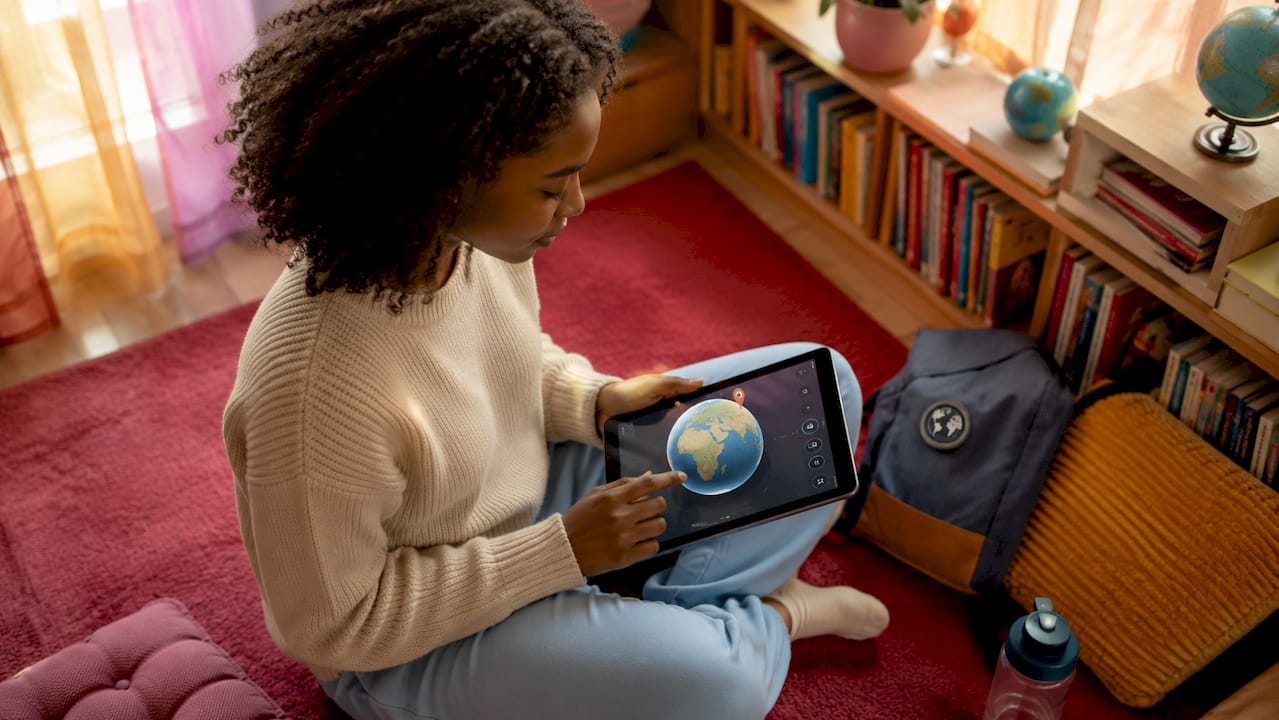
A globe quiz is an interactive, browser-based geography game where you guess a mystery country on a 3D rotating globe using color-coded proximity clues and kilometer distance feedback. The concept sits at the intersection of geography education and puzzle gaming, and it has pulled in players of all ages who want something more engaging than a flat flashcard. If you’ve been wondering what a globe quiz is, explained in plain terms, here it is: you type a country name, watch it light up on the globe, and use the color and distance hint to guide your next guess.
What is a globe quiz and how does it work?
A globe quiz is a geography guessing game built around a spherical, 3D Earth model rather than a flat map. That distinction matters more than it sounds. The game presents a mystery country each day, and your job is to identify it through a series of guesses, each one rewarded with a color clue and a distance reading in kilometers.
The color system runs from cool beige (you’re far away) to hot red (you’re very close), functioning as a heat map layered over the globe. Color-coded proximity clues reset with every new guess, so the globe gets progressively warmer as you zero in. The distance shown is the shortest measurement from your guessed country’s border to the mystery country’s border, not a center-to-center calculation. That nuance trips up a lot of players early on.
There’s no guess limit. You can take as many attempts as you need, which makes the game genuinely low-pressure and accessible to beginners. The daily mystery resets at midnight local time, giving you a fresh challenge every day.
How to play a globe quiz: step-by-step
Playing is straightforward. Here’s how a typical session runs:
- Open the game in any browser on desktop or mobile. No download or account is needed.
- Type a country name into the search box. The globe highlights your guess and displays a color clue plus a kilometer distance.
- Read the color. Beige or cool tones mean you’re far off. Orange means you’re getting warmer. Red means you’re close.
- Check the distance. The number tells you how far your guessed country’s border sits from the mystery country’s border.
- Adjust your next guess based on both clues. Move toward the warmer zone on the globe.
- Keep guessing until the zone turns fully red and you’ve found the target country.
The simple typing and touch controls are deliberately designed to minimize barriers. You don’t need a geography degree or a tutorial. Average play sessions last roughly 5–15 minutes, depending on your knowledge of geography, making it a perfect lunch-break game.
Pro Tip: Start with a large country like Russia, Brazil, or Australia. These cover massive portions of the globe and give you a strong directional clue right away, even if they’re wrong guesses.
Why a 3D globe gives you a better geography lesson than a flat map
A globe is a spherical 3D Earth model that shows countries and continents in accurate proportions. Flat maps, particularly the Mercator projection(https://www.britannica.com/science/Mercator-projection), distort size significantly. Greenland looks roughly the same size as Africa on a Mercator map. In reality, Africa is about 14 times larger.
Globe quizzes correct that distortion by putting you in direct 3D contact with the planet. When you spin the globe to find your guessed country, you naturally absorb the true relative sizes and positions of landmasses. That’s a geography lesson you don’t even notice you’re getting.
“Globe quizzes function as gamified education, where visual feedback transforms geography into a spatial puzzle. The 3D interaction helps players correct common map misconceptions by showing true continental size and proximity relationships that flat maps cannot convey.” — Geography game developers, as noted by Dle Games
Experts highlight that 3D globe interaction builds spatial reasoning in a way static maps and lists cannot match. You’re not memorizing facts. You’re building an intuitive mental model of the planet. That’s a meaningfully different kind of learning, and it sticks longer.
For players curious about how globe-based formats compare to other formats, the map-based quiz games breakdown is worth a look.
Strategies to improve your globe quiz score
Getting better at globe quizzes is mostly about using the clues like a GPS rather than guessing randomly. A few focused habits make a big difference.
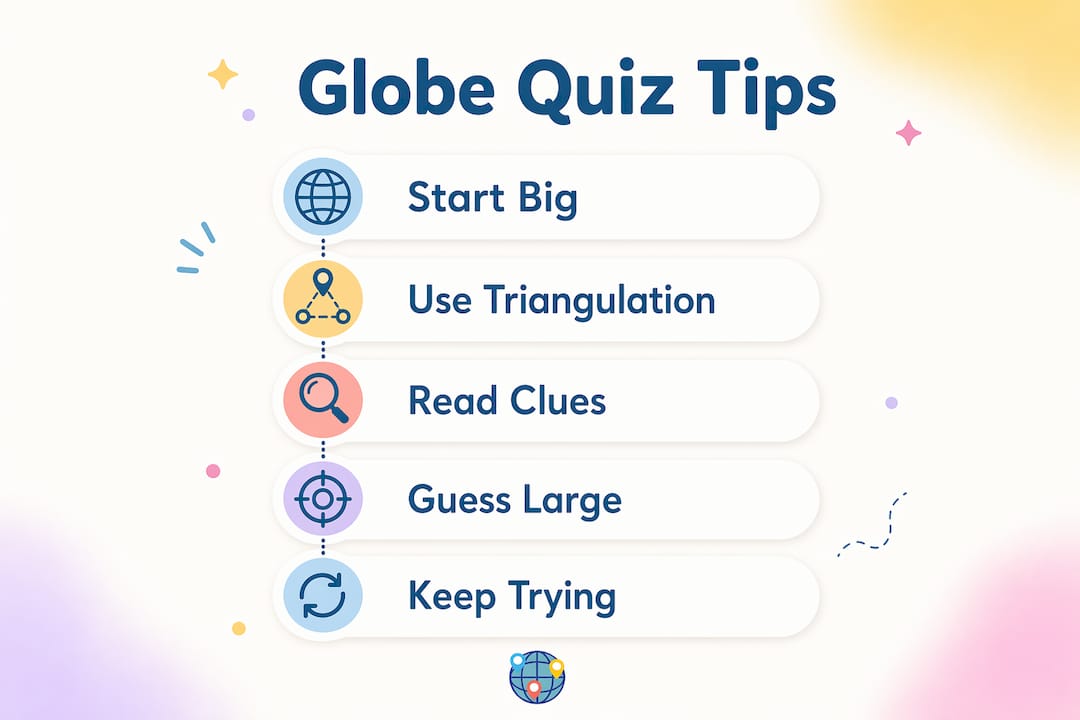
Use triangulation from the start. Advanced players apply a technique where they guess large countries first to identify the continent quickly. Russia covers northern Asia and eastern Europe. Brazil anchors South America. Australia locks in Oceania. Once you know the continent, you’ve cut the problem in half.
Read distance clues carefully. The distance shown measures the shortest border-to-border path, not center-to-center. This matters most for island nations, where the distance can feel counterintuitive. A small island nation might show a large distance even when it looks close on the globe.
Watch out for gray territories. Certain regions appear gray on the globe rather than colored. These are territories linked to other countries, like Greenland (linked to Denmark) or Alaska (linked to the USA). Gray neutral zones don’t influence the color feedback, so don’t expect them to help you narrow down your guess.
Here are the core habits that separate efficient players from random guessers:
- Start with one large country per continent to establish direction.
- Never guess two countries in the same cold zone back to back. Move toward warmth.
- Use the distance number as a radius. Mentally draw a circle that is that number away from your last guess.
- Treat the color clues like a heat map. Warmer colors mean move closer, not just “try nearby.”
- Note which continents you’ve ruled out. Process of elimination works fast once you have a continent confirmed.
Pro Tip: If you’re stuck between two neighboring countries, guess the larger one first. Its color clue will tell you whether the target is on that side of the border or the other.
Benefits of playing globe quizzes for fun and education
Globe quizzes work because they make geography feel like a puzzle rather than a homework assignment. The gamified approach strengthens knowledge and engagement far beyond what static maps or country lists can deliver. You get immediate feedback, a sense of progress with each guess, and a satisfying moment when the globe finally turns red.
The benefits go beyond entertainment:
- Spatial reasoning. Spinning a 3D globe and tracking color changes builds an intuitive sense of where countries sit relative to each other.
- Country and continent knowledge. Repeated play naturally expands your mental map of the world, including smaller nations you’d never encounter on a standard quiz.
- Low barrier to entry. No registration is required, and the controls are simple enough for kids and adults alike.
- Daily habit formation. The daily reset creates a natural reason to return, similar to a daily crossword or word puzzle.
- Community sharing. Most globe quiz formats let you share your result, which adds a social layer that makes the game feel connected rather than solitary.
Globe quizzes also work well as a learning tool for kids because the visual feedback is immediate and the stakes are zero. There’s no wrong answer that ends the game. You just keep going until you find it.
For a broader look at how geography quizzes fit into different formats, the regional vs global quiz breakdown explains the scope differences clearly.
Key Takeaways
A globe quiz is the most effective browser-based format for building real geographic intuition because the 3D color-feedback system teaches spatial reasoning through play, not memorization.
| Point | Details |
|---|---|
| Globe quiz definition | An interactive browser game where you guess a mystery country using color clues and distance feedback on a 3D globe. |
| No guess limit | Players take as many attempts as needed, making the game accessible for all skill levels without pressure. |
| 3D accuracy advantage | Globes show true country sizes and distances, correcting distortions that flat maps like the Mercator projection create. |
| Triangulation strategy | Start with large countries like Russia or Brazil to identify the continent before narrowing down regionally. |
| Gray zone awareness | Territories like Greenland or Alaska appear gray and do not affect color clues, so don’t rely on them for proximity hints. |
Worldlecity takes the globe quiz concept further
If globe quizzes have you hooked on geography challenges, Worldlecity builds on that same energy with a daily city guessing game that adds a whole new layer. Each day, you get a photograph of a mystery city and six attempts to identify it, with proximity and direction feedback after each guess.
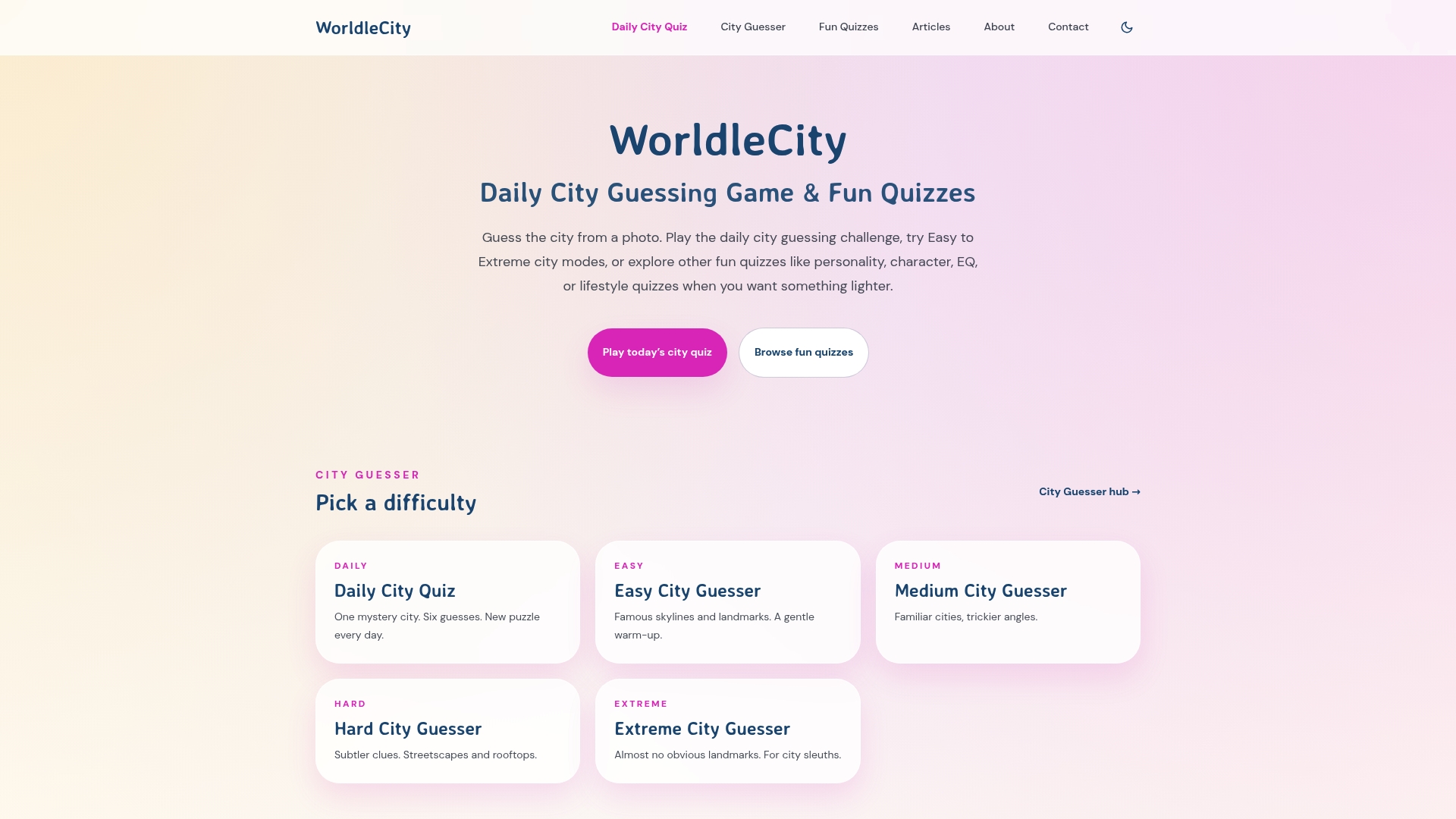
Worldlecity also offers city guesser quizzes across four difficulty modes, so you can ease in or go straight to the deep end. No account needed. No setup. Just open it, play, and share your result. Whether you’re a geography enthusiast or just looking for a fun five-minute challenge, Worldlecity’s daily games are worth adding to your daily rotation. Check the quiz night topics guide if you want to bring the fun to a group setting too.
FAQ
What is a globe quiz in simple terms?
A globe quiz is a browser-based game where you guess a hidden country on a 3D rotating globe, using color clues and kilometer distances to guide each attempt. No registration or download is required.
How does the color system work in a globe quiz?
Cool beige colors mean your guess is far from the mystery country, while warm orange and red colors mean you’re getting close. The color updates with every new guess you make.
Is there a limit on guesses in a globe quiz?
Globe quizzes give you unlimited guesses, so you can keep trying until you find the mystery country. The challenge resets daily with a new mystery country.
Why is a 3D globe better than a flat map for geography learning?
A 3D globe shows countries in accurate proportions, avoiding the size distortions created by flat map projections like the Mercator. That accuracy helps players build a more realistic mental model of the world.
What is the best strategy for beginners playing a globe quiz?
Start by guessing large countries like Russia, Brazil, or Australia to quickly identify which continent the mystery country is in, then use the color and distance clues to narrow down your search regionally.