What Is a Daily City Challenge? Rules and How to Play
Discover the daily city challenge, a fun game where you guess a new mystery city each day using clues. Test your geography skills!
- what is a daily city challenge
- how daily city guessing games work
- daily city challenge rules
- photo-based geography game
- city guessing game strategy
- WorldleCity daily puzzle
On this page
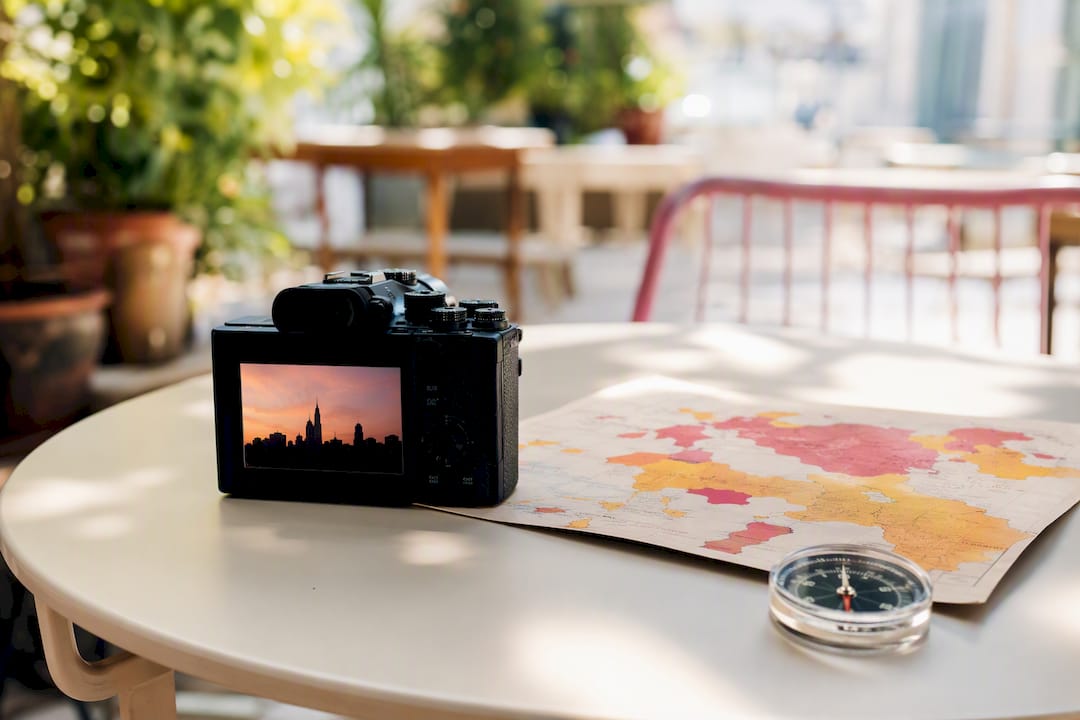
A daily city challenge is a photo-based geography game that gives you one new mystery city per day and a limited number of guesses to name it. You get visual clues, and once you guess, you get feedback on how close you are, guess by guess, until you nail it or run out of tries.
Every version of this format shares a few core pieces:
- The photo or clue — a street scene, skyline, or landmark shot with the obvious identifiers cropped out
- A guess limit — typically six attempts before the round ends
- Feedback per guess — distance, direction, or a hot/cold signal telling you how close your guess was
- One puzzle a day — a fresh city drops on a set schedule, then locks
Worldlecity uses the same format, building on the photo of a mystery city and direction feedback with every guess.
Key Takeaways
A daily city challenge is a photo-based guessing game with a fixed daily puzzle, a limited number of guesses, and feedback that sharpens each attempt.
| Point | Details |
|---|---|
| Core format | One photo, six guesses, and distance/direction feedback define the standard daily city challenge. |
| No signup needed | WorldleCity’s daily puzzle and quiz library are playable instantly, with no account required. |
| Modes vary | Daily, freeplay, and four difficulty tiers on WorldleCity let you pick between shared challenge and casual practice. |
| Read the clues systematically | Signage, vegetation, sun angle, and road markings narrow your region faster than guessing at random. |
| Try it yourself | WorldleCity offers the daily photo-based city challenge alongside a stacked-difficulty quiz library for practice. |
How does a daily city challenge work?
The flow is simple enough to learn in one round. A new photo appears at the same time every day. You look at it, form a guess, type it in, and the game tells you how you did before letting you try again.
Here’s the typical sequence:
- The daily puzzle loads with one photo (sometimes a short clue text alongside it)
- You study the image — architecture, signage, terrain, weather
- You submit a city name
- You get feedback: distance in miles/km, compass direction, or a proximity score
- You guess again, using that feedback to narrow down the region
- The round ends when you guess correctly or exhaust your attempts
Guess limits usually cap at a few attempts, mirroring the format popularized by word games — enough tries to reward reasoning, not so many that it turns into a slot machine. Some versions add hints you can unlock: a zoomed-out view, a landmark callout, or a population range. Scoring typically rewards fewer guesses and closer misses, and a lot of platforms track streaks for consecutive days played.
Valid guesses are usually flexible on most platforms, accepting a metro area name or common alternate spelling. WorldleCity sidesteps the spelling question entirely: you pick your guess from a searchable city list rather than typing free text, so a typo or alternate spelling never costs you a guess.
WorldleCity’s version needs zero setup. No account, no email, no login wall. Load the page, look at the photo, start guessing. It works the same on a phone during a commute as it does on a desktop.
Pro Tip: Before locking in your first guess, scan for three things fast: the script on any signage, the vegetation, and the road markings. Together, they’ll usually narrow you to a continent within seconds — sometimes a specific country.
What modes and variations exist?
Not every round looks the same, and that’s the point. Daily city challenges branch into a few recognizable formats:
- Daily mode — one puzzle, shared by everyone, resets every 24 hours
- Freeplay/casual mode — unlimited puzzles, play as many as you want, no daily cap
- Photo-only rounds — pure visual deduction, no text hints
- Mixed-clue rounds — a photo plus a text nudge (population, region, a fun fact)
- Difficulty tiers — beginner (obvious landmarks, tight zoom), intermediate (partial views), expert (obscure angles, no famous buildings in frame)
WorldleCity stacks four difficulty modes for casual play, on top of the single daily puzzle. That split matters: the daily mode gives you a shared challenge to compare notes on, while freeplay lets you drill a weak spot, like European mid-sized cities or East Asian skylines, without waiting for tomorrow. If you’re curious how this compares to map-click formats, the difference between a city guesser and GeoGuessr comes down to photo recognition versus street-view navigation. Different skill, similar rush.
WorldleCity also runs a second daily format worth knowing about: GeoAngles. It skips the photo entirely and gives you four known cities with bearing arrows pointing outward from the hidden mystery city, so you’re reasoning from compass angles instead of visual clues. Same six-guess budget, same searchable city-list input, different clue type.
Why do people keep playing these?
The appeal is mostly habit plus tiny wins. A daily puzzle takes two to five minutes, which makes it an easy slot to fill during a coffee break or a commute, and unlike longer games, missing a day doesn’t feel like falling behind on anything real.

Repetition genuinely builds recognition skills. See enough photos of Lisbon’s tiled buildings or Bangkok’s tuk-tuks, and your brain starts pattern-matching faster each time. That’s the same idea behind any spaced-repetition habit: time-bound, repeated exposure to a place teaches you its patterns, whether you’re studying flashcards or just someone chasing a streak.
Sharing results adds a social layer without any pressure to compete directly. Classrooms and geography clubs use these games the same way — the City Nature Challenge pulled in over 3 million observations from more than 106,000 participants in a single weekend, proof that short, bounded, city-focused activities can pull in a genuinely large crowd. Daily brain games in general carry documented mental benefits for adults who make them a routine.
What strategies actually improve your guesses fast?
Most improvement comes from learning to read a photo systematically instead of scanning it randomly. Train your eye to hit the same checklist every round:
- Foreground and background — cars, road markings, and plant life often say more than the skyline
- Text and alphabets — even a blurry sign narrows your continent instantly
- Sun angle and shadows — tells you hemisphere and rough time zone
- Vehicle plates and traffic signs — colors and shapes vary by country more than people expect
- Vegetation type — palm trees, pine forests, and desert scrub each rule out huge swaths of the map
Build a personal mistakes list. When you guess wrong, note why — did you misread the architecture, miss a language clue, or assume the wrong hemisphere? That log becomes your fastest study guide.
Elimination beats guessing blind. If your first guess comes back “cold” and pointing north, don’t nudge slightly. Jump continents if the feedback says you’re wildly off. Look for the single “anchor” clue in the photo, like a dominant building style, before chasing smaller details.
Ten minutes a day on one specific weak spot, say, distinguishing Central European cities from Eastern European ones, adds up faster than random play. For a deeper breakdown of clue types, how visual clues sharpen your guesses covers the specifics.
Pro Tip: When you’re stuck between two regions, don’t guess the “safe” middle ground. Pick the region your strongest clue actually points to. A confident wrong guess teaches you more (via feedback) than a hedge does.
How do you play the daily challenge on WorldleCity?
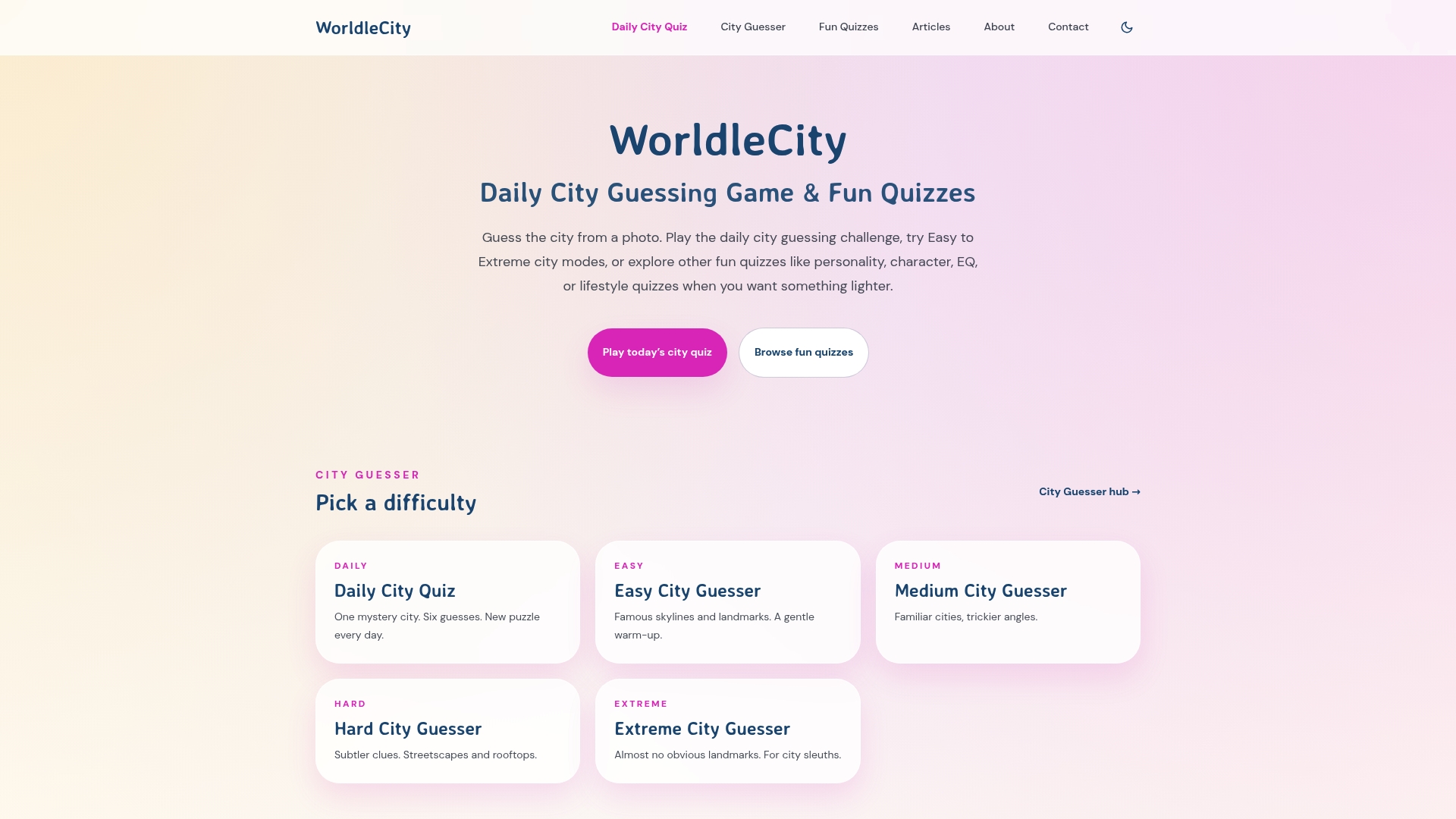
Head to the WorldleCity homepage and the daily city puzzle is right there. No signup screen, no forced tutorial. If you want a full walkthrough of competitive daily play first, how to compete in daily online quiz challenges breaks down the mechanics before you dive in.
The flow, start to finish:
- Open today’s puzzle
- Study the photo (zoom in if you want)
- Type your city guess and submit
- Read your feedback — distance and direction
- Guess again if needed, up to six tries
- See your final score and share it if you want bragging rights
Once you’ve cleared the daily round, the difficulty-tiered quiz library is sitting right there for extra reps. Beginner mode is a good warm-up; expert mode is where the obscure landmarks live.
Play today’s city challenge now
You don’t need to make an account to try this. Just show up, look at a photo, and start guessing.
- Quick rounds — most games wrap in under five minutes
- Shareable results — send your score to a friend and start a friendly rivalry
Head to WorldleCity and take a crack at today’s mystery city. Worst case, you learn a new capital. Best case, you nail it in two guesses and feel unreasonably proud of yourself.
Sources
- City Nature Challenge
- City Nature Challenge (California Academy of Sciences)
- Daily rhythm of urban space usage: insights from the nexus of urban functions and human mobility | Humanities and Social Sciences Communications
FAQ
What is a daily city challenge exactly?
It’s a daily geography game where you see a photo of an unnamed city and get a limited number of guesses, typically six, to identify it, with feedback after each try.
How many guesses do you get?
Most daily city challenges, including WorldleCity’s, cap attempts at six, giving you enough room to narrow down the answer using distance and direction feedback.
Do I need an account to play?
No. WorldleCity’s daily challenge and its quiz library are playable with no registration, so you can start guessing the moment the page loads.
Can I play past puzzles or only today’s?
Daily mode locks to one puzzle per day, but freeplay or archive modes on some platforms, including WorldleCity’s difficulty-tiered quizzes, let you play extra rounds anytime.
What counts as a correct guess?
Most platforms accept the city’s common name, its metro area name, or standard alternate spellings. WorldleCity avoids the issue altogether: you select your guess from a searchable city list, so spelling never factors in.