Why Feedback Matters in Quiz Games: Boost Your Skills
Discover why feedback matters in quiz games. Learn how immediate feedback boosts retention and transforms guessing into mastery.
- how feedback enhances quiz games
- why feedback is important for games
- why feedback matters in quiz games
- role of feedback in learning
- improving quizzes with feedback
- importance of feedback in quizzes
On this page

Feedback in quiz games is not just a nice bonus. It is the mechanism that turns a guess into actual learning. Research by John Hattie places feedback’s effect size on learning outcomes at 0.70, well above the 0.40 threshold considered significant in education research. Skip the feedback, and you are basically shooting free throws in the dark.
Quizzes with per-question explanations produce about twice the learning retention compared to quizzes that only show final scores. That gap is the whole argument for why feedback matters in quiz games, and everything below unpacks how it works.
How immediate feedback supercharges your quiz game experience
The moment you answer a question, your brain is primed. It just retrieved something, made a judgment, and committed. That window is short. Immediate feedback is most effective while your reasoning is still active, which is why it consistently outperforms delayed feedback for factual and procedural learning.
Not all feedback is equal, though. Three types show up across quiz design research:
- Positive feedback confirms a correct answer, reinforcing the memory trace.
- Corrective feedback flags a wrong answer and reveals the right one. Useful, but limited on its own.
- Elaborative feedback explains why an answer is correct or incorrect. This is the type that targets misconceptions and produces the biggest learning gains.
Elaborative feedback does more than correct you. It connects the fact to context, which is exactly what geography players need when a city name alone means nothing without knowing the region, the coastline, or the climate zone.
Gamification combined with instant feedback also raises motivation and sustained attention. Players report a sense of “learning while playing,” and that feeling keeps them coming back. One real challenge: very detailed feedback on every answer can overload working memory. Two to three targeted sentences outperform a paragraph every time.

How feedback builds self-awareness and smarter players
Feedback’s deeper job is to build self-regulation. That means helping you accurately predict what you actually know, not just what you think you know.
Lucky guesses are the quiet enemy here. You pick the right city, feel good, and move on. But you did not actually know it. Elaborate feedback surfaces that gap by explaining the reasoning behind the correct answer, converting a lucky pick into genuine understanding.
Over repeated quiz cycles, this builds metacognition. You start noticing patterns in your own errors. “I keep confusing Central Asian capitals” or “I always underestimate how far north Scandinavian cities are.” That kind of self-awareness is what separates a player who plateaus from one who keeps improving.
Feedback and game mechanics work as dual pillars of effective quiz design. Neither works as well alone. Feedback visibility and the ability to review wrong answers support self-correction between rounds, which is why difficulty levels paired with feedback matter so much for long-term skill development.
Pro Tip: After a wrong answer, pause for five seconds before moving on. Read the explanation fully. Players who rush past feedback after low scores consistently show lower skill improvement over time.
Making the most of feedback in your geography quiz games
Knowing feedback exists is not enough. How you engage with it determines whether you actually improve. A few habits make a real difference:
- Focus on the explanation, not just whether you got it right or wrong.
- After a mistake, say the correct answer out loud or type it. Active recall cements it faster.
- Replay sections where you missed multiple questions in a row. Patterns in errors point to genuine knowledge gaps.
- Use quiz patterns and strategies to recognize question structures that trip you up repeatedly.
- Balance speed and accuracy. Rushing for a high score while skipping explanations trades short-term points for long-term learning.
- Track your progress across sessions. Outcome feedback encourages players to adapt their study behavior, and that adaptation predicts better long-term performance.
Geography quiz games reward repetition. The more you engage with feedback across sessions, the more your mental map of the world fills in with real detail rather than vague impressions.
Why Worldlecity nails feedback for geography lovers
Worldlecity is built around the feedback loop that research consistently backs. Here is what that looks like in practice:
- Immediate item-level feedback after each guess in the daily city game tells you not just that you were wrong, but how far off you were and in which direction. That proximity and directional clue turns every wrong guess into a usable course correction.
- Four difficulty modes in the city guesser quizzes let you calibrate challenge to your current skill level, so feedback stays meaningful rather than overwhelming.
- Community sharing without account registration means you can compare results socially, which adds a layer of external feedback and motivation.
- No registration required keeps the barrier to entry low, so you can start playing geography quizzes immediately without friction.
If you want to dig into how a quiz’s format changes the way feedback lands, Worldlecity’s blog breaks down quiz types suited to different learning styles.
Why detailed explanations make feedback actually stick
Simple right/wrong feedback encourages surface learning. You know you missed it. You do not know why, and you will likely miss it again. Elaborate feedback that explains the reasoning behind correct answers produces higher academic achievement and better knowledge transfer than corrective feedback alone.
For geography specifically, this means more than “the answer is Tbilisi.” It means understanding that Tbilisi sits at the crossroads of Eastern Europe and Western Asia, which is why it keeps appearing in questions about both regions. That context is what makes the fact retrievable later.
Quizzes as educational tools work best when explanations are concise and targeted. Two to three sentences per question, focused on the key misconception or the connecting context, outperform longer explanations that dilute attention.
What effective feedback strategies actually look like in quiz games
The best-designed quiz games do not just tell you the answer. They show you the gap between what you thought and what is true.
Effective strategies include immediate per-question explanations that arrive before you move to the next question, directional or proximity cues in geography games that quantify how close your guess was, and the option to review all missed questions at the end of a session. Feedback that supports behavioral adaptation also prompts players to slow down after a low score rather than rushing to the next question.
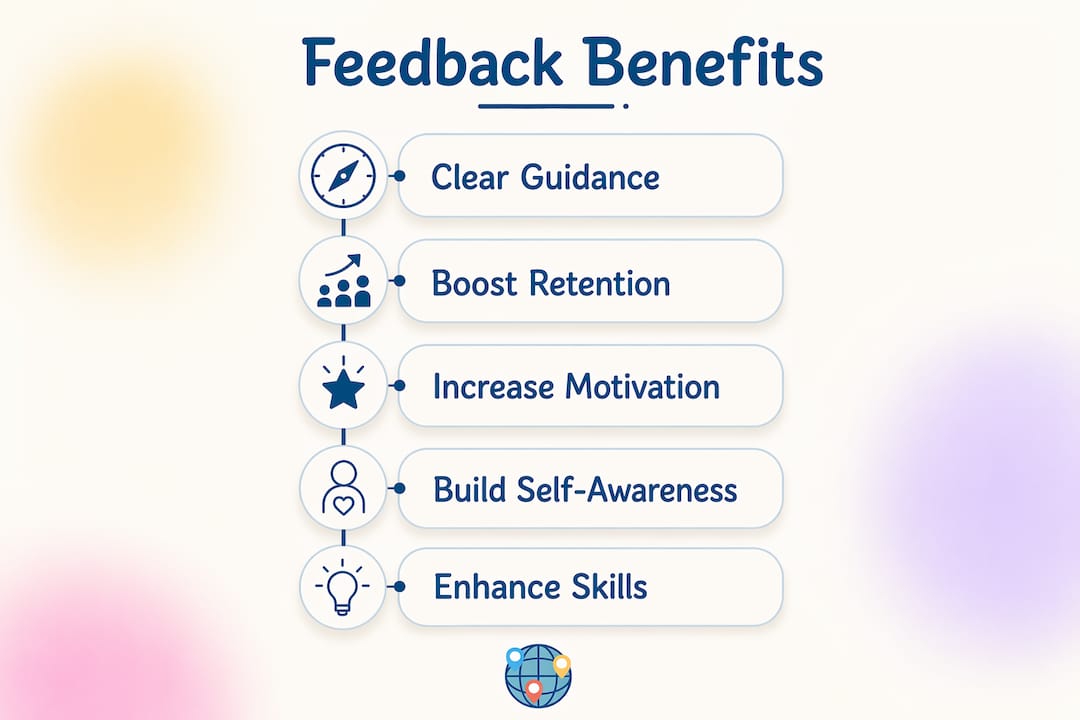
The engagement angle matters too. Players in gamified quiz environments report that instant item-by-item feedback “pushed” them to get topics right and made the experience feel rewarding rather than punishing. That emotional framing keeps players returning, which is ultimately what drives long-term skill improvement.
Worldlecity puts feedback where it counts
Geography quiz players who want real skill sharpening, not just a score, get exactly that with Worldlecity. Every guess in the daily city game comes with directional feedback that tells you how close you were and where to look next. The four-mode city guesser quizzes scale the challenge so feedback stays useful at every level.
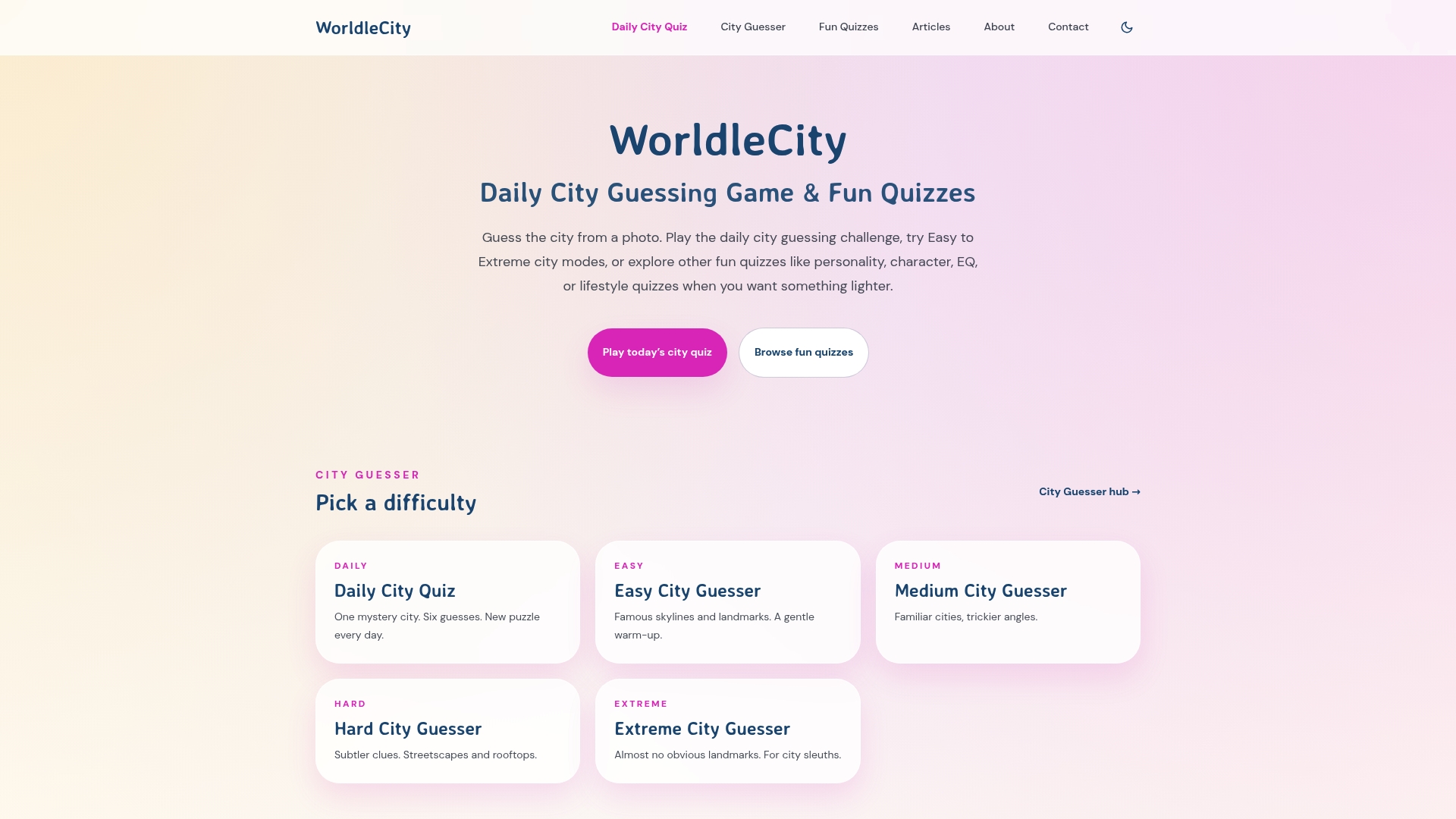
No account needed. No commitment. Just play the daily city guessing game and see how fast your geography knowledge actually grows when every answer teaches you something.
Key Takeaways
Feedback in quiz games doubles learning retention compared to score-only formats, and its effect on learning outcomes carries an effect size of 0.70 per John Hattie’s research.
| Point | Details |
|---|---|
| Effect size of feedback | John Hattie’s research places feedback’s effect size on learning at 0.70, well above the 0.40 significance threshold. |
| Elaborative beats corrective | Quizzes with per-question explanations produce about twice the learning retention compared to quizzes that only show final scores. |
| Timing is everything | Immediate feedback hits while reasoning is active in working memory, maximizing how much sticks. |
| Self-regulation over guessing | Feedback builds metacognition, helping players accurately identify real knowledge gaps rather than lucky guesses. |
| Worldlecity’s approach | Worldlecity delivers directional and proximity feedback after each guess, turning every wrong answer into a geography lesson. |
FAQ
Why does feedback matter more than just seeing your score?
A score tells you how you did. Feedback tells you why, which is the only part that improves future performance. Quizzes with per-question explanations produce about twice the learning retention compared to quizzes that only show final scores.
What type of feedback works best in quiz games?
Elaborative feedback, which explains why an answer is correct or incorrect, consistently outperforms simple right/wrong feedback for both retention and knowledge transfer.
How does immediate feedback help with geography quizzes?
Immediate feedback arrives while your reasoning about the question is still active, making the explanation far easier to encode. Delayed feedback loses most of that advantage.
Can quiz game feedback actually build long-term skills?
Yes. Repeated engagement with feedback builds metacognition over time, helping players accurately predict what they know and identify persistent gaps. Worldlecity’s daily format and four difficulty modes support exactly this kind of progressive skill building.