Prepare for International Travel Geographically: Daily Drills
Learn how to prepare for international travel geographically with daily map drills. Boost your place recognition in just 10 minutes a day!
- prepare for international travel geographically
- geographic travel planning
- how to prepare for travel abroad
- traveling internationally checklist
- international travel tips
- daily map drills
On this page
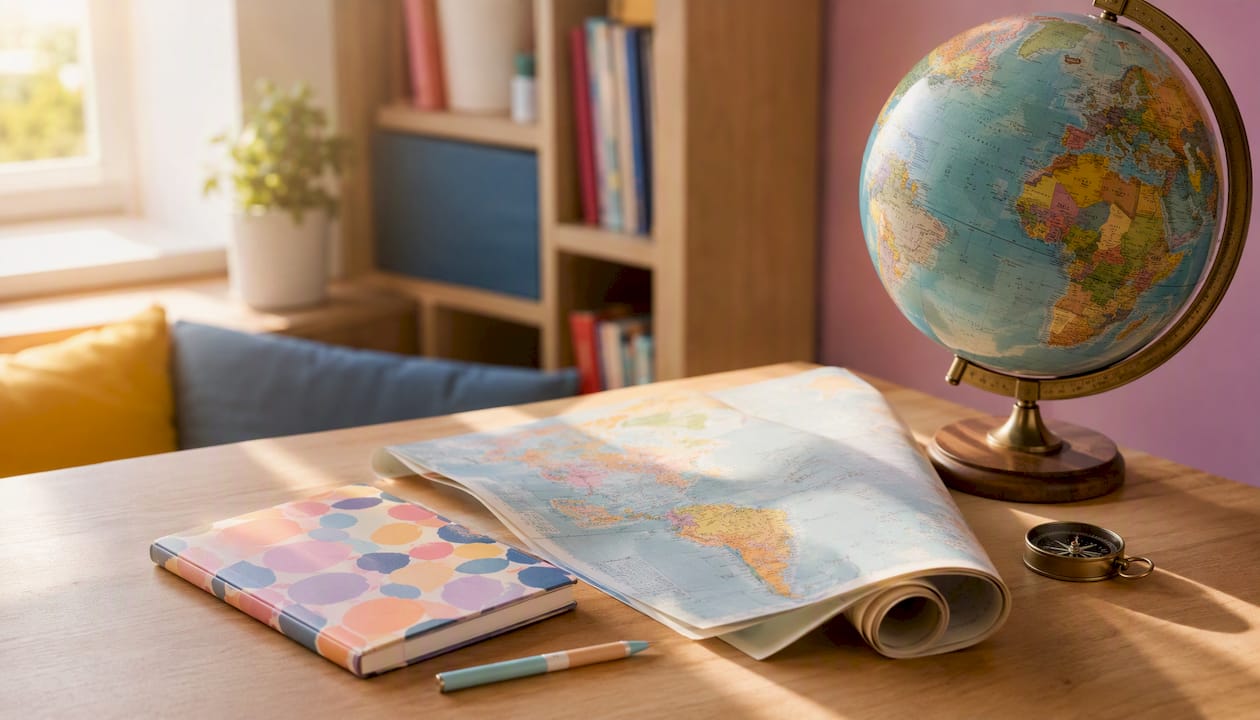
Ten to thirty minutes of retrieval-focused practice per day is the fastest way to build place-recognition before a trip. Skip the passive atlas-flipping. Open today’s Worldlecity challenge right now: one photo of a mystery city, six guesses, distance and direction feedback after each one. That one small habit, repeated daily, compounds fast.
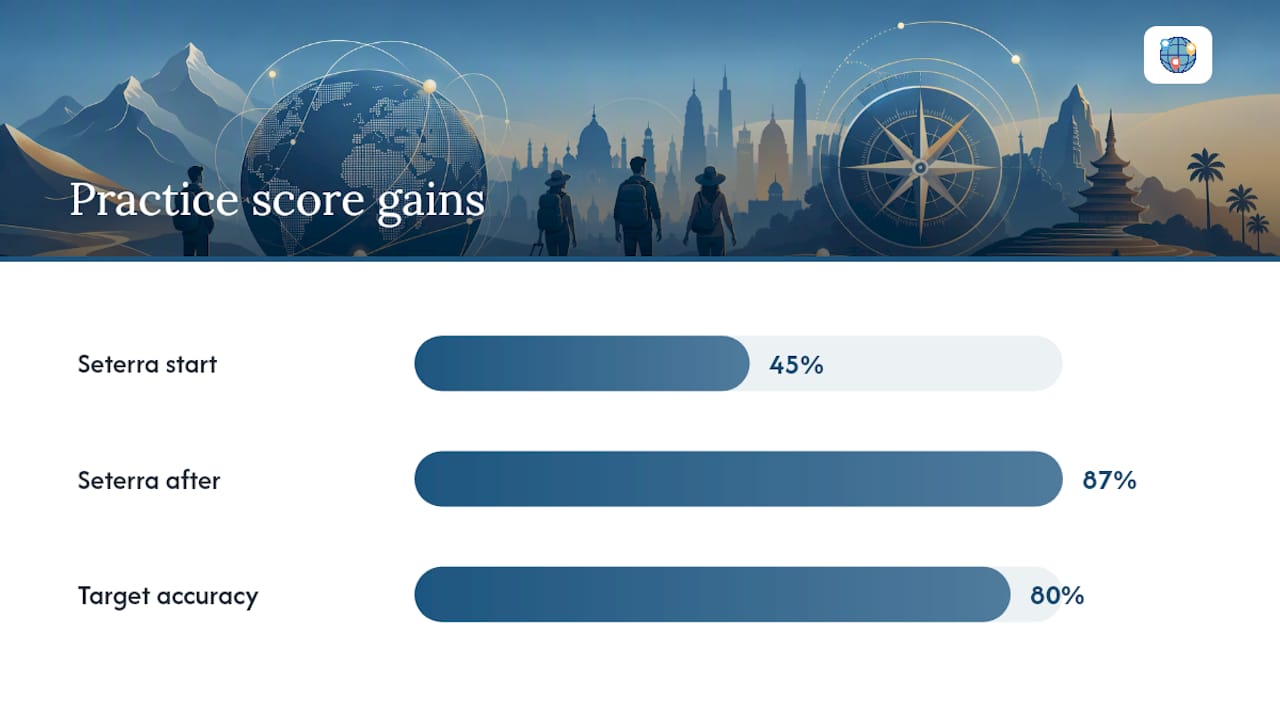
Why does it work so quickly? A classroom study using Seterra’s game-based cycles pushed average map-literacy scores from 45 to 87 across three practice rounds. The mechanism is retrieval practice: forcing your brain to recall a location (rather than just look at it) builds stronger, longer-lasting spatial memory. Start with:
- One city-guessing run (the Worldlecity daily challenge, six guesses)
- One blank-outline map printed and filled from memory
- Three wrong answers added to an Anki flashcard deck
Why game-based practice beats passive map study
Retrieval practice plus immediate feedback builds spatial memory faster than re-reading a map. When you guess wrong and see the correct location pop up instantly, your brain encodes the correction more deeply than if you had just read the right answer the first time.
“Gamification can contribute to the development of geography-specific competencies, especially spatial imagination, cartographic skills, and understanding of natural and social processes.” — Frontiers in Education systematic review, 2026
That Seterra classroom study is worth pausing on. Scores climbed from 45 at pretest to 60 after cycle one, then 75, then 82, and finally 87 at posttest. Three short practice cycles, one posttest, not months of study. The gains came from repeated, scored attempts with corrective feedback after each round.
Posttest scores showed a substantial gain. Students who started barely passing ended up near-mastery after three game-based cycles.
Location-based geogames also improved mental rotation and sketch-map perspective in a controlled primary-school study by Bartoschek and Schwering, published in Agile-GISS. Active recall engages spatial encoding in ways passive review does not trigger. Spaced repetition and daily streaks reinforce that consolidation over days, not just hours.
What does a realistic pre-trip practice schedule look like?
Pick the plan that matches your timeline, then follow its daily micro-tasks without skipping the blank-map checks.
30-day plan (10–15 min/day)
- Week 1: Learn your destination region’s country outlines in clusters, not alphabetically. Borrow the shape-association and regional-clustering tricks from map-memorization guides, and feed them into your own Anki deck.
7-day plan (15–20 min/day)
- Day 1–2: Top 20 cities and country outlines for your region.
- Day 3–4: The Worldlecity daily challenge, plus a geography quiz run from the library on Medium or Hard.
- Day 5–6: Google Street View orientation drills at your destination city.
- Day 7: Full blank-map run plus a destination preview quiz.
48-hour quick drill (20–30 min/day)
- Today’s Worldlecity daily challenge, plus ten geography quiz runs from the library.
- Ten blank-map attempts from memory.
- Airport-to-city mapping for your specific route.
- One rapid-route practice: map the airport to your hotel using only landmarks.
Practical guides on learning world geography fast land in the same place as the spacing and testing-effect literature: short daily sessions outperform long, infrequent cramming for geographic retention.
How to use Worldlecity, Street View, blank maps, and Anki together
Combine a daily Worldlecity timed run with two complementary practices: blank-map recall and spaced flashcards. That three-part stack covers active retrieval, spatial encoding, and error correction.
Worldlecity workflow:
- Take the daily challenge, or pick a geography quiz from the library and set the difficulty
- Set a mental timer and commit to each guess before checking
- After each session, note every missed city
- Understand why the feedback loop matters before moving on
Google Street View:
- Drop into a neighborhood in your destination city
- Identify the cardinal direction you are facing using sun position or signage
- Name the district or neighborhood before checking the map
Blank maps:
- Print a region outline with no labels
- Fill in cities and countries from memory, then check
- Trace borders with a finger to build motor memory
Anki:
- Create one card per missed city: map outline on the front, city name plus one anchor fact on the back
- Run your deck daily, letting spaced repetition schedule the hard ones more often
Pro Tip: Build an immediate-feedback loop. After a timed Worldlecity session, add every wrong answer to Anki within two minutes, then do a 5-minute blank-map redo of just those cities. The triple hit (quiz, card, redraw) locks the location in fast.
For more game formats to rotate into your practice, the map-based quiz games guide covers options worth bookmarking.
Common mistakes that slow your progress (and quick fixes)
Passive staring at a map is the biggest time-waster. If you are not being tested, you are not learning. One-off cramming and learning countries alphabetically are close seconds.
What to stop doing:
- Studying with the map open (no retrieval = no retention)
- Skipping the feedback review after a wrong guess
- Learning isolated facts with no spatial anchor
- Treating a long single session as equivalent to daily short ones
Pro Tip: Practice reverse retrieval. Given a landmark or airport name, recall the city, its country, and one neighboring country. This direction of recall is exactly what you need when you land somewhere unfamiliar. Most people only practice forward (city name to location), so reverse retrieval is where the real gains hide.
Chunk by region, always attach one vivid anchor fact per place, and occasionally add time pressure to simulate the mild stress of real navigation. Faster quiz recognition techniques can sharpen your speed once accuracy is solid.
Key Takeaways
Daily retrieval practice with timed city quizzes, blank-map recall, and spaced flashcards is the minimum effective dose for building real place-recognition before any international trip.
| Point | Details |
|---|---|
| Start with 10–30 min/day | Short daily sessions beat long cramming; even 5 minutes of timed retrieval builds retention. |
| Game-based gains are real | Seterra classroom cycles raised scores from 45 to 87; repeated retrieval with feedback drives the jump. |
| Train five core skills | Location recognition, orientation, scale, symbol decoding, and place-context anchors cover what travel demands. |
| Self-test weekly | Target 80% accuracy on a regional country map within 3 weeks; place 10 major cities in under 5 minutes. |
| Worldlecity as daily habit | A daily city photo, six guesses, and distance-and-direction feedback match the retrieval-practice model directly; the quiz library adds difficulty modes. |
Worldlecity makes the daily drill effortless
No app-switching, no setup, no account required. Worldlecity’s daily city challenge gives you a real photo of a mystery city, six guesses, and instant proximity feedback after each one. That feedback loop is exactly what the research points to as the driver of fast geographic gains.
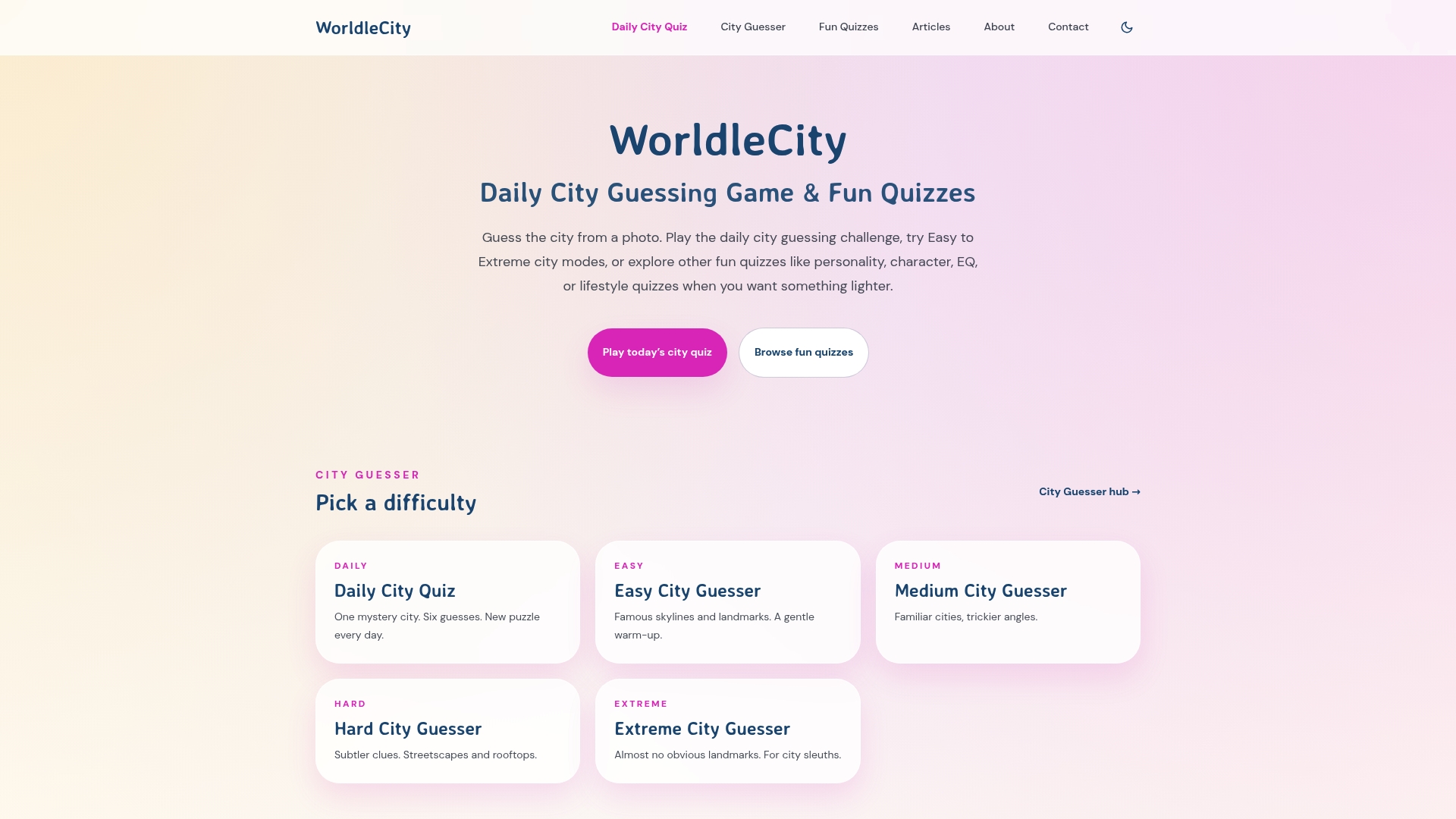
When you want to ramp up, the quiz library adds four difficulty modes, from Easy to Extreme. Sharing your daily result turns the score into a low-stakes check-in with other geography fans. It takes five minutes, it is free, and it fits between your morning coffee and the rest of your day. Try today’s challenge and see how many cities you already know.
Useful sources
The evidence and tools behind this plan, if you want to go deeper:
- Mahpuzah, Junaidin & Arif (2025), Meningkatkan Keterampilan Literasi Peta Menggunakan Game Based Learning Model Pada Siswa Sekolah Menengah Pertama | Jurnal Ilmiah Profesi Pendidikan
- Shernay et al. (2026), A systematic literature review of the global experience of applying the gamification approach in teaching school geography | Frontiers in Education
- Map Literacy Through Digital Games: A Framework for Geography Education | KN, Journal of Cartography and Geographic Information (Springer)
- Memorize Any Map (Countries, States, Capitals) [2026]
- How to Learn World Geography Fast: 7 Science-Backed Methods | Softroni
- Chang, Huang & Tsaur (2019), Tourist geographic literacy and its consequences | Tourism Management Perspectives
- Adanali (2021), How Geogames Can Support Geographical Education? | RIGEO (ERIC PDF)
FAQ
How long does it take to prepare geographically for a trip?
Three weeks of 10–15 minutes daily is enough to reach 80% accuracy on a regional country map. A 7-day focused plan covers major cities and orientation for a single destination.
What is the best tool for geographic travel planning?
Worldlecity’s daily city-photo challenge is a practical starting point: one mystery city a day, six guesses, and distance and direction feedback after every guess, free and with no registration. When you want difficulty control, the quiz library adds Easy, Medium, Hard, and Extreme modes.
Does game-based practice actually improve map skills?
Yes. A classroom study using Seterra’s game-based cycles raised average map-literacy scores from 45 at pretest to 87 at posttest across three practice cycles, and a systematic review in Frontiers in Education found gamification supports spatial imagination and cartographic skills when tied to clear learning goals.
How do I use Anki for geography preparation?
Create one card per missed city after each quiz session: map outline on the front, city name plus one anchor fact on the back. Run the deck daily and let spaced repetition prioritize your weak spots.
What map skills should I focus on before international travel?
Prioritize location recognition, orientation, scale estimation, symbol decoding, and place-context anchors. Research on tourist geographic literacy links stronger geographic literacy to higher travel satisfaction and to lower hesitation and destination risk perception.