What Is a Picture Round Quiz? Your Complete Guide
Discover what a picture round quiz is and how it transforms traditional trivia into a dynamic visual experience. Engage your team today!
- how to create picture rounds
- quiz round ideas
- picture quiz examples
- what is a picture round quiz
- picture quiz format
- what is a quiz round
On this page
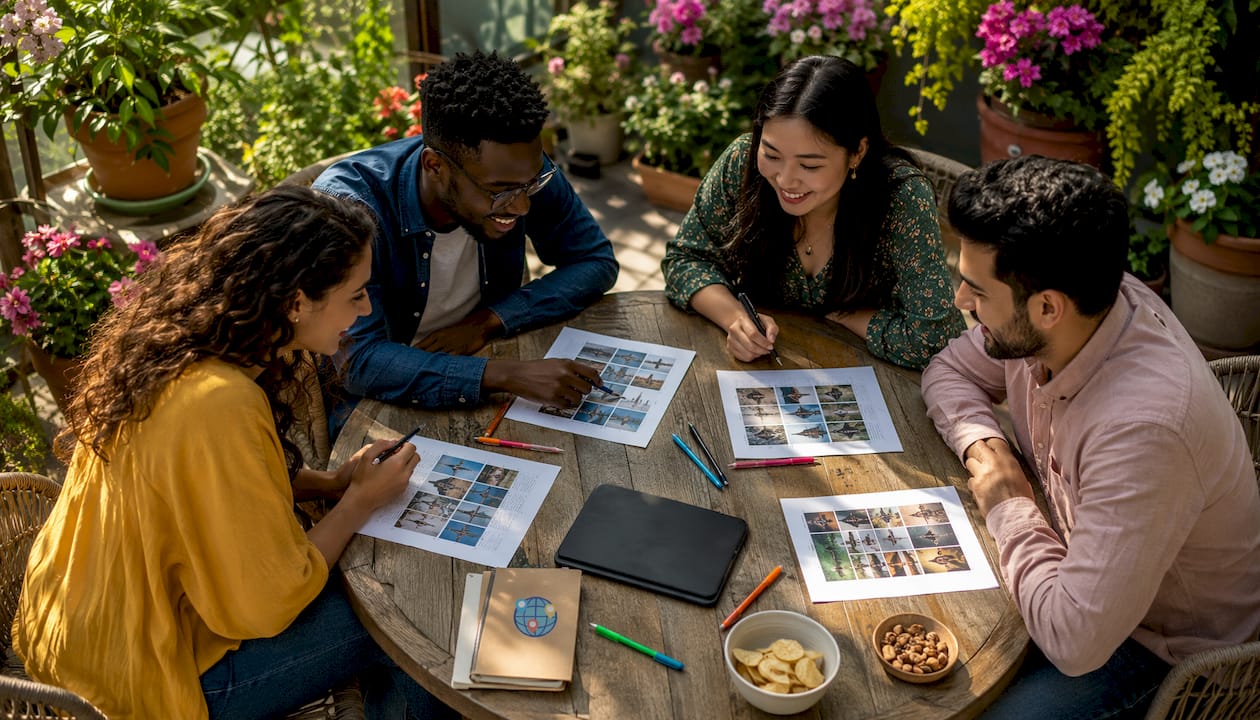
A picture round quiz is a dedicated quiz segment where players identify visual prompts, like photos, logos, flags, or maps, instead of answering spoken questions. It shifts the room from listening mode to looking mode, and that one change does a lot for the energy at the table. Industry standard rounds run 10–20 images, typically displayed over 5–10 minutes of solving time.
Here’s what makes a picture round its own thing:
- Visual prompts only. No host reading questions aloud. Players study images and write answers on a numbered sheet.
- 10–20 images per round. Fewer than 10 feels like a warm-up. Twenty is the sweet spot for a full round that moves quickly.
- Timed display. Each image shows for a set interval, usually looped twice so teams can double-check.
- Silent solving. Teams work together quietly, which creates a different kind of buzz than verbal rounds.
- Numbered answers. Players match their answers to image numbers on a simple answer sheet.
Picture rounds often land mid-game, giving teams a mental breather between read-aloud rounds. They also tend to produce the most memorable moments of the night.
What is a picture round quiz good for? Popular themes to try
The best picture round themes tap into things people recognize visually but might struggle to name from a text clue alone. That gap between “I know that face” and “what’s their name?” is exactly where the fun lives.
Popular themes that consistently work well:
- Celebrity faces. Classic for a reason. Throw in some aged or retouched photos to raise the difficulty.
- Brand logos. Crop them tight or remove the color, and suddenly everyone second-guesses themselves.
- World flags. Great for geography fans. Mix in some obscure ones to separate the experts from the guessers.
- Landmarks and maps. Aerial shots of famous cities, cropped skylines, or zoomed-in map sections all work.
- Movie posters. Use older films for a harder round, recent blockbusters for a more accessible one.
- TV show characters. Works especially well with a younger crowd or a pop culture-themed night.
- Album covers. A fan favorite for music-themed quizzes. Blur them slightly for extra challenge.
- Close-up objects. Extreme macro shots of everyday items. Deceptively tricky and always good for laughs.
- Childhood cartoons. Nostalgic, inclusive, and surprisingly competitive.
- Sports logos or jerseys. Solid choice for a sports-themed event or a mixed crowd where sports fans want their moment.
Mixing themes across a single round keeps everyone engaged. If you want ideas on which topics land best across different quiz formats, the most common quiz night topics guide is worth a look.
How picture rounds boost engagement and tips for hosting them well
Picture rounds shift cognitive load from auditory recall to visual recognition. That switch keeps energy high because it activates a different part of how people process information. It also opens the door for players who go quiet during general knowledge rounds. The person who never buzzes in might be the one who instantly spots a half-cropped movie poster.
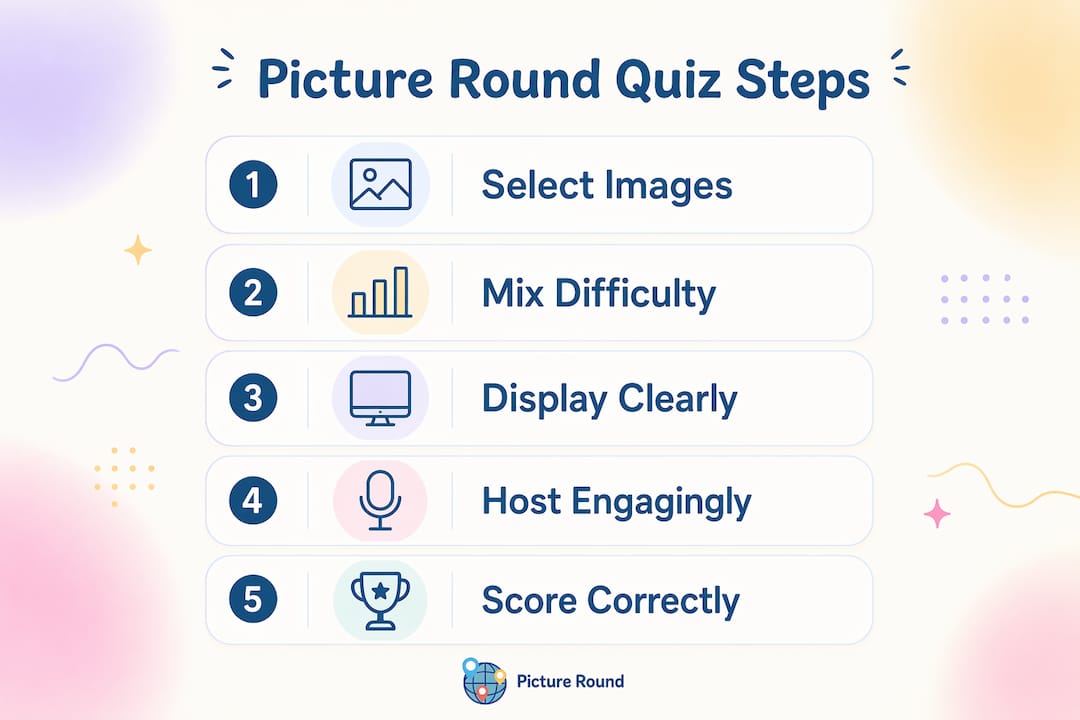
For quiz hosts, the setup matters as much as the content.
Display and pacing:
- Project images on a large screen using a 16:9 aspect ratio. Printed sheets kill the shared energy and tempt teams to peek at each other’s answers.
- Use one image per slide, numbered clearly. No watermarks, no text overlays, no distracting backgrounds.
- Loop the full set twice at roughly 30–45 seconds per image so teams can pace themselves naturally.
Scoring:
- One point per correct answer keeps the math simple and the game fun. For a 20-image round, some hosts run double points for tie-breaking purposes, but simple scoring beats complex formulas every time.
- Collect answer sheets right after the round ends, then reveal answers while scoring. The reveal is usually the loudest moment of the night.
Image quality:
- Use high-resolution, clear images and observe fair use guidelines. Stick to public domain or royalty-free sources when possible, especially for public or commercial events.
Pro Tip: Balance your image selection across three difficulty tiers: a few easy ones everyone gets, a solid middle group that sparks debate, and two or three genuinely hard ones that reward the specialists. That mix of difficulty keeps motivation high and makes the round feel fair to every player at the table.
Picture rounds also pair naturally with corporate event entertainment, where getting a mixed group engaged quickly is the whole challenge.

If you want to go deeper on how visual formats connect to different player types, the guide on quiz types for learning styles breaks it down well.
Worldlecity brings geography picture rounds to life
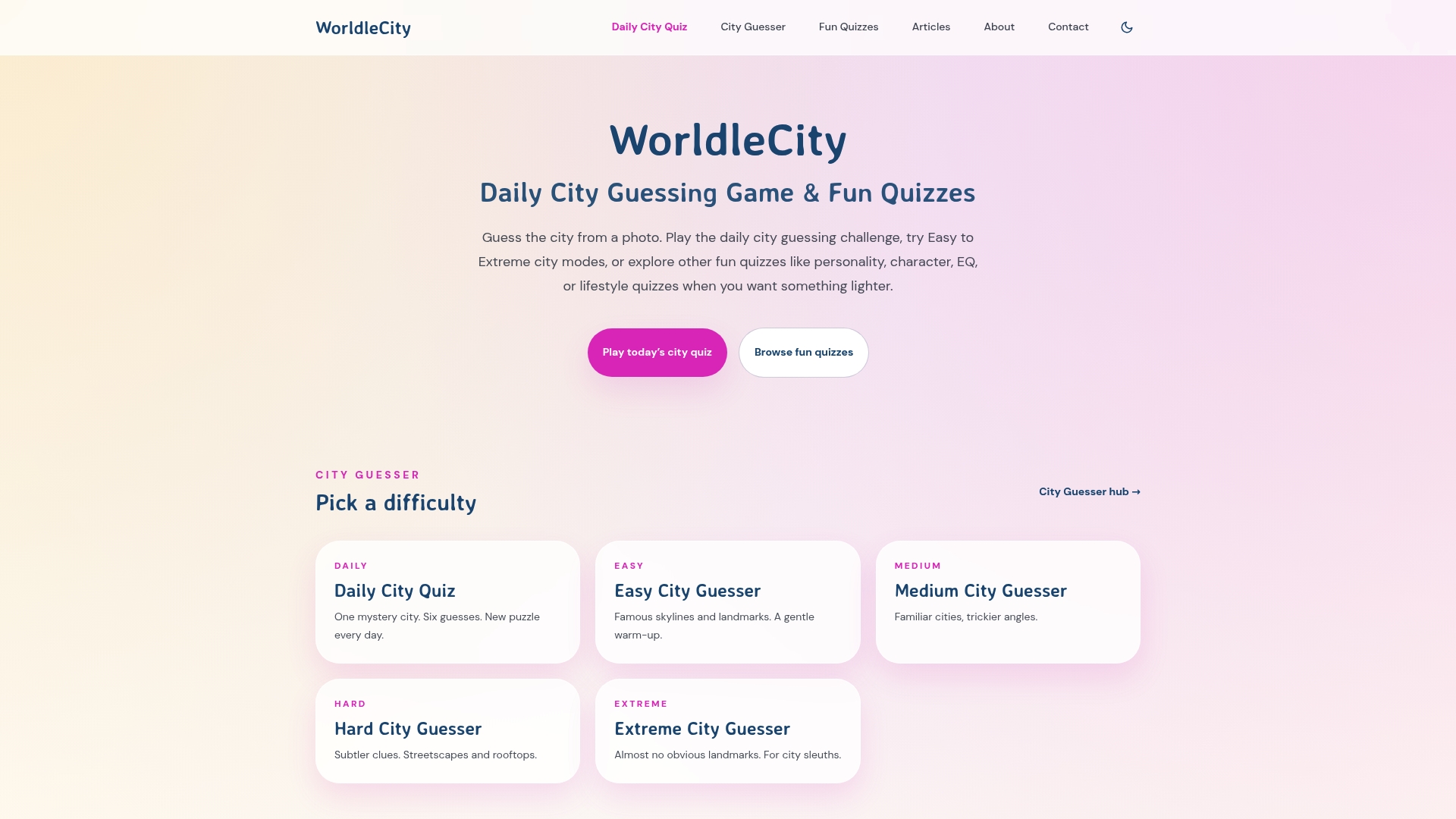
Geography is one of the richest categories for picture rounds, and Worldlecity is built around exactly that. Every day, Worldlecity drops a photograph of a mystery city and gives you six attempts to identify it, with each guess telling you how close you are and which direction to look. It’s the picture round format turned into a daily habit.
Beyond the daily challenge, Worldlecity offers city guesser quizzes across four difficulty modes, so you can practice at your own pace or push yourself when you’re feeling confident. No account needed. No pressure. Just you, a photo, and a map’s worth of possibilities.
If you’re building a geography-themed picture round for your next quiz night, playing on Worldlecity is a genuinely fun way to sharpen your eye for cities, landmarks, and skylines before the big event.
FAQ
What is a picture round in a quiz?
A picture round is a quiz segment where players identify images, such as celebrity faces, logos, or landmarks, instead of answering spoken questions. Rounds typically include 10–20 images shown on a screen or printed sheet.
What makes a good picture round for a quiz night?
A good picture round uses clear, high-resolution images across a mix of easy, medium, and hard prompts, displayed on a large screen with one image per slide and no distracting overlays.
What is the purpose of a picture quiz?
Picture quizzes shift players from auditory recall to visual recognition, which keeps energy high and lets quieter team members contribute in a way that verbal rounds often don’t allow.
What is a visual round in a quiz?
A visual round is another name for a picture round. Players identify what they see, whether that’s a flag, a face, a logo, or a landmark, rather than responding to a spoken or written question.
How many images should a picture round have?
Most picture rounds include 10–20 images. Twenty is the standard for a full round; fewer than ten tends to feel too short to build any real momentum.
Key Takeaways
A picture round quiz works best when it combines clear visuals, a balanced difficulty mix, and a projected display that keeps the whole room focused on the same image at the same time.
| Point | Details |
|---|---|
| Standard round size | Most picture rounds include 10–20 images, with 20 being the widely used standard. |
| Cognitive shift | Visual recognition keeps energy high and lets players who struggle with verbal rounds contribute. |
| Scoring simplicity | One point per correct image keeps the game moving; avoid complex bonus formulas. |
| Display method | Project on a 16:9 screen with one numbered image per slide and no watermarks or overlays. |
| Worldlecity for practice | Worldlecity’s daily city photo challenge and four-difficulty quiz modes make it a natural fit for sharpening geography picture round skills. |